Planting a new tree in the garden is something I always find rewarding. A young tree can add beauty, shade, privacy, and even value to an outdoor space, but the first few months are very important. Unlike an established tree, a newly planted tree has a small root system and may not be strong enough to handle strong winds on its own.
This is where proper tree support becomes useful. Giving a new tree the right support can help it remain stable while its roots become established. However, I believe supporting a tree does not mean tying it tightly to a stake and leaving it there for years. The goal is to provide temporary support while still allowing the young tree to move naturally.
In this guide, I will explain how I support new trees, when tree staking is necessary, what materials can be used, and how to avoid common mistakes.
Why Do New Trees Need Support?
A newly planted tree often has a limited root system. When a tree is moved from a nursery or container into the garden, its roots need time to spread into the surrounding soil. During this period, strong wind or loose soil can cause the tree to lean or even fall.
Young trees with tall trunks and small root systems can be particularly vulnerable. Trees planted in exposed locations may also need additional protection from strong winds.
Proper tree support can help keep the tree upright while the roots develop. It can also protect the trunk from accidental damage caused by people, pets, lawn equipment, or heavy weather.
At the same time, I would not automatically stake every new tree. If a young tree is already stable and the planting location is sheltered, it may develop perfectly well without a stake.
When Should You Stake a New Tree?
The decision depends on the tree and its location. Before adding support, I gently check whether the tree can stand upright by itself.
If the tree moves excessively at the root area when the wind blows, temporary support may be helpful. I also consider the condition of the soil. Very loose soil can make it difficult for a young tree to remain stable.
Staking is especially useful when:
The planting area is exposed to strong winds.
The tree has a weak or flexible trunk.
The root ball is not stable in the soil.
The tree is tall compared with its root system.
The planting site has loose or disturbed soil.
The tree is located where accidental damage is possible.
If the tree stands firmly and moves naturally without leaning, I prefer not to add unnecessary support.
Choose the Right Tree Stakes
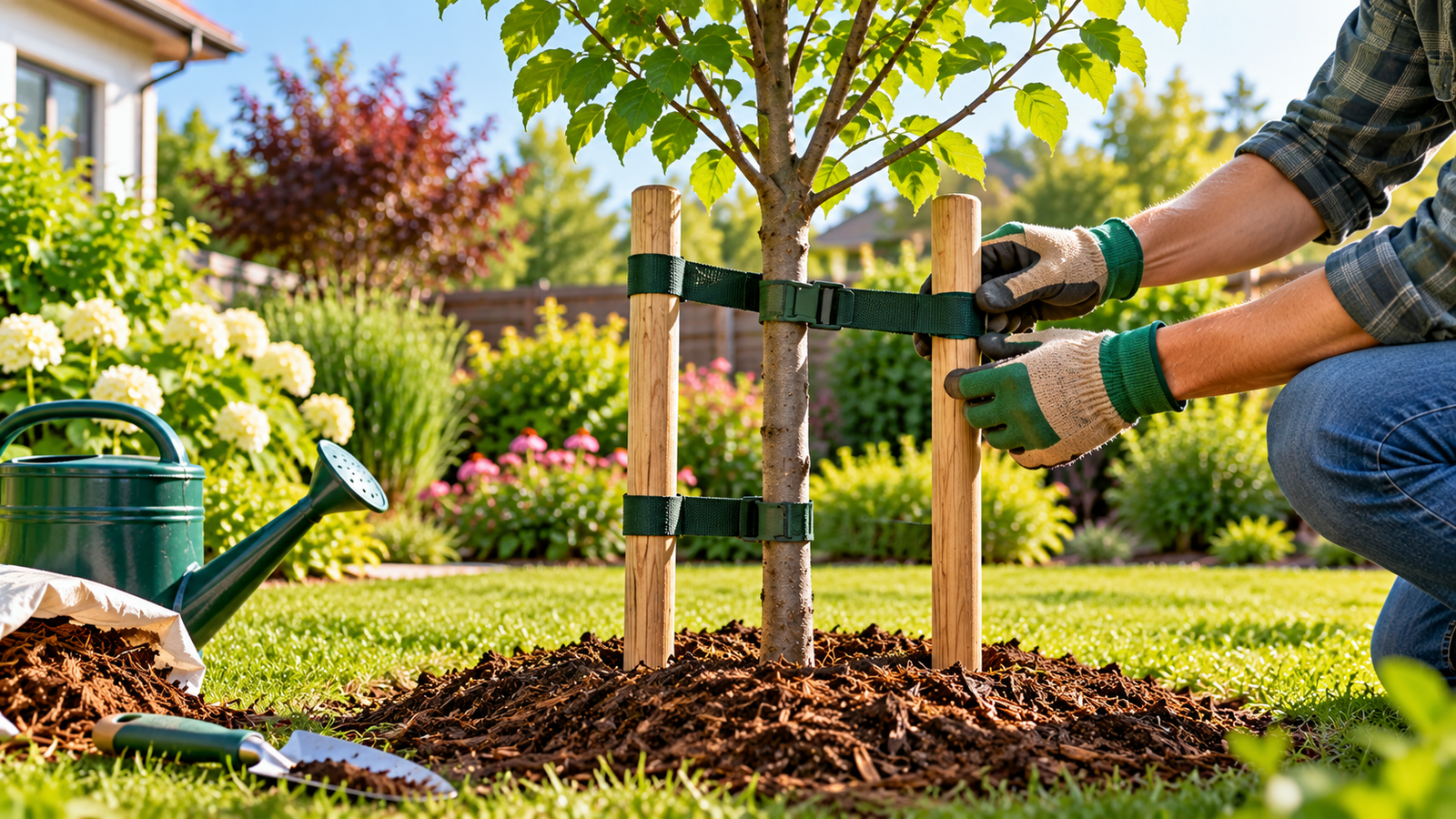
Choosing suitable stakes is an important part of supporting a young tree. The stake should be strong enough to provide stability but should not be so large or rigid that it prevents all natural movement.
Wooden stakes are a common choice for garden trees. They are simple, affordable, and easy to install. Strong garden stakes made from other materials can also work when they are suitable for outdoor use.
For most small trees, one or two stakes may be enough. Larger young trees may require a different support system.
I also recommend checking the length of the stake before installing it. Part of the stake needs to go firmly into the soil, while the remaining portion should provide support at an appropriate height.
Where Should the Stake Be Placed?
One mistake I often see is placing the stake directly against the trunk. This can cause rubbing and may damage the bark.
Instead, I place the stake slightly away from the trunk. The exact position depends on the size of the tree and the direction from which strong winds normally come.
The support should stabilize the tree without forcing the trunk into an unnatural position.
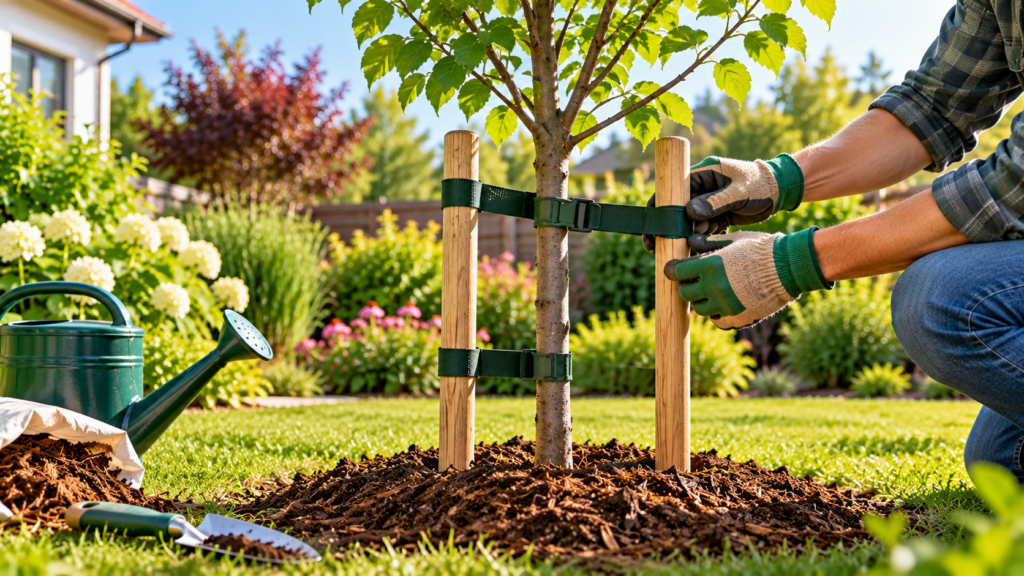
If two stakes are being used, they can be positioned on opposite sides of the tree. This can provide balanced support while still allowing some movement.
The important point is that the stake should support the tree rather than replace the tree’s natural strength.
Use Soft Tree Ties
The material used to connect the tree to the stake is just as important as the stake itself.
I prefer soft and flexible tree ties because they reduce the chance of damaging the bark. Hard wire, thin rope, or other narrow materials can cut into the trunk as the tree grows.
A proper tree tie should be wide enough to distribute pressure over a larger area. It should also have enough flexibility to allow the trunk to move slightly.
This natural movement is important because a tree develops strength as it responds to normal wind movement. If the trunk is held completely rigid, it may not develop as naturally as it should.
Do Not Tie the Tree Too Tightly
One of the most important rules of tree staking is to avoid tight ties.
The tie should hold the tree close enough to the support to prevent excessive leaning, but it should still allow some movement.
I usually check the tie by gently moving the trunk. The tree should have some natural flexibility. If the tie is pressing tightly against the bark, I loosen it.
As the tree grows, the tie can also become restrictive. This is why regular inspection is necessary.
A support system that was suitable when the tree was planted may become too tight several months later.
Give the Tree Some Natural Movement
It may seem strange, but a young tree should not be completely motionless.
Gentle movement caused by normal wind can encourage the trunk to develop strength. The roots can also become more firmly established as the tree responds to movement.
This is why I use support only when it is actually needed. My goal is not to create a tree that depends on a stake. My goal is to give the tree enough temporary stability to establish itself.
A good support system should therefore allow controlled movement rather than completely restricting the trunk.
Protect the Trunk From Damage
When installing tree support, I pay close attention to the trunk. Young tree bark can be delicate, and repeated rubbing can cause injuries.
The tie should not scrape against the trunk every time the wind moves the tree. If I notice rubbing, I adjust the position or use a softer material.
I also make sure the stake itself is not pressing against the trunk.
Checking the support after storms is particularly important. Strong wind can shift the stake, loosen the soil, or change the position of the tie.
Check the Support Regularly
Installing tree support is not a task I would recommend doing once and forgetting about.
I check a newly supported tree regularly during its first growing season. I look at the trunk, ties, stake, and surrounding soil.
I ask myself a few simple questions.
Is the tree still standing upright?
Is the tie rubbing against the bark?
Has the stake become loose?
Has the tree grown enough to make the tie restrictive?
Does the tree still need support?
These simple checks can prevent small problems from becoming serious ones.
When Should Tree Support Be Removed?
Tree stakes are usually temporary. Leaving them attached for too long can interfere with the tree’s natural development.
Once the roots are established and the tree can remain upright without assistance, I remove the support.
The exact timing depends on the tree, soil, weather, and planting conditions. Some trees establish quickly, while others need more time.
I do not remove support simply because a certain number of weeks have passed. Instead, I look at the tree itself.
If the trunk remains upright without leaning and the roots appear well established, the support may no longer be necessary.
After removing the stake, I continue observing the tree. If it remains stable, I leave it unsupported.
Common Tree Staking Mistakes
There are several mistakes that can cause more harm than good.
One common mistake is tying the tree too tightly. This can damage the bark and restrict natural movement.
Another mistake is using thin wire or unsuitable material around the trunk. These materials can cut into the bark as the tree grows.
Some people also leave stakes attached for years. This can make the tree unnecessarily dependent on artificial support.
Another problem is using a stake that is too tall or too rigid. The purpose of support is to provide temporary stability, not to prevent all movement.
I also avoid placing the stake directly against the trunk. A small gap can help reduce rubbing and damage.
What About Trees in Windy Areas?
Trees planted in windy gardens may need extra attention. If strong winds are common in your area, temporary support can help a young tree establish itself.
However, I still avoid making the support completely rigid. The tree should be able to move naturally within a controlled range.
Before planting, I also consider the location. A spot protected by a wall, fence, or group of established plants may provide some natural protection from strong winds.
Good planting location and proper support can work together to protect a young tree.
Supporting a Tree After Heavy Rain
Heavy rain can sometimes make soil soft and unstable. This can cause a recently planted tree to lean.
After heavy rainfall, I check the soil around the tree and look for signs of movement. If the tree has shifted, I gently correct its position before checking the support.
I avoid compacting the soil excessively because young roots need access to air and water.
Good drainage is also important. A tree sitting in constantly waterlogged soil may struggle to develop a strong root system, even when it has excellent physical support.
Final Thoughts
Giving new trees the right support is mainly about balance. A young tree needs enough stability to survive difficult weather while its roots become established, but it should also have the freedom to develop naturally.
In my experience, the best approach is to use suitable stakes, soft tree ties, and regular inspections. I make sure the ties are not too tight, keep the support away from direct contact with the trunk, and allow some natural movement.
Most importantly, I remember that tree staking is temporary. Once the tree becomes stable and its roots are established, removing the support allows it to continue growing naturally.
If you are planting a new tree in your garden, take a few minutes to assess the planting location, soil condition, wind exposure, and strength of the tree before deciding whether support is necessary. With proper care and attention, a young tree can develop into a strong and healthy part of the garden for many years.