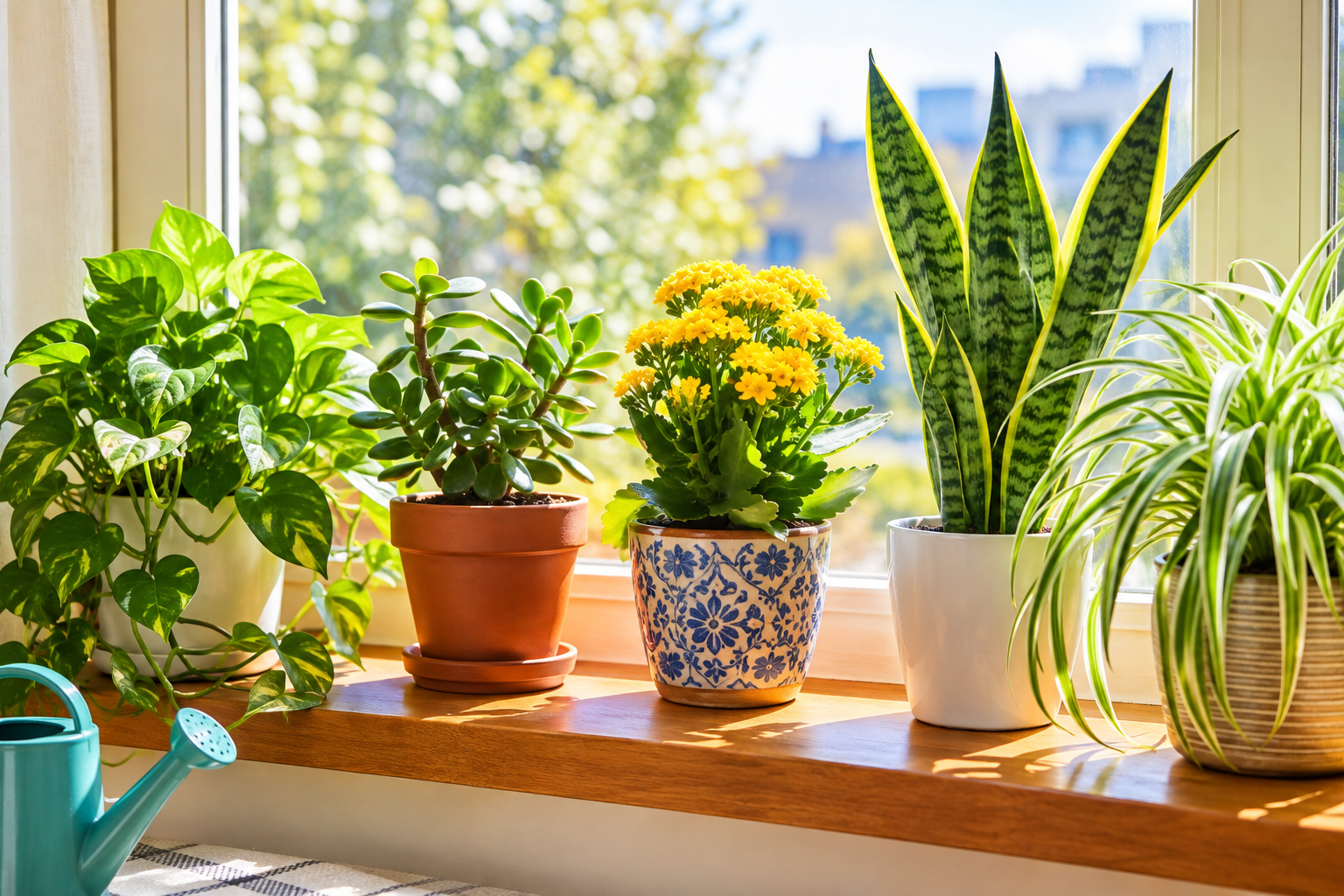

A bright sunny windowsill can be one of the best places in the home to grow plants. When sunlight comes through a window for several hours each day, many plants get the energy they need for healthy leaves, strong growth, and beautiful flowers. In my experience, choosing the right plant for the amount of sunlight available makes indoor gardening much easier.
Not every houseplant enjoys strong sunlight. Some plants prefer low or indirect light, while others can handle several hours of direct sunshine without a problem. If you have a sunny windowsill, you have many interesting options to choose from.
In this guide, I will share some of the best plants for a bright sunny windowsill, along with simple care tips that can help them grow well indoors.
Why Choose Plants for a Sunny Windowsill?
A sunny windowsill provides natural light that many indoor plants need. Good sunlight can help plants produce healthy green leaves and encourage flowering in plants that need plenty of light.
One of the biggest advantages is that you may not need a grow light when your window receives enough natural sunlight. This makes growing plants indoors simpler and more affordable.
However, sunlight through glass can sometimes become surprisingly intense, especially during summer. The temperature near a window can also become warmer than the rest of the room. This means that plant selection and watering are both important.
1. Aloe Vera
Aloe vera is one of my favorite choices for a bright sunny windowsill. It is attractive, useful, and relatively easy to care for.
Aloe vera enjoys plenty of bright light and can tolerate several hours of direct sunlight once it has adjusted to the conditions. Its thick leaves store water, so it does not need frequent watering.
The most important thing is to use a pot with good drainage. I usually recommend allowing the soil to dry before watering again. Keeping the roots constantly wet can cause problems.
Aloe vera is especially suitable for people who sometimes forget to water their plants.
2. Jade Plant
Jade plants are another excellent option for sunny indoor spaces. Their thick, rounded leaves store water, and they can grow into attractive small indoor plants with proper care.
A jade plant generally enjoys bright light and can handle direct sunlight. A sunny windowsill can help it maintain compact growth and healthy leaves.
I recommend using well draining soil and avoiding excessive watering. If the soil remains wet for long periods, the roots may suffer.
With enough light and careful watering, a jade plant can remain attractive for many years.
3. Snake Plant
Snake plants are famous for being tough indoor plants. They can tolerate lower light, but many varieties also grow well in bright light.
A bright sunny windowsill can help a snake plant maintain strong and attractive leaves. However, if the window receives extremely strong afternoon sunlight, it is a good idea to watch the leaves for signs of stress.
One thing I really like about snake plants is their simple watering routine. Their leaves hold moisture, so they usually prefer the soil to dry between waterings.
For beginners looking for an easy houseplant, a snake plant is worth considering.
4. Kalanchoe
If you want flowers on your sunny windowsill, kalanchoe can be an excellent choice. This colorful succulent produces small flowers in shades such as yellow, pink, red, orange, and white.
Kalanchoe enjoys bright light and can do particularly well near a sunny window. Good sunlight can support flowering and help the plant maintain healthy growth.
Like other succulents, kalanchoe does not appreciate constantly wet soil. I prefer allowing the soil to become somewhat dry before watering.
With the right combination of sunlight, drainage, and watering, kalanchoe can bring a cheerful touch of color to your home.
5. Spider Plant
Spider plants are popular indoor plants because they are attractive and relatively easy to grow. They have long, narrow leaves that create a beautiful flowing appearance.
Although spider plants can adapt to different lighting conditions, bright indirect light is often ideal. If your windowsill receives very strong direct afternoon sun, placing the plant slightly away from the glass may help protect the leaves.
Spider plants also produce small plantlets that grow from long stems. These baby plants can eventually be separated and grown into new plants.
For a sunny room, a spider plant can add plenty of greenery without requiring complicated care.
6. Pothos
Pothos is another popular houseplant that can work well in bright indoor spaces. It is particularly attractive when its long vines are allowed to trail from a shelf or windowsill.
Bright indirect light can encourage healthy growth and attractive leaf patterns. Variegated pothos varieties often benefit from good light because insufficient light can cause their patterns to become less noticeable.
I would avoid placing pothos directly against extremely hot glass for long periods. A little distance from the window can provide bright light without excessive heat.
Pothos is also forgiving when you occasionally forget a watering session, making it a useful choice for beginners.
7. Geranium
Geraniums are excellent plants if you want flowers and have a bright sunny window. They generally appreciate plenty of sunlight and can produce colorful blooms when their basic needs are met.
A sunny windowsill can provide the light needed for flowering. Watering should be balanced because geraniums do not like sitting in constantly wet soil.
I also recommend removing faded flowers when possible. This can keep the plant looking tidy and encourage continued flowering.
Geraniums can make an ordinary windowsill feel much more colorful and lively.
8. Herbs for a Sunny Windowsill
A bright windowsill is not only useful for decorative plants. You can also grow several herbs indoors.
Basil is one of the best choices because it enjoys plenty of sunlight. With enough light, warmth, water, and regular harvesting, basil can produce fresh leaves for cooking.
Other herbs that can work well in bright indoor locations include thyme, oregano, rosemary, and chives. Their exact needs are different, so it is important to understand each plant before growing it.
I especially like growing herbs on a kitchen windowsill because fresh leaves are always close when preparing food.
9. Cactus
Cacti are among the best plants for a bright sunny windowsill. Many types naturally grow in environments with intense sunlight, so a bright window can provide suitable conditions.
Their water requirements are also relatively low. The biggest mistake I see with cactus care is overwatering.
Use a container with drainage holes and a suitable cactus or succulent growing mix. Allow the soil to dry before watering again.
Different cactus varieties have different light requirements, but many appreciate strong sunlight.
10. Croton
Croton is an attractive houseplant known for colorful leaves. Depending on the variety, its foliage can include green, yellow, orange, red, and other shades.
Bright light is particularly important for maintaining its colorful appearance. A sunny windowsill can provide the light needed for strong foliage color.
Croton can be more demanding than some of the plants mentioned above. It prefers consistent conditions and should not be moved constantly from one location to another.
If you want a decorative plant with colorful foliage, croton can be a beautiful choice for a bright indoor space.
How Much Sunlight Does a Sunny Windowsill Provide?
Before choosing a plant, I recommend observing your window throughout the day.
A south facing window in the Northern Hemisphere often receives strong sunlight for much of the day. East facing windows generally receive morning light, while west facing windows can receive stronger afternoon sunlight. North facing windows usually receive less direct sunlight.
The exact amount of light also depends on nearby buildings, trees, curtains, window size, and the season.
Instead of choosing a plant based only on the direction of the window, pay attention to how much direct sunlight actually reaches the windowsill.
Tips for Growing Plants on a Sunny Windowsill
One important tip is to avoid watering plants according to a fixed schedule. Instead, check the soil and the plant’s individual needs.
Containers should have drainage holes so excess water can escape. This is particularly important for succulents, aloe vera, cactus, and jade plants.
You should also rotate plants occasionally. A plant may grow toward the window because it is attracted to the light. Rotating the pot can encourage more balanced growth.
Another useful tip is to watch the leaves. Brown patches, scorched areas, sudden wilting, or faded foliage can sometimes indicate that the plant is receiving too much direct sunlight or heat.
During very hot weather, moving a plant slightly away from the glass can help. A bright location does not always have to mean placing the pot directly against the window.
Common Mistakes to Avoid
One common mistake is assuming that every plant loves direct sunlight. Some plants prefer bright indirect light and can suffer when exposed to intense afternoon sunshine.
Another mistake is overwatering. More sunlight does not automatically mean you should water every day. Always consider the soil, pot size, temperature, humidity, and plant variety.
Using a container without drainage is another problem. Even a plant that enjoys plenty of sunlight can develop root problems if excess water has nowhere to go.
I also recommend cleaning dusty leaves occasionally. Dust can cover the leaf surface and make the plant look dull. Gently wiping suitable leaves can help keep your plants looking fresh.
Final Thoughts
A bright sunny windowsill can become a beautiful little indoor garden when you choose plants that match the available light. Aloe vera, jade plants, snake plants, kalanchoe, spider plants, pothos, geraniums, herbs, cactus, and croton are all worth considering, although their individual care needs are different.
From my point of view, the best plant is not necessarily the most attractive one. It is the plant that matches your window, your watering habits, and the amount of attention you can provide.
Start with one or two easy plants and observe how they respond. Once you understand the conditions in your sunny windowsill, you can gradually add more plants and create a healthy, colorful indoor garden.
With the right plant selection, good drainage, proper watering, and suitable sunlight, even a small windowsill can become one of the most enjoyable parts of your home.