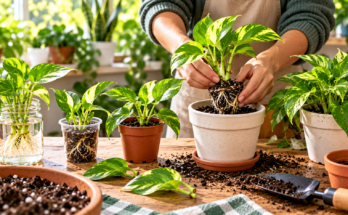
Growing new plants from cuttings is one of my favorite ways to increase the number of plants in a garden without spending much money. However, taking a cutting is only the beginning. The most important part comes afterward, when the cutting has to stay healthy while new roots are developing.
During this stage, a cutting is quite delicate. It does not have an established root system to absorb enough water and nutrients, so it depends heavily on the right moisture, light, temperature, and humidity. If these conditions are not balanced, the cutting can dry out, become weak, or develop rot.
In my experience, keeping plant cuttings healthy is mostly about providing stable conditions rather than constantly disturbing them. Once I understand what a cutting needs, the process becomes much easier. In this guide, I will explain how I care for plant cuttings while roots develop and share simple methods that beginners can follow.
Choose Healthy Cuttings
The health of a cutting starts with the plant material itself. I always prefer taking cuttings from a healthy parent plant because strong stems have a better chance of producing healthy roots.
Avoid stems that have signs of disease, serious insect damage, or severe wilting. A healthy cutting should generally look fresh and firm. Depending on the plant, I may use a stem cutting, leaf cutting, or another suitable propagation method.
I also prefer taking cuttings from active, healthy growth rather than old and damaged sections. Using clean and sharp scissors or pruning shears is important because dirty tools can transfer problems from one plant to another.
Keep the Cutting Moist but Not Waterlogged
One of the biggest mistakes I see with plant cuttings is too much water. It is easy to think that a cutting needs constant moisture because it does not have roots yet. In reality, excessive moisture can create serious problems.
The propagation medium should usually remain lightly moist, but it should not stay soaked. If I am using soil or another growing medium, I check it regularly instead of watering automatically every day.
Too much water can reduce the amount of oxygen around the cutting and create an environment where rot develops easily. On the other hand, allowing the cutting to become completely dry can cause it to wilt before roots have a chance to form.
The goal is to maintain a comfortable middle ground. Moisture should be consistent without making the propagation medium soggy.
Provide Bright but Indirect Light
Light is another important factor when keeping plant cuttings healthy. Newly propagated cuttings usually benefit from bright indirect light rather than intense direct sunlight.
I avoid placing fresh cuttings directly under strong midday sunlight, especially if they are being kept in a small container or covered propagation setup. Direct sunlight can increase temperature and moisture loss, causing the cutting to wilt quickly.
A bright location near a window can work well if the cutting is protected from harsh direct rays. Artificial grow lights can also be useful when natural light is limited.
The important thing is to provide enough light for the cutting to remain active without creating excessive heat or drying conditions.
Maintain Suitable Humidity
Humidity can make a big difference while plant cuttings are developing roots. Since cuttings do not have a functioning root system, they can lose moisture through their leaves faster than they can replace it.
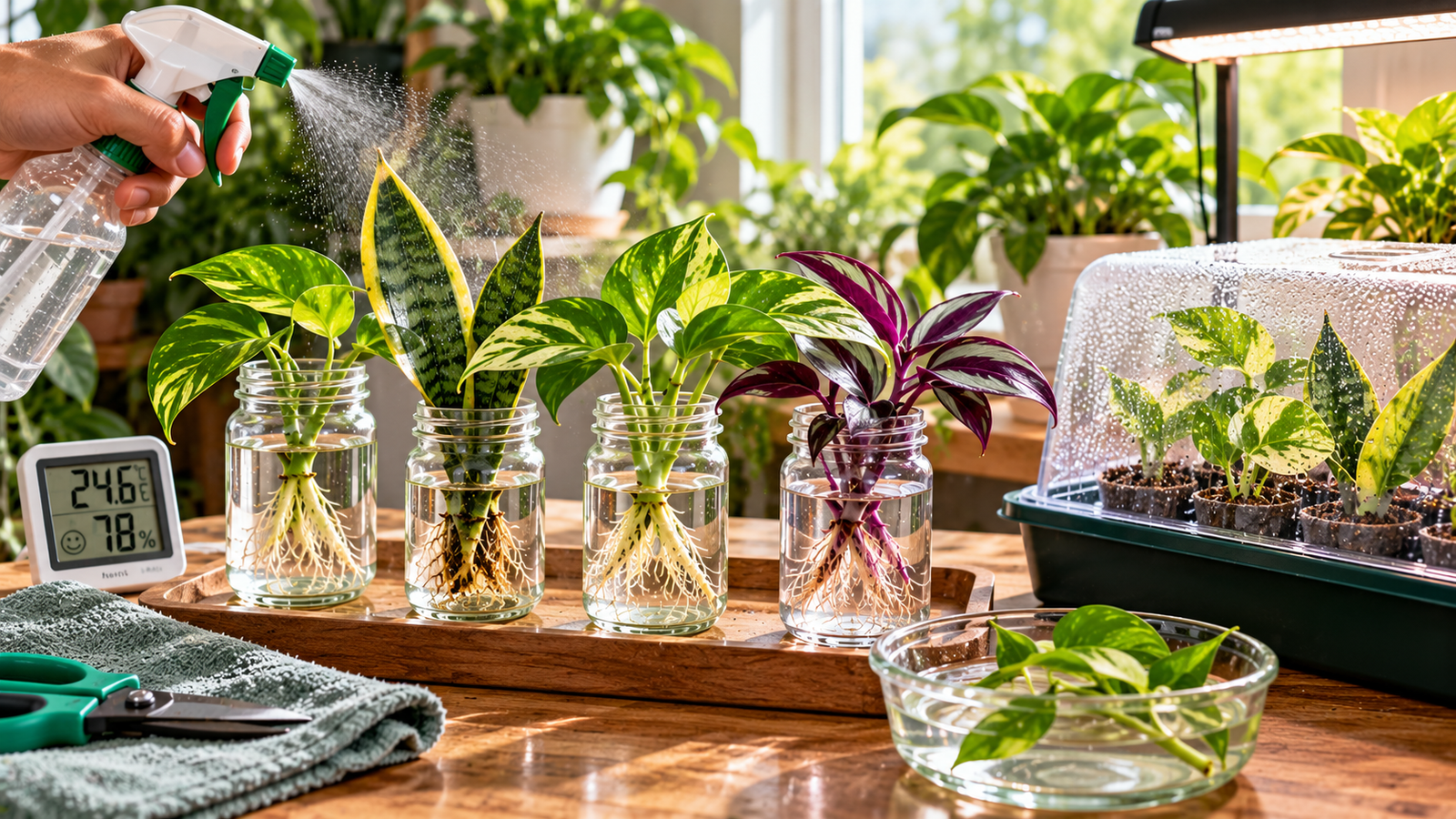
Higher humidity can reduce this moisture loss. This is one reason propagation boxes, humidity domes, and simple covers are commonly used.
However, I would not keep a cutting completely enclosed without ventilation for long periods. Excessive humidity combined with poor airflow can encourage fungal problems.
If I use a cover, I make sure there is some airflow and check the cutting regularly. The purpose is to create a supportive environment, not a completely sealed and stagnant one.
Give the Cutting Good Airflow
Good airflow is often overlooked when people focus on humidity. I think both need to be considered together.
A cutting needs enough humidity to prevent excessive water loss, but it also needs fresh air around its leaves and stem. Stagnant air can increase the risk of fungal growth and other problems.
If the cutting is inside a covered container, opening the cover occasionally can help refresh the air. If several cuttings are placed together, I also avoid overcrowding them.
Good spacing allows air to move around the leaves and makes it easier to notice problems early.
Keep the Temperature Stable
Most plant cuttings develop better when they are kept in a comfortable and stable temperature range suitable for the particular plant.
I avoid placing cuttings near strong heating sources, air conditioners, cold drafts, or areas with sudden temperature changes. A stable environment is usually better than constantly moving the cuttings from one location to another.
Extreme temperatures can stress a cutting and slow down root development. If the room is comfortable for the plant, it is often a good starting point for propagation.
The exact temperature requirement depends on the plant species, so I always consider the natural growing conditions of the plant when possible.
Avoid Fertilizing Too Early
New cuttings generally do not need heavy feeding while they are developing their first roots. This is another area where beginners can sometimes do too much.
A cutting without an established root system cannot use nutrients in the same way as a mature plant. Adding strong fertilizer too early may stress the developing tissue.
I prefer focusing on moisture, light, humidity, and temperature first. Once the cutting has developed a healthy root system and begins producing new growth, gentle feeding may become appropriate depending on the plant and growing medium.
Patience is important during this stage.
Check for Signs of Root Development
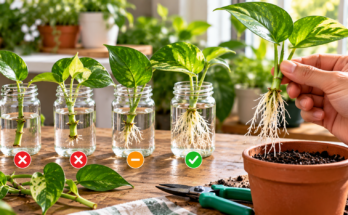
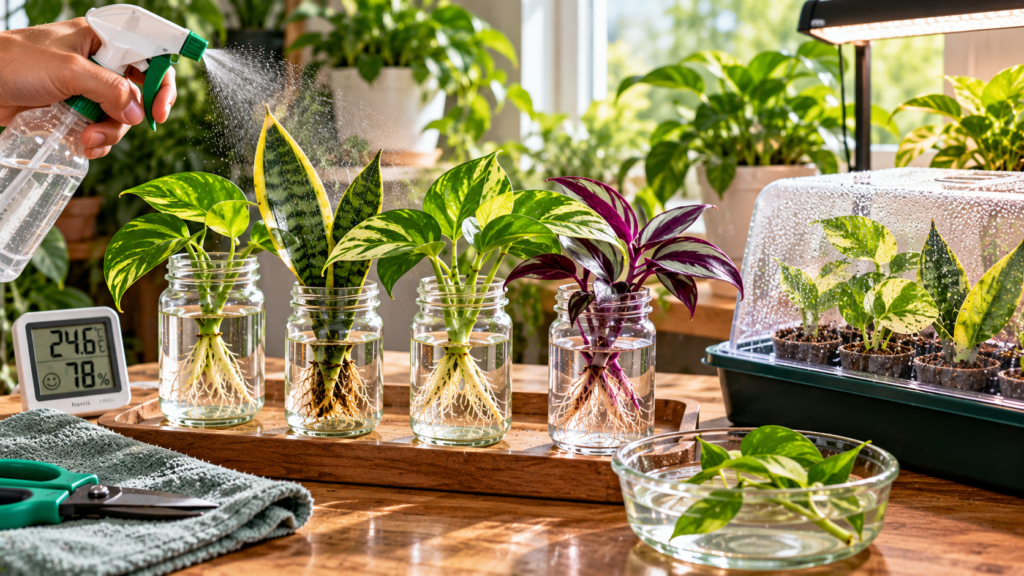
One of the most exciting parts of plant propagation is seeing evidence that roots are developing. However, I try not to disturb the cutting just to check for roots.
If a cutting is growing in water, roots may become visible without disturbing the plant. With soil propagation, it can be harder to know what is happening underneath the surface.
New leaf growth can sometimes be a positive sign, although it does not always guarantee that a strong root system has developed. The best approach is to give the cutting enough time to establish itself.
Pulling the cutting out of the medium repeatedly can damage delicate new roots. I prefer to be patient and observe changes above the surface.
Remove Damaged Leaves Carefully
Sometimes a cutting may lose a leaf or develop a damaged section during propagation. This does not automatically mean that the entire cutting has failed.
If a leaf becomes completely dead, yellow, or badly damaged, removing it can help keep the propagation area cleaner. However, I avoid removing healthy leaves unnecessarily because they can still contribute to the cutting’s energy production.
If rot appears on the stem, the situation is more serious. A healthy section may sometimes be cut above the damaged area and propagated again, depending on the plant.
Always use clean tools when removing damaged tissue.
Protect Cuttings From Pests
Even young cuttings can attract pests. Aphids, fungus gnats, spider mites, and other common garden pests may become a problem depending on the environment.
I recommend checking the leaves, stems, and growing medium regularly. Early detection makes pest management much easier.
When I notice insects, I first identify the problem before applying anything. Using unnecessary treatments can sometimes create more stress for a delicate cutting.
Keeping the propagation area clean and removing dead plant material can also help reduce potential problems.
Do Not Move Cuttings Too Often
I believe one of the simplest propagation tips is to leave the cutting alone as much as possible.
It can be tempting to move a cutting from one window to another, change its container, adjust the water, or check its roots every few days. However, frequent disturbance can create unnecessary stress.
Once I find a suitable location with appropriate light and temperature, I try to maintain those conditions consistently.
Plants need time to adapt and develop. A stable environment usually gives them a better opportunity to produce roots.
Watch for Common Problems
There are several signs that a plant cutting may be struggling.
If the cutting becomes soft and dark near the base, excessive moisture or rot may be involved. If the leaves become extremely dry and crispy, the cutting may be losing moisture too quickly.
Yellowing leaves can have several causes, including natural leaf aging, excess moisture, poor conditions, or stress. The exact cause depends on the plant.
Instead of reacting immediately to one symptom, I look at the overall growing conditions. I check the moisture level, light, airflow, temperature, and condition of the stem.
This approach helps me understand the real problem rather than treating only the visible symptom.
Be Patient With Root Development
Root development does not happen at the same speed for every plant. Some cuttings may produce visible roots relatively quickly, while others can take considerably longer.
The type of plant, temperature, light, moisture, cutting size, propagation method, and time of year can all influence the process.
For this reason, I try not to compare one cutting with another too closely. A cutting that appears to be doing nothing may still be developing roots beneath the surface.
Giving the plant enough time is one of the most important parts of successful propagation.
When Is a Cutting Ready for Transplanting?
A cutting is usually ready for transplanting when it has developed a reasonably strong root system and can support itself after being moved.
For water propagated cuttings, I look for several healthy roots rather than just one tiny root. For cuttings propagated in soil or another medium, signs such as new growth and resistance to gentle movement can indicate that roots have established.
I avoid rushing this stage. Moving a cutting too early can damage young roots and slow its progress.
Once the root system appears established, I gradually introduce the young plant to its new growing conditions.
Final Thoughts
Keeping plant cuttings healthy while roots develop is mainly about balance and patience. The cutting needs enough moisture without becoming waterlogged, enough light without excessive heat, suitable humidity with good airflow, and a stable environment.
From my experience, the biggest mistake is trying to do too much. Plant propagation does not always require complicated equipment or constant attention. A healthy cutting, clean tools, suitable growing conditions, and regular observation can be enough to achieve good results.
I also believe that every cutting teaches something. If one cutting fails, I look at what may have caused the problem and use that experience with the next one. Over time, this makes plant propagation much easier and more enjoyable.
By paying attention to moisture, light, humidity, temperature, airflow, and root development, you can give your plant cuttings a much better chance of becoming strong, healthy plants. The process may require patience, but watching a small cutting develop its first roots and new growth makes the effort worthwhile.