Transplanting newly propagated plants is an exciting step in gardening because it means the small cutting, leaf, or stem you started has developed enough roots to grow on its own. In my experience, this stage needs a little patience because young plants are much more sensitive than established plants. A simple mistake with watering, soil, sunlight, or handling can slow their growth or even damage their new roots.
Learning how to transplant newly propagated plants properly can make a big difference in their survival and future growth. Whether you propagated your plant in water, soil, or another growing medium, the basic goal is the same. You want to move the young plant into a suitable container without causing unnecessary stress.
In this guide, I will explain the process I follow when transplanting newly propagated plants, including how to know when a plant is ready, how to prepare the soil, how to handle young roots, and how to care for the plant after transplanting.
How to Know When a Propagated Plant Is Ready
One of the first things I look for is healthy root development. A cutting does not always need a huge root system before it can be transplanted, but it should have enough roots to support itself after the move.
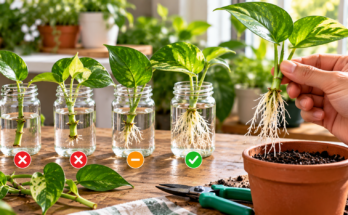
For water propagated plants, I usually wait until the roots are clearly visible and have developed several healthy branches. Very short roots can sometimes survive transplantation, but they are more delicate and need extra care.
For plants propagated in soil, I gently check whether the cutting has started producing new growth. New leaves or visible signs of growth usually indicate that the cutting has begun establishing itself.
The exact timing depends on the type of plant. Some plants root quickly, while others take several weeks. I prefer to watch the plant rather than transplant it based only on a fixed number of days.
Choose the Right Container
The container you choose can affect how well a newly propagated plant grows. I avoid using a very large pot because young plants usually have small root systems. Too much soil around a small root system can stay wet for a long time, increasing the chance of root problems.
A small pot with drainage holes is usually a better choice. The container should be slightly larger than the current root system.
Drainage holes are especially important because excess water needs somewhere to escape. I have found that good drainage is one of the simplest ways to reduce problems after transplanting.
If you are reusing an old container, clean it properly before using it. This helps remove old soil and possible plant residue.
Prepare the Right Potting Mix
Newly propagated plants need a growing medium that provides both moisture and air around their roots. I generally prefer a light and well draining potting mix instead of heavy garden soil.
A basic indoor potting mix can work for many houseplants. Depending on the plant, you can improve drainage by adding materials such as perlite, coarse sand, or other suitable amendments.
The exact mixture should depend on the plant. Succulents and some drought tolerant plants prefer a much faster draining mix, while tropical plants often appreciate a mix that holds some moisture without becoming waterlogged.
Before transplanting, I make sure the potting mix is slightly moist. It should not be soaking wet.
Prepare the New Pot
Once I have the container and potting mix ready, I add enough soil to the bottom of the pot so the plant will sit at the correct depth.
The plant should not be buried too deeply. The roots should be covered, but the stem should generally remain at a similar depth to where it was growing before.
I leave some space near the top of the container so water does not immediately overflow when I water the plant.
This small preparation makes the actual transplanting process easier and reduces the amount of time the young roots are exposed.
Carefully Remove the Young Plant
This is probably the part where I am most careful. Newly developed roots can be extremely fragile, especially roots that formed in water.
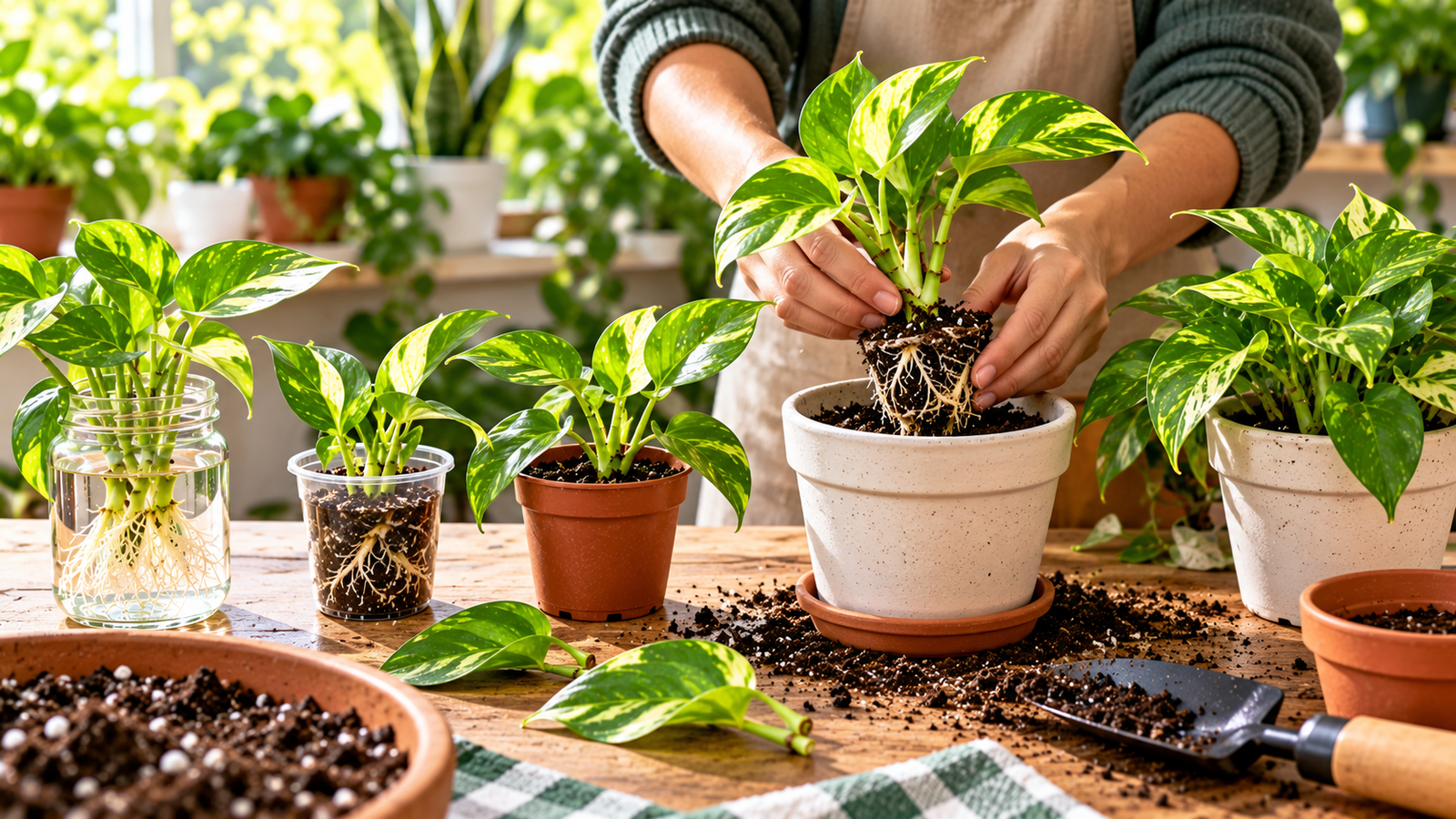
If the plant has been propagated in water, I gently remove it from the water rather than pulling on the stem or leaves.
I avoid touching the roots more than necessary. Even healthy looking roots can break easily when they are young.
If the cutting was propagated in soil, I try to keep as much of the surrounding growing medium attached to the roots as possible. This can reduce disturbance during transplantation.
The main rule I follow is simple: handle the roots gently and do not rush.
Place the Plant in the New Pot
After making a small opening in the potting mix, I place the roots inside the hole. I position the plant so the roots spread naturally rather than being folded tightly.
Then I gently add potting mix around the roots.
I do not press the soil down aggressively. Young roots need air as well as moisture, so compacting the soil too much can create an unhealthy growing environment.
Once the plant is positioned correctly, I lightly firm the soil around the base to keep the cutting upright.
Water After Transplanting
After transplanting, I usually give the plant a gentle watering. The purpose is to settle the soil around the roots and remove large air pockets.
However, I avoid keeping the soil constantly soaked.
The correct amount of water depends on the plant, pot size, soil mix, and growing conditions. Some plants prefer to dry slightly between waterings, while others need more consistent moisture.
For newly transplanted plants, I pay close attention to the soil rather than following a strict watering schedule. If the surface is still wet, I wait.
Give the Plant Gentle Light
One of the common mistakes I see with newly transplanted plants is exposing them to strong direct sunlight immediately.
A young plant may need time to adjust after its roots have been disturbed. I usually place newly transplanted plants in bright, indirect light or another suitable location depending on the plant’s requirements.
After the plant begins showing stable growth, I gradually move it toward its normal lighting conditions.
This adjustment period can help reduce stress, especially for delicate cuttings.
Avoid Fertilizing Immediately
I usually do not rush to fertilize a newly transplanted cutting. The young plant is already dealing with the stress of developing roots and adjusting to a new environment.
Fresh potting soil may already contain some nutrients, depending on the mix.
Once the plant becomes established and starts producing healthy new growth, a suitable fertilizer can be introduced according to the plant’s needs.
Using too much fertilizer on a young plant can cause more harm than good, so I prefer to wait until the plant is actively growing.
Keep an Eye on the Plant
The first few weeks after transplanting are important. I regularly check the leaves, soil moisture, and overall appearance of the plant.
Some temporary drooping can happen after transplantation. This does not always mean the plant is dying. It may simply be responding to the change.
However, persistent wilting, yellowing, soft stems, unpleasant soil odors, or rotting roots can indicate a problem.
If the soil remains wet for too long, I check the drainage and watering routine. If the plant appears dry, I check the soil before adding more water.
Observing the plant is often more useful than following a fixed routine.
Common Mistakes to Avoid
There are several mistakes that can make transplanting newly propagated plants more difficult.
One mistake is using a pot that is much too large. A large container can hold excessive moisture around a small root system.
Another mistake is damaging the roots while moving the plant. Young roots should always be handled gently.
Overwatering is another common problem. Many new gardeners think a recently transplanted plant needs frequent watering, but constantly wet soil can create serious root problems.
Planting the cutting too deeply can also cause stem problems. I always try to maintain an appropriate planting depth.
Another mistake is placing the plant into harsh sunlight immediately after transplanting. Giving it a suitable adjustment period can help reduce stress.
Finally, I avoid making too many changes at once. Transplanting is already a major change for a young plant, so I prefer to keep its environment stable afterward.
How Long Does Transplant Shock Last?
Transplant shock can vary from one plant to another. Some young plants recover within a few days, while others may need several weeks.
During this period, the plant may grow slowly or appear slightly less vigorous than before.
I usually focus on providing stable conditions rather than trying to force faster growth. Good light, suitable moisture, proper drainage, and a comfortable temperature can help the plant adjust naturally.
Once the plant begins producing fresh leaves or new growth, it is usually a positive sign that the roots are becoming established.
When to Move the Plant to a Larger Pot
A newly propagated plant does not need to be moved into a large container immediately.
I wait until the plant has established a healthy root system and begins showing signs that it needs more space. Roots growing through drainage holes, very rapid drying of the potting mix, or noticeably crowded roots can indicate that a larger container may be needed.
When repotting again, I still prefer increasing the container size gradually instead of making a dramatic jump.
Final Thoughts
Transplanting newly propagated plants is not difficult, but it does require gentle handling and patience. In my experience, the most important things are healthy roots, suitable soil, proper drainage, careful watering, and gradual adjustment to light.
I do not try to rush the process. A young plant needs time to settle into its new container and develop a stronger root system.
If you are learning how to transplant newly propagated plants, remember that every plant can respond differently. Watch the plant, check the soil, and make changes according to what you observe.
With the right care, a small cutting can eventually become a healthy and established plant. That is one of the most rewarding parts of plant propagation, and with a little patience, transplanting can be the next successful step in growing your own plants at home.