Indoor plants can make a home look fresh, peaceful, and naturally beautiful. However, one problem I often notice with indoor plants is dust collecting on their leaves. Even when the plant is healthy, dusty leaves can make it look dull and neglected. Regularly cleaning indoor plant leaves is a simple part of plant care that can make a noticeable difference.
Dust can also cover the natural surface of leaves and reduce the amount of light reaching them. Since plants need light for photosynthesis, keeping their leaves clean is a useful habit. The good thing is that cleaning plant leaves does not require expensive products. With a soft cloth, clean water, and a little patience, most indoor plants can be cleaned safely at home.
In this guide, I will explain how to clean dust from indoor plant leaves safely, which methods work best, what mistakes to avoid, and how often you should clean your houseplants.
Why Should You Clean Indoor Plant Leaves?
Indoor plants naturally collect dust because they are surrounded by household air, fabrics, furniture, and other sources of small particles. Over time, a layer of dust can become visible on the leaves.
From my experience, clean leaves simply make a plant look healthier and more attractive. There is also a practical reason for cleaning them. Dust can interfere with the amount of light reaching the leaf surface.
Plants use light to produce energy through photosynthesis. When leaves are covered with a heavy layer of dust, their surface may not receive light as efficiently.
Cleaning also gives you an opportunity to inspect your plants closely. While wiping the leaves, you may notice spider mites, small insects, discoloration, damaged leaves, or other plant problems before they become serious.
What You Need to Clean Plant Leaves
You do not need many supplies to clean indoor plant leaves. I usually recommend keeping the process simple.
You can use:
- A soft microfiber cloth
- Clean lukewarm water
- A small bowl
- A spray bottle if needed
- A clean towel
- A soft makeup brush for delicate leaves
A microfiber cloth works particularly well because it can collect dust without requiring strong pressure. The most important thing is to avoid anything rough that could scratch or damage the leaf surface.
The Safest Method for Cleaning Plant Leaves
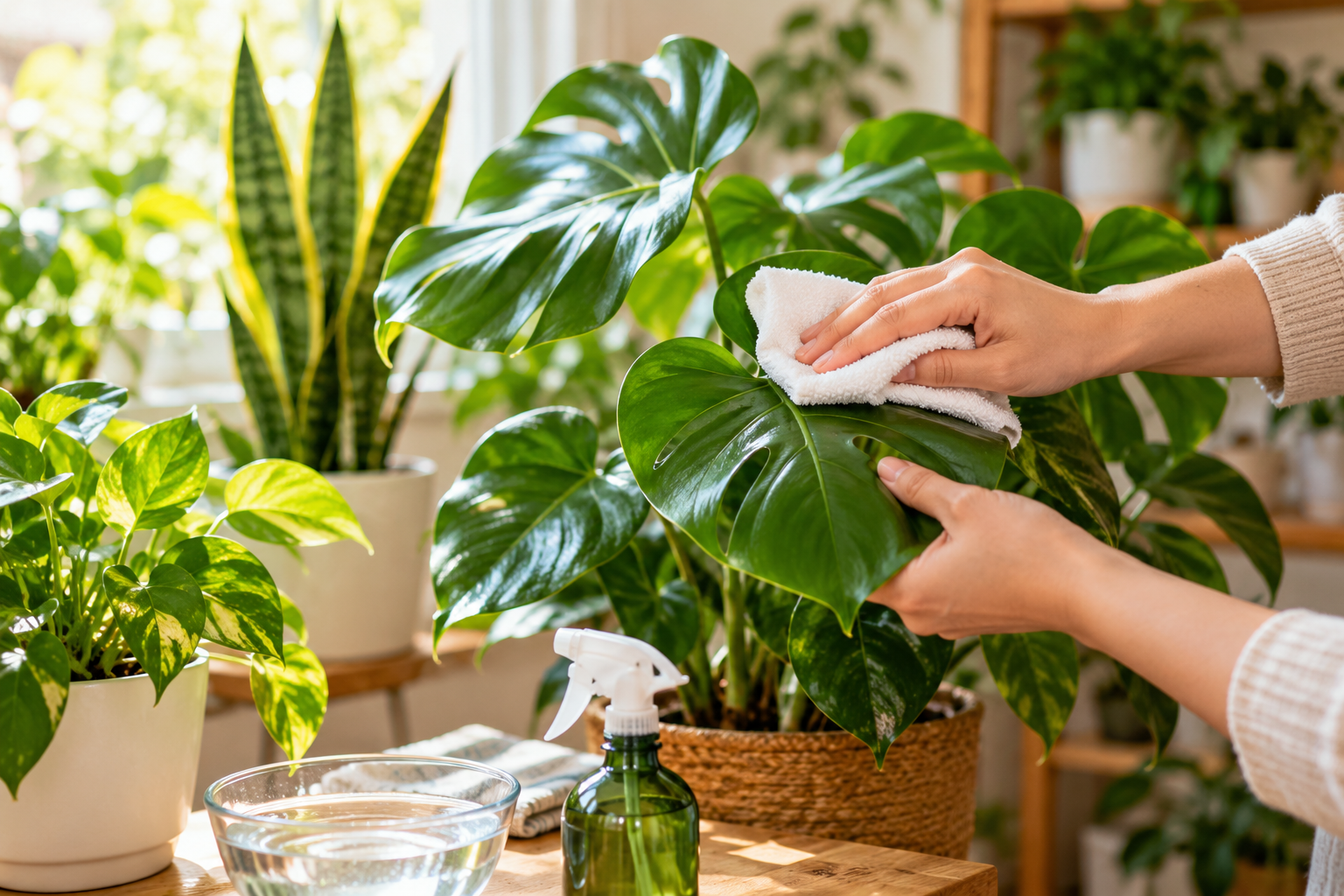
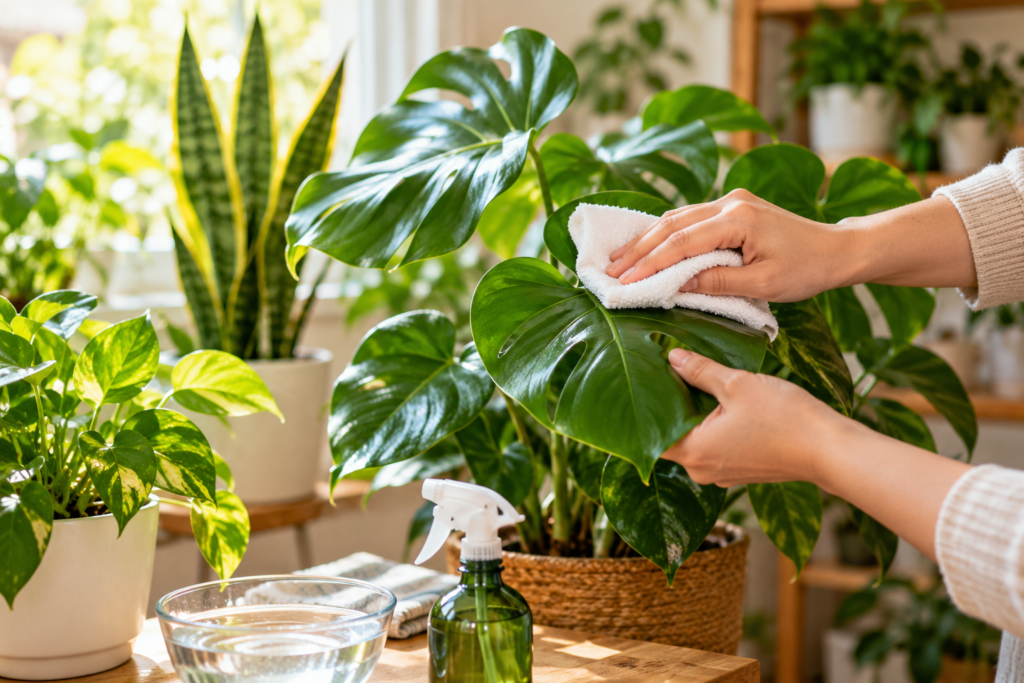
For most indoor plants, gently wiping the leaves with a damp soft cloth is one of the safest cleaning methods.
Start by filling a small bowl with clean water. Dip the cloth into the water and then squeeze it well. The cloth should be damp rather than dripping wet.
Support the leaf gently with one hand. With the other hand, wipe the leaf from the base toward the tip using light pressure.
There is no need to scrub. If the dust does not come away immediately, rinse the cloth and gently wipe the area again.
I prefer this method because it gives me better control over the amount of water and pressure being used. It is especially useful for larger plants with broad leaves.
Clean Both Sides of the Leaves
Many people only clean the upper surface of indoor plant leaves, but dust can also collect underneath.
When possible, carefully inspect the underside of each leaf. You do not have to wipe every leaf aggressively. Simply use a damp cloth and gentle movements.
The underside is also a useful place to look for pests. Small insects and spider mites can sometimes hide there.
While cleaning, pay attention to unusual spots, fine webbing, sticky residue, or tiny insects. If you notice these signs, the plant may need pest treatment rather than simple dust removal.
How to Clean Small and Delicate Leaves
Not every indoor plant has large, strong leaves. Some houseplants have small or delicate foliage that can be damaged by wiping.
For these plants, I recommend using a very soft makeup brush or another clean, soft brush.
Gently brush the dust away without pressing down on the leaves. You can also use a very light mist of clean water if the plant tolerates moisture well.
Avoid rubbing delicate leaves repeatedly. It is better to clean them slowly than to damage them while trying to remove every small particle of dust.
Can You Use a Spray Bottle?
A spray bottle can be useful for some indoor plants, but spraying is not always necessary.
If you choose to mist the leaves, use clean water and a gentle spray. Avoid soaking the foliage, especially if the plant is sensitive to prolonged moisture.
I would also avoid spraying plants in a dark, poorly ventilated room. Wet leaves can take longer to dry under those conditions.
For most plants, I still prefer using a damp microfiber cloth because it removes dust more effectively and allows me to clean individual leaves carefully.
Should You Use Milk or Leaf Shine Products?
I do not recommend using household ingredients or commercial leaf shine products simply to make leaves look glossy.
Products that leave an oily or waxy coating can potentially interfere with the natural surface of the leaf and may attract more dust. Some products may also block parts of the leaf surface.
Clean water is usually enough for routine dust removal.
If your goal is healthy indoor plants, focus on proper light, watering, humidity, soil, and regular cleaning rather than trying to make leaves artificially shiny.
How Often Should You Clean Indoor Plant Leaves?
There is no single cleaning schedule that works for every home.
A good general routine is to check your indoor plant leaves every one to two weeks. If you can clearly see dust, it is probably time for cleaning.
Plants placed near open windows, fans, kitchens, or busy areas may collect dust faster. These plants may need more frequent cleaning.
Plants in cleaner and less dusty rooms may need attention less often.
Instead of following a strict calendar, I prefer checking the leaves regularly and cleaning them whenever they look dusty.
Be Gentle With New Leaves
New leaves can be softer and more sensitive than mature leaves. I recommend being especially careful when cleaning them.
If a leaf is still unfolding, avoid pulling, pressing, or forcing it open. Give it time to develop naturally.
Once the leaf has become stronger and fully opened, you can clean it gently if necessary.
This small amount of patience can prevent unnecessary damage.
Avoid Cleaning Leaves Under Harsh Sunlight
It is better to clean indoor plant leaves away from intense direct sunlight.
If leaves become wet while sitting in strong sunlight, the water can evaporate quickly and may leave mineral spots depending on the quality of your water.
I usually prefer cleaning plants in bright but indirect light. This makes it easier to see the dust while keeping the plant comfortable during the cleaning process.
Do Not Forget the Plant Pot and Surrounding Area
Cleaning the leaves is only one part of keeping indoor plants looking fresh.
Dust can also collect on plant pots, shelves, nearby furniture, and the surface of the soil. After cleaning the leaves, wipe the outside of the pot and clean the area around the plant.
However, avoid disturbing the soil unnecessarily. You do not need to dig around the roots simply because you are cleaning the plant.
Keeping the surrounding area clean can also help reduce the amount of dust that settles on the leaves again.
What About Plants With Fuzzy Leaves?
Plants with fuzzy or hairy leaves require extra care.
Avoid rubbing these leaves with a wet cloth because moisture can remain trapped between the fine hairs.
Instead, use a clean, soft brush to gently remove dust. Work slowly and avoid applying pressure.
The same principle applies to plants with textured or highly sensitive foliage. Always consider the natural structure of the leaf before choosing a cleaning method.
Common Mistakes to Avoid
One of the biggest mistakes is using too much pressure. Leaves are living plant tissues and can be damaged by rough handling.
Another mistake is using dirty cloths. A dirty cloth can simply move dust around instead of removing it. Always use a clean cloth.
I also recommend avoiding household cleaners, soap, oils, and unnecessary polishing products unless a specific plant care recommendation calls for them.
Do not pour large amounts of water directly onto the leaves without knowing whether your plant can tolerate it.
Finally, never rush the process. Cleaning indoor plant leaves is a simple task, so there is no reason to scrub quickly.
A Simple Leaf Cleaning Routine
For a simple routine, I recommend following these steps.
First, inspect the plant and look for visible dust or pests.
Second, prepare a clean microfiber cloth and a small amount of lukewarm water.
Third, dampen the cloth and squeeze out excess water.
Fourth, gently support each leaf with one hand.
Fifth, wipe the leaf carefully from the base toward the tip.
Sixth, check the underside when practical.
Seventh, use a soft brush for delicate or fuzzy leaves.
Finally, allow the plant to remain in a suitable location with good air circulation.
This routine is simple enough to include in your regular houseplant care schedule.
Final Thoughts
Learning how to clean dust from indoor plant leaves safely is one of the easiest ways to improve the appearance of your houseplants. Clean leaves look brighter and healthier, and regular cleaning also gives you a chance to inspect your plants for pests and other problems.
In my opinion, the best approach is to keep things simple. A soft clean cloth and a little water are usually all you need. There is no reason to use harsh cleaners or expensive leaf shine products for routine plant care.
Take your time, use gentle pressure, and choose the cleaning method according to the type of plant you have. With regular attention, your indoor plants can stay clean, attractive, and healthy throughout the year.
A small amount of care can make a surprisingly big difference, and cleaning plant leaves is one simple habit that I believe every indoor gardener can add to their routine.