Indoor plants can completely change the feeling of a room. I personally like keeping plants around my home because they add freshness, color, and a natural touch to otherwise ordinary spaces. However, one thing I have noticed over time is that indoor plants can collect a surprising amount of dust.
When dust builds up on the leaves, even a healthy plant can start looking dull and neglected. Cleaning plant leaves is not difficult, but it should be done carefully because leaves can be more delicate than they appear.
Knowing how to clean dust from indoor plant leaves safely can help plants look fresher while also giving you a chance to check their overall condition. I prefer simple cleaning methods using water, a soft cloth, and gentle handling rather than complicated products.
Why Indoor Plant Leaves Collect Dust
Dust is a normal part of every home. It can come from open windows, fabrics, furniture, carpets, pets, cooking, and everyday movement inside the house.
Plant leaves naturally catch some of these tiny particles.
Broad leaf plants such as monstera, rubber plants, peace lilies, and fiddle leaf figs usually show dust more clearly. When sunlight hits the leaves, a layer of dust can become very noticeable.
Even smaller plants collect dust, although it may be harder to see.
I usually inspect my plants when watering them. If the leaves look faded or I can see a dusty film on the surface, I know they need cleaning.
Why Cleaning Plant Leaves Is Important
Cleaning leaves is not only about appearance.
Plants use their leaves to absorb light. Light plays an important role in photosynthesis, which is how plants produce the energy they need to grow.
A thick layer of dust can reduce the amount of light reaching the leaf surface.
Cleaning also gives me a good opportunity to inspect the plant closely. While wiping the leaves, I can look for yellow spots, brown edges, damaged leaves, or signs of insects.
Small pests such as spider mites and scale insects can sometimes remain unnoticed until the problem becomes serious.
Regular inspection while cleaning can make it easier to identify these issues early.
Use Plain Lukewarm Water
For normal dust, I believe plain water is usually the safest solution.
There is generally no need to use strong cleaners or complicated homemade mixtures.
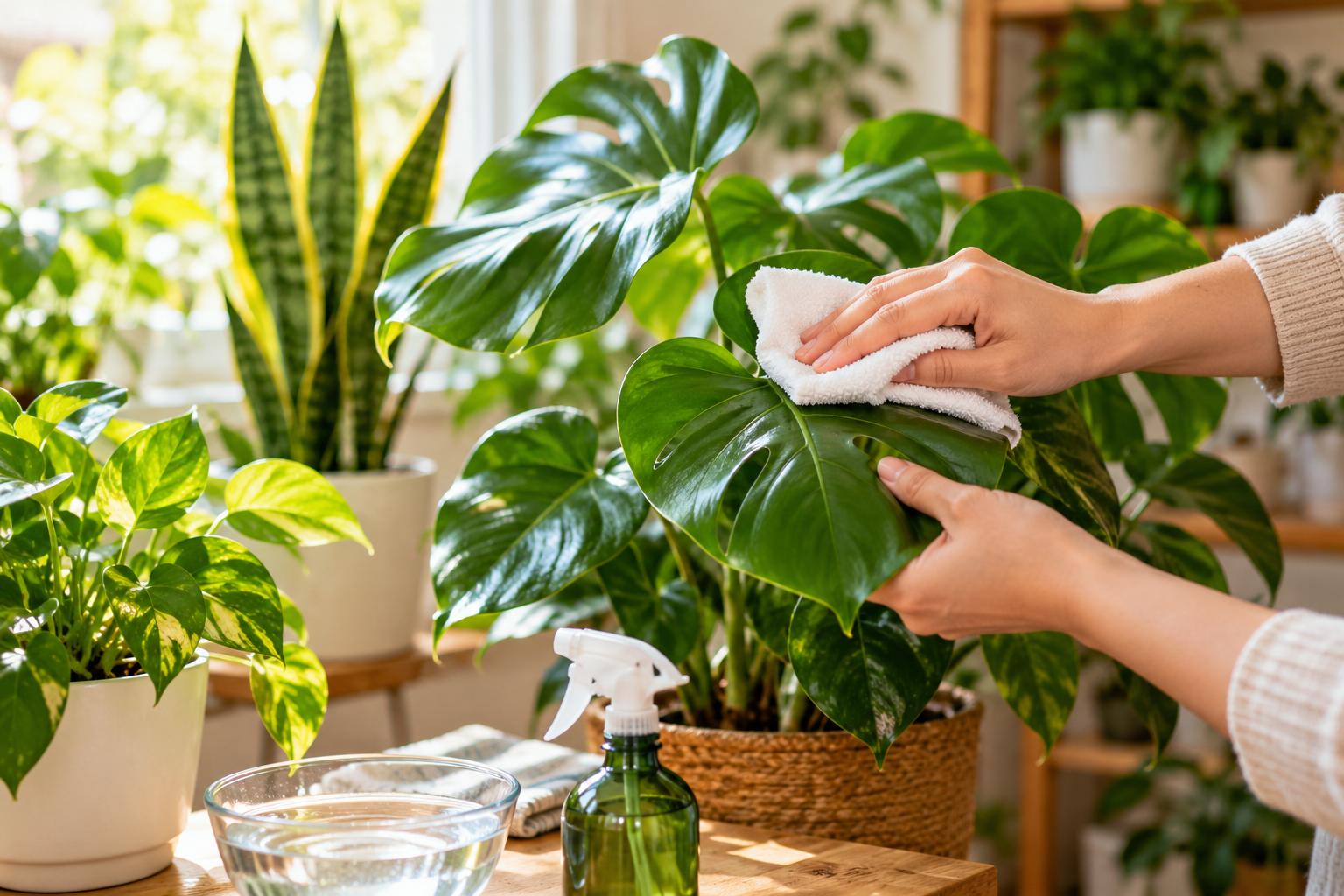
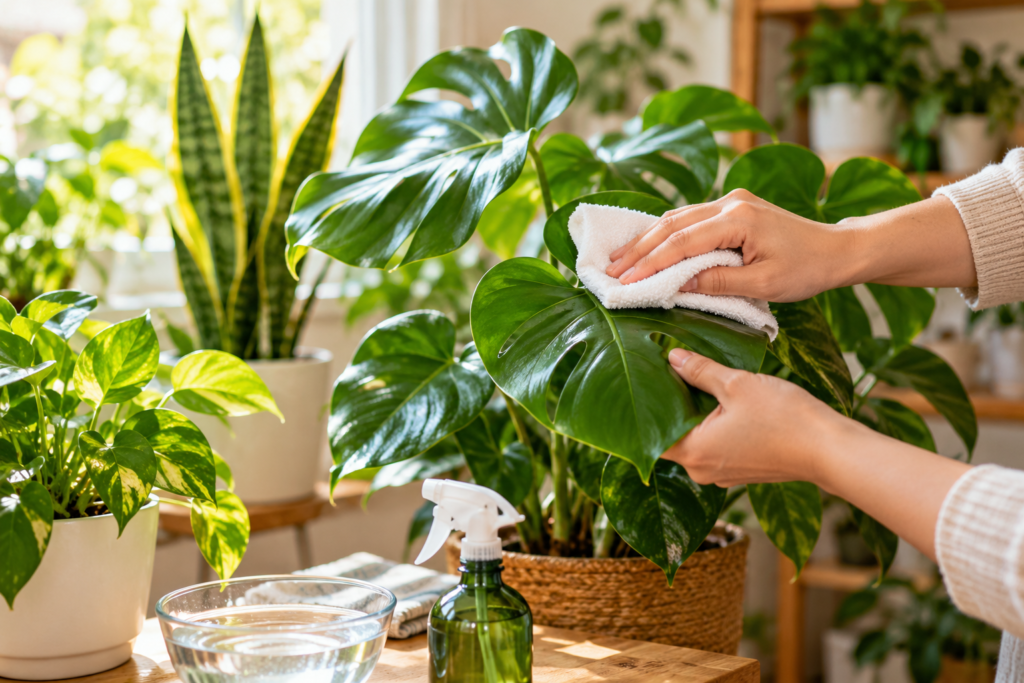
I fill a small bowl with lukewarm water and take a clean, soft microfiber cloth. The cloth should be damp rather than soaking wet.
I gently wipe the upper surface of each leaf.
If there is dust underneath the leaf, I clean that side as well.
Lukewarm water works well because extremely cold or hot water may be uncomfortable for sensitive plants.
I also change the water if it becomes dirty while cleaning several plants.
Support the Leaf With Your Hand
One of the most important things I have learned is to support the leaf while cleaning it.
I place one hand underneath the leaf and gently wipe the surface with the other hand.
This prevents unnecessary pressure on the stem.
I normally wipe from the base of the leaf toward the tip using a smooth motion.
There is no reason to scrub hard.
If dust does not come off immediately, I dampen the cloth again and repeat the process gently.
This method works especially well for plants with large leaves.
Use a Gentle Shower for Large Plants
Cleaning every single leaf can become time consuming if a plant is large and full.
For bigger plants, I sometimes use a shower.
I place the plant in the shower, bathtub, or large sink and use a gentle stream of lukewarm water.
The water pressure should remain low.
Strong water pressure can damage leaves, break stems, or disturb the soil.
If the plant has already been watered recently, I sometimes cover the soil so it does not become overly wet during cleaning.
After rinsing the plant, I allow excess water to drain completely.
I leave the plant in a bright area with indirect light until the leaves are mostly dry.
How I Clean Plants With Small Leaves
Plants with many small leaves can be difficult to clean individually.
In these situations, gentle rinsing is usually easier.
If the plant is suitable for rinsing, I place it under a soft stream of water and carefully wash away the dust.
For fragile plants, I may use a very soft brush.
I gently move the brush across the leaves to remove loose dust.
The important thing is to avoid bending or crushing small stems.
Be Careful With Fuzzy Leaves
Not every indoor plant should be cleaned with a wet cloth.
Some plants have soft or fuzzy leaves.
African violets are a good example.
For these plants, I prefer using a clean and completely dry soft brush.
A small unused makeup brush or soft artist brush can work well.
I lightly brush away the dust without pressing hard.
This is much safer than rubbing fuzzy leaves with a wet cloth.
Understanding the type of plant you have is important because different leaves respond differently to moisture.
Avoid Using Leaf Shine Products
There are many commercial products that promise shiny plant leaves.
Personally, I do not think they are necessary for routine cleaning.
Some leaf shine products can leave residue on the surface of the leaf.
That coating may att