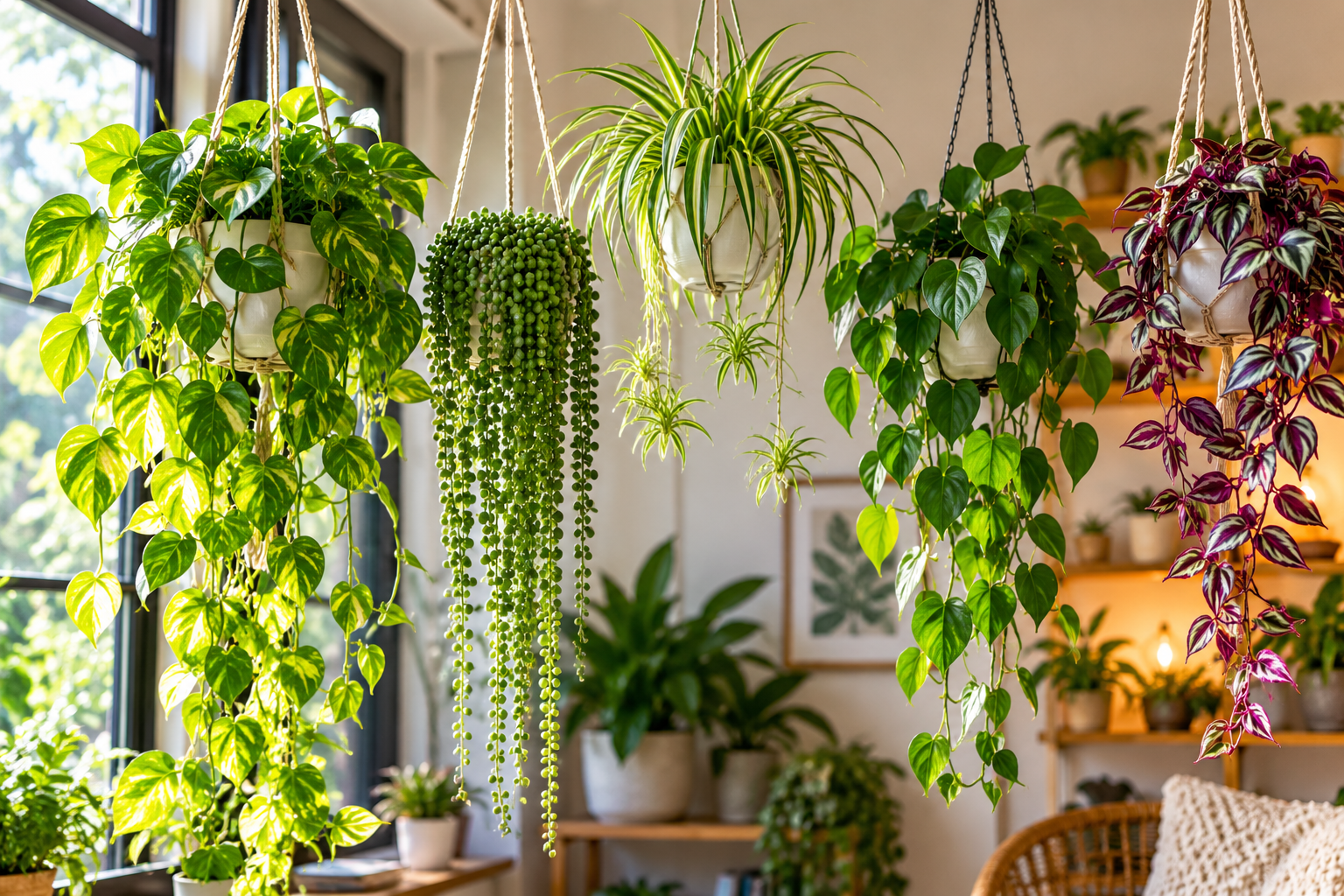
Indoor plants can change the entire atmosphere of a home. I have always felt that greenery makes a room look more peaceful, fresh, and welcoming. However, not everyone has enough floor space for large pots. This is where hanging plants become extremely useful.
The best hanging plants for indoor spaces allow us to add natural beauty without using valuable floor space. They can be placed near windows, in empty corners, above shelves, or in areas that otherwise look plain. Their trailing leaves also create a soft and stylish appearance that works well in bedrooms, living rooms, kitchens, and even home offices.
Over time, I have noticed that some hanging plants are much easier to manage indoors than others. Light conditions, watering needs, humidity, and growth habits all play an important role. In this article, I am sharing the hanging plants that I personally find most suitable for indoor spaces.
Why Hanging Plants Are Great for Indoor Spaces
One reason I like hanging plants is that they make good use of vertical space. Instead of placing every plant on the floor or on furniture, I can hang a few plants and create a more balanced indoor garden.
They are also useful in small apartments. When space is limited, hanging plants allow me to enjoy greenery without making the room feel crowded.
Another advantage is their decorative value. Many hanging plants develop long vines or flowing leaves. These plants naturally draw attention and can make simple walls, windows, and corners look more interesting.
I also like the flexibility they provide. Some plants can hang from ceiling hooks, while others can be placed in elevated pots, wall planters, or high shelves.
Pothos
Pothos is one of my favorite hanging plants for indoor spaces. It is attractive, easy to maintain, and suitable for beginners.
The plant produces heart shaped leaves on long trailing vines. Depending on the variety, the leaves may be deep green, golden, white, or lightly patterned.
I usually keep pothos in bright indirect light, although it can also survive in lower light conditions. Strong direct sunlight is not necessary and can sometimes damage the leaves.
Watering is also simple. I normally wait until the upper layer of soil feels dry before watering again.
Pothos grows quickly under good conditions, so occasional trimming helps keep the plant looking neat and full.
Spider Plant
Spider plants are another excellent choice for hanging baskets. Their long narrow leaves naturally arch downward, creating a full and attractive appearance.
One thing I enjoy about spider plants is the small plantlets they produce. These baby plants hang from long stems and make the plant look even more decorative.
Spider plants usually perform well in bright indirect light. They can tolerate moderate indoor light, but strong direct sunlight may cause leaf damage.
I water them when the soil starts to dry slightly. I also make sure the pot has proper drainage.
For beginners, spider plants are a practical choice because they are generally easy to care for and easy to propagate.
Heartleaf Philodendron
Heartleaf philodendron is one of the best hanging plants for indoor spaces because of its simple beauty and easy care needs.
It has smooth green leaves shaped like hearts and long vines that look beautiful when allowed to trail naturally.
I like placing this plant on a high shelf or in a hanging basket where its vines have enough room to grow.
Bright indirect light is ideal, but the plant can also tolerate slightly lower light levels. I water it when the upper part of the soil becomes dry.
Regular trimming encourages fuller growth and prevents the vines from becoming too long.
String of Hearts
String of hearts is a beautiful option for people who want something more delicate and decorative.
The plant develops thin vines covered with small heart shaped leaves. Its appearance is different from most common indoor plants, which is why I think it works especially well in bedrooms and modern living spaces.
I usually place string of hearts near a bright window where it can receive indirect sunlight.
It does not need constant watering. I allow the soil to dry between watering sessions because too much moisture can cause root problems.
The vines can grow quite long, so a hanging basket is one of the best ways to display this plant.
String of Pearls
String of pearls is another unique hanging plant that immediately attracts attention.
Its leaves are small, round, and shaped like tiny green beads. These leaves grow along long trailing stems, creating a very distinctive appearance.
I prefer keeping string of pearls in bright indoor light. A location near a sunny window usually works well as long as the light is not excessively harsh.
The plant prefers well drained soil and does not like excessive watering.
For me, string of pearls is more suitable for people who already understand basic indoor plant care because careful watering is important.

Boston Fern
Boston fern is a good option when I want a fuller and more dramatic hanging plant.
Its long green fronds create a lush appearance that can make a room feel more natural.
Unlike some other hanging plants, Boston fern prefers consistent moisture and higher humidity.
I find that bathrooms and bright kitchens can sometimes provide suitable conditions, especially when there is enough indirect light.
Dry indoor air may cause the tips of the fronds to turn brown, so maintaining reasonable humidity can help keep the plant healthy.
Boston ferns require slightly more care, but their appearance can make the effort worthwhile.
Tradescantia
Tradescantia is a good choice if you want more color in your indoor plant collection.
Different varieties can have leaves in shades of green, purple, silver, and pink.
I like placing Tradescantia in a hanging basket near bright indirect light because stronger light usually helps maintain its attractive leaf colors.
The plant grows relatively quickly, so I trim it regularly to keep the shape compact.
Another advantage is that cuttings can often be propagated easily.
This makes Tradescantia a useful option for anyone who enjoys growing new plants from existing ones.
English Ivy
English ivy has a classic appearance that works well in many interior styles.
Its vines can trail from baskets or grow around supports, shelves, and decorative structures.
I prefer placing indoor ivy where it receives good indirect light and air circulation.
The soil should remain slightly moist, but I avoid keeping it constantly wet.
Regular pruning helps control growth and keeps the plant looking tidy.
When grown indoors, English ivy can create a beautiful green feature without taking up much floor space.
Trailing Peperomia
Trailing peperomia varieties are another good option for small indoor spaces.
These plants usually have compact leaves and softer trailing stems.
I like peperomia because many varieties remain relatively small. This makes them useful for bedrooms, offices, small apartments, and shelves.
Bright indirect light usually works best. I allow the soil to dry slightly before watering again.
Overwatering can create problems, so I always check the soil before adding more water.
How I Choose the Best Hanging Plant
Before buying a hanging plant, I first look at the light available in the room.
If the area receives bright indirect sunlight, I have many choices. String of hearts, spider plants, pothos, and philodendrons can all perform well in suitable conditions.
In darker rooms, I usually choose more adaptable plants such as pothos.
I also think about watering requirements.
Some plants prefer slightly moist soil, while others need the soil to dry between watering sessions.
Choosing a plant that matches my normal routine makes plant care much easier.
Room size is another important factor. Large ferns may look beautiful in spacious areas, while compact trailing plants can be more practical in small rooms.
Best Places to Hang Indoor Plants
Choosing the right location is just as important as choosing the plant itself.
I often place hanging plants near windows where they receive natural light.
Empty corners are also ideal because a hanging plant can make an unused area look more complete.
Shelves provide another good option. Instead of hanging the plant from the ceiling, I can place a trailing plant on a high shelf and allow the vines to fall naturally.
Bathrooms can work well for humidity loving plants if there is enough light.
Bedrooms can also benefit from hanging plants because the greenery can make the room feel calmer and more comfortable.
Important Safety Considerations
Whenever I hang a plant, I make sure the hook or support is strong enough to hold the weight of the pot.
A freshly watered planter can become much heavier than a dry one.
I also avoid hanging heavy pots directly above beds, sofas, computers, or areas where people frequently walk.
Secure installation is important for both the plant and the people living in the home.
If there are pets or young children in the house, I also check whether a particular plant may be harmful if eaten.
Simple Care Tips for Hanging Plants
I have learned that regular observation is one of the best ways to care for indoor plants.
Instead of watering automatically on a fixed day, I check the soil first.
I also inspect the leaves for yellowing, dryness, or signs of pests.
Rotating hanging pots every few weeks can help the plant receive more balanced light.
Pruning is useful for plants that grow long vines. Cutting unhealthy or overly long stems can encourage fuller growth.
I also clean dusty leaves when necessary because clean leaves look better and receive light more effectively.
Final Thoughts
The best hanging plants for indoor spaces combine beauty, practicality, and manageable care requirements.
Pothos, spider plants, heartleaf philodendron, string of hearts, string of pearls, Boston fern, Tradescantia, English ivy, and trailing peperomia can all make attractive additions to an indoor garden.
Personally, I prefer choosing plants based on the actual conditions inside my home rather than simply buying the most attractive option.
Light, humidity, watering habits, and available space should all be considered.
Even a single hanging plant can make a noticeable difference in a room. When placed in the right location and given proper care, hanging plants can add color, texture, and natural beauty without taking up valuable floor space.
For anyone who wants to create a greener home, starting with one or two easy hanging plants is a simple and practical approach.