Creating a colorful garden is one of the most enjoyable parts of gardening. I personally believe that a garden looks much more attractive when plants are arranged at different heights instead of placing everything at the same level. Different plant heights create depth, make the garden feel fuller, and allow each flower and plant to become part of the overall design.
You do not need a huge garden or expensive plants to create this effect. With a little planning, you can combine tall plants, medium sized plants, and low growing plants to create a beautiful and colorful garden at home. The important thing is to understand how plants grow and how their colors, shapes, and heights work together.
In this guide, I will share how I would create a colorful garden using different plant heights, along with some practical ideas that can help beginners design a garden that looks balanced and lively.
Why Plant Height Matters in Garden Design
Plant height plays an important role in garden design because it gives the garden a natural layered appearance. If every plant is the same height, the garden can sometimes look flat and less interesting.
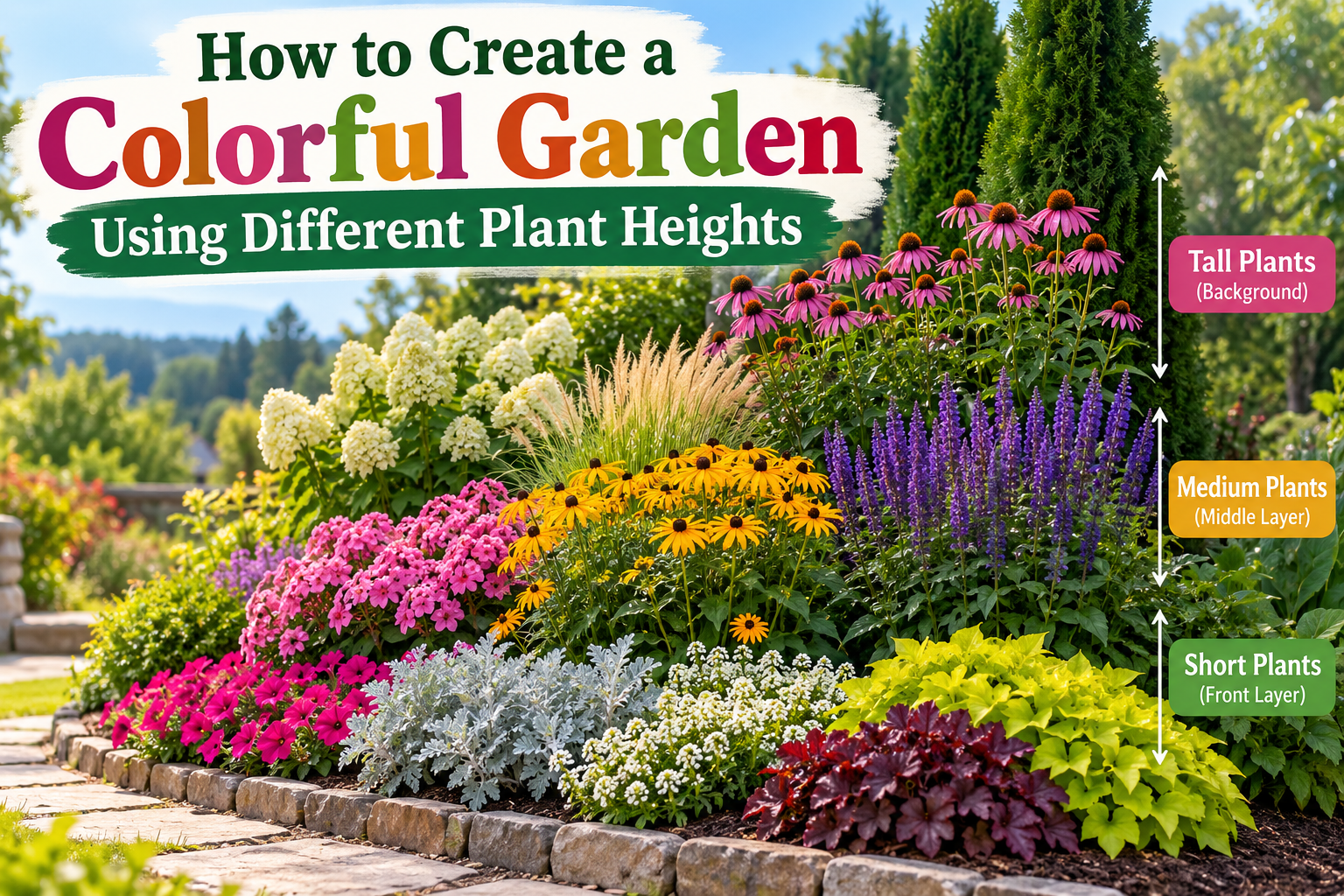
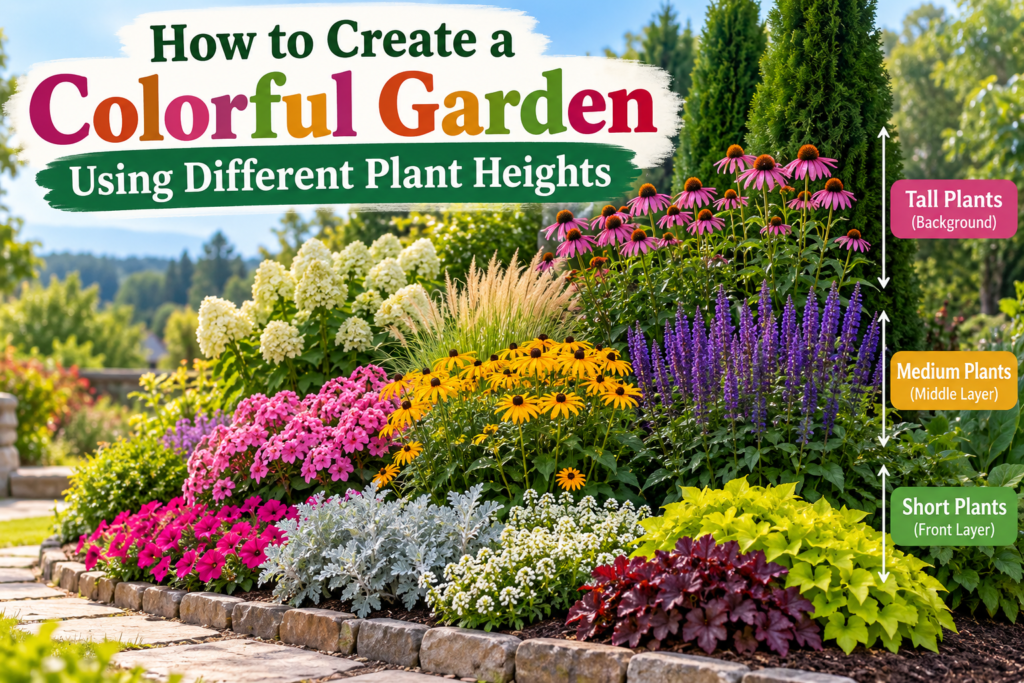
When I use plants with different heights, I can create several visual levels. Tall plants provide a background, medium plants fill the middle area, and shorter plants create a colorful border near the front.
This arrangement also helps prevent smaller plants from being hidden behind larger ones. Each plant gets its own space to display its flowers and leaves.
Different plant heights can also make a small garden appear larger. The layers create depth, which gives the garden a more organized and spacious appearance.
Start With a Simple Garden Plan
Before buying plants, I recommend making a simple garden plan. You do not need professional drawing skills. Even a rough sketch on paper can help you decide where different plants should go.
First, look at the space available in your garden. Check how much sunlight it receives and notice which areas are sunny, partially shaded, or mostly shaded.
Then think about the height of the plants you want to grow. A simple arrangement can include tall plants at the back, medium height plants in the middle, and short plants at the front.
If your garden can be viewed from several directions, you may need to arrange the plants differently. In that situation, taller plants can be placed toward the center while shorter plants surround them.
Choose Tall Plants for the Background
Tall plants are useful for creating the highest layer of a colorful garden. They naturally draw attention and can make the garden look more dramatic.
Depending on your climate and growing conditions, you can consider plants such as sunflowers, hollyhocks, cosmos, delphiniums, or tall ornamental grasses.
When choosing tall plants, I would avoid planting too many varieties close together. Tall plants can become crowded as they grow, and their leaves may block sunlight from reaching shorter plants.
It is also important to consider mature plant height rather than the size of the plant when you purchase it. A small plant at the garden center may eventually become several feet tall.
Place tall plants toward the back if the garden is viewed mainly from the front. This allows their flowers to rise above the other plants without covering them.
Add Medium Height Plants in the Middle
Medium height plants are the connection between tall background plants and short foreground plants. They help make the transition between different levels look natural.
Some popular options include marigolds, zinnias, coneflowers, salvias, lavender, and medium sized ornamental plants.
I like using medium height flowers with different colors because they can create a strong visual connection between the taller and shorter plants.
For example, you could combine yellow flowers with purple flowers or pink flowers with white flowers. You can also use green foliage to separate bright colors and prevent the garden from looking too busy.
Medium height plants can also be repeated throughout the garden. Repeating the same flower in different areas creates a more connected and organized appearance.
Use Short Plants to Create a Colorful Border
Short plants are especially useful around the front edges of a garden. They create a soft transition between the garden and paths, lawns, or other outdoor spaces.
Some short flowering plants include pansies, alyssum, petunias, lobelia, dwarf marigolds, and creeping flowers.
Ground covers can also work well in this layer. They spread across the soil and help fill empty spaces between larger plants.
When creating a colorful garden, I like using short flowers with strong colors near the front. This makes their flowers easier to notice and gives the garden a welcoming appearance.
You can also use small plants along pathways or around garden borders to create a neat frame.
Combine Different Flower Colors
Plant height is only one part of creating a beautiful garden. Color is equally important.
I recommend choosing a simple color theme instead of using every available color. Too many colors can sometimes make a garden look confusing.
You could choose warm colors such as red, orange, and yellow for a bright and energetic garden. Another option is to use cool colors such as blue, purple, and white for a calmer appearance.
You can also create contrast by placing colors opposite each other. For example, purple flowers can look beautiful beside yellow flowers.
White flowers are especially useful because they can help separate stronger colors and make the entire garden look brighter.
Mix Flower Shapes and Leaf Textures
A colorful garden becomes even more interesting when plants have different flower shapes and leaf textures.
For example, you can combine plants with round flowers, tall flower spikes, small clusters, and delicate blooms. Different leaf shapes can also add variety even when plants are not flowering.
I think this is an important part of garden design because flowers do not bloom throughout the entire year. Attractive foliage can keep the garden looking interesting between flowering periods.
Try combining broad leaves with narrow leaves and soft foliage with stronger textures. This creates visual variety without requiring more colors.
Think About Sunlight Requirements
One common mistake I see in garden planning is choosing plants based only on appearance. A beautiful plant will not perform well if it is placed in the wrong growing conditions.
Before choosing plants, check their sunlight requirements. Some plants need full sun, while others prefer partial shade.
Tall plants can sometimes create shade for shorter plants. This is why it is important to understand how much sunlight each plant needs before deciding where to place it.
If a short plant requires full sunlight, avoid placing it directly behind a tall plant that will block the sun for most of the day.
Good placement can make a major difference in plant growth and flower production.
Consider Plant Spacing
Plant spacing is another important part of creating a colorful garden using different plant heights.
When plants are young, it can be tempting to place them close together because the garden may look empty. However, plants often grow much wider than expected.
I prefer leaving enough space for each plant to reach its mature size. Proper spacing improves air circulation and makes maintenance easier.
Crowded plants can also compete for sunlight, water, nutrients, and growing space.
A garden may look slightly empty at first, but with time the plants will fill the available space naturally.
Create Repeated Color Groups
One simple design technique is to repeat colors throughout the garden.
Instead of placing one red flower in one corner and another red flower somewhere completely different, you can create small groups of the same color.
For example, you might plant groups of yellow flowers near the front and repeat yellow flowers among medium height plants.
This repetition helps the garden feel more intentional. It also creates a visual connection between different sections.
You do not have to repeat every plant. Sometimes repeating a color or flower shape is enough to make the garden look coordinated.
Add Foliage for Extra Interest
Flowers usually receive the most attention, but foliage is equally valuable in garden design.
Green leaves provide a background for colorful flowers and help connect plants of different heights. Plants with silver, dark green, yellow green, or variegated leaves can also add additional visual interest.
I recommend including several foliage types rather than depending entirely on flowers. This helps the garden remain attractive even when some flowers are not blooming.
Ornamental grasses are another useful choice because they can add height, movement, and texture.
Maintain the Different Plant Levels
Once your colorful garden is planted, regular maintenance will help preserve the design.
Water plants according to their individual needs and check the soil regularly. Remove dead flowers when appropriate because this can help some flowering plants produce more blooms.
Pruning may also be necessary for certain plants. If a tall plant becomes too large, it can cover nearby plants and disturb the layered design.
I also recommend checking for weeds, pests, and damaged leaves regularly. Small problems are generally easier to manage when they are noticed early.
Make Seasonal Changes
A garden does not need to look exactly the same throughout the year. You can choose plants with different flowering periods so that some part of the garden remains colorful during different seasons.
For example, spring flowers can provide early color, while summer flowers can create strong displays during warmer months. Seasonal plants can then add interest later in the year.
This approach allows you to enjoy a changing garden rather than depending on one group of plants for the entire year.
Final Thoughts
Creating a colorful garden using different plant heights is a simple way to make an outdoor space look fuller, more balanced, and more attractive. The basic idea is to create layers by combining tall plants in the background, medium height plants in the middle, and shorter plants toward the front.
From my experience, the best garden designs are not necessarily the most complicated ones. A simple combination of suitable plants, thoughtful colors, good spacing, and different heights can create a beautiful result.
Before planting, take some time to understand your garden space, sunlight conditions, soil, and the mature size of your plants. Then choose colors and plant shapes that work well together.
Most importantly, do not be afraid to experiment. Gardening is a learning process, and every season gives you an opportunity to improve your garden. With a little patience and planning, you can create a colorful garden where plants at different heights work together naturally and make your outdoor space more enjoyable.