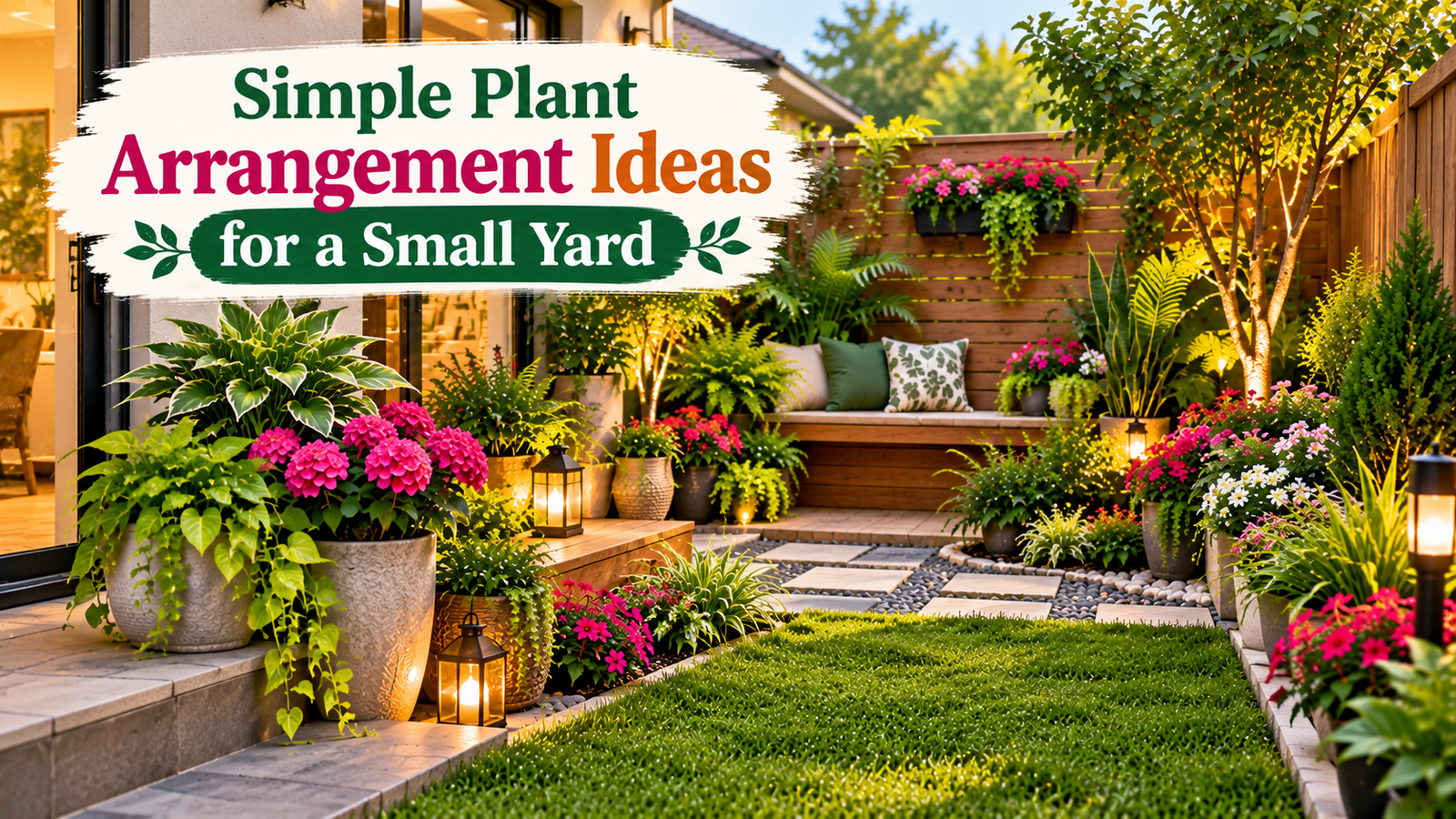
A small yard can still look beautiful, green, and welcoming with the right plant arrangement. In my experience, having a limited outdoor space does not mean I have to give up on gardening. The main thing is to use the available space carefully and choose plants that work well together.
When plants are arranged properly, even a small yard can feel organized and spacious. Instead of filling every empty area with plants, I prefer to create a simple layout where every plant has its own place. This makes the garden easier to maintain and also gives it a more attractive appearance.
In this article, I will share some simple plant arrangement ideas for a small yard that can help create a beautiful garden without making the space feel crowded.
Start by Understanding Your Yard
Before choosing plants, I think it is important to understand the space you already have. Look at how much sunlight reaches different areas of the yard during the day. Some areas may receive full sunlight, while others may remain shaded for several hours.
I also recommend checking the soil and observing where water collects after rain or watering. These simple observations can help you choose suitable plants.
Measure the available space if possible. Knowing the approximate size of your yard makes it easier to decide how many plants you actually need.
One common mistake is buying too many plants before planning the arrangement. In a small yard, this can quickly make the garden look crowded.
Create a Simple Plant Border
One of the easiest small yard landscaping ideas is creating a plant border around the edges. This allows you to keep the center of the yard open while still adding plenty of greenery.
You can plant flowers, small shrubs, or decorative foliage plants along a fence or wall. Arrange taller plants toward the back and shorter plants toward the front.
A plant border can also make the yard look more organized. I especially like this idea because it uses areas that might otherwise remain empty.
For a simple look, choose two or three plant varieties instead of using too many different types. Repeating the same plants along the border can create a balanced appearance.
Use Different Plant Heights
Using plants with different heights is another simple way to improve a small yard. If every plant is the same height, the garden can sometimes look flat.
I prefer placing taller plants toward the back or in corners. Medium sized plants can go in the middle, while smaller flowers and ground covering plants can be placed near the front.
This creates layers and makes the garden more interesting without requiring extra space.
For example, you can use a small shrub in the back, medium flowering plants in the middle, and low growing plants around the edges. The different heights create a natural flow.
Make Use of Garden Corners
Corners are often ignored in small yards, but they can become some of the most useful planting areas.
A single large pot, small tree, or group of plants can transform an empty corner. I like using corners for plants that need a little more height because they do not interfere with the main walking area.
You can also place several pots of different sizes together in one corner. Keep the tallest container toward the back and smaller containers in front.
This arrangement creates a small garden display while keeping the rest of the yard open.
Try Container Gardening
Container gardening is especially useful when you have limited ground space. Pots allow you to grow plants without creating permanent garden beds.
You can place containers along walls, near entrances, on patios, or in corners. Another advantage is that containers can be moved whenever you want to change the garden arrangement.
For a small yard, I recommend choosing containers that are suitable for the size of the plants. Very large pots can take up valuable space, while extremely small containers may not provide enough room for plant roots.
Using containers of different heights can also add visual interest.
Arrange Plants Around a Small Path
A small path can make a yard feel more organized. You do not need a large walkway. Even a narrow path through the garden can create a clear separation between planting areas.
I like placing low growing plants along the sides of a path. Avoid using plants that spread too much into the walking area because they can make the space difficult to use.
A simple path made from stepping stones can work well in a small yard. Plants around the stones can soften the appearance and create a natural garden feeling.
Use Vertical Space
When the ground area is limited, looking upward can provide more gardening opportunities. Vertical gardening allows you to grow plants along walls, fences, and other upright structures.
Climbing plants can be trained to grow on a simple support. Hanging containers can also add greenery without using much floor space.
I find vertical gardening particularly useful for small yards because it adds height without taking away too much walking space.
You can also use a simple plant stand against a wall to display several small pots.
Keep a Small Open Area
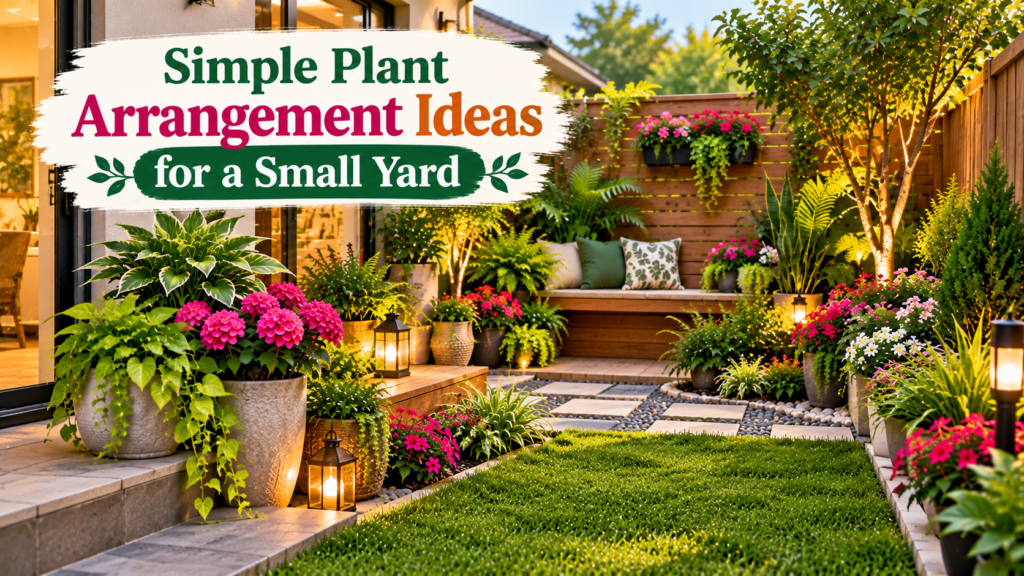
It can be tempting to fill every available space with plants, but I believe leaving some open space is important.
An empty section can make a small yard feel larger. It can also provide a place to sit, walk, or enjoy the garden.
Instead of planting throughout the entire yard, create a few defined planting areas. Leave the remaining space open for movement.
This simple approach can make the garden feel less crowded and easier to maintain.
Group Plants With Similar Needs
Plant arrangement should not only be about appearance. Plants should also be grouped according to their growing requirements.
Plants that need plenty of sunlight should be placed in sunny areas. Shade loving plants should be kept in areas where they are protected from strong sunlight.
I also recommend grouping plants with similar watering needs. This makes garden care much easier.
For example, placing plants with similar water requirements together means you can water the group without worrying that one plant is receiving too much or too little moisture.
Use a Limited Color Scheme
Too many colors can sometimes make a small garden look busy. A simple color scheme can create a cleaner appearance.
You can choose one main flower color and combine it with green foliage. Another option is to select two or three complementary colors.
White flowers combined with green plants can create a fresh and peaceful appearance. Purple, pink, yellow, and red flowers can also be used depending on your personal preference.
I prefer repeating the same flower colors in different parts of the yard. This creates a connection between different planting areas.
Combine Flowers With Green Plants
Flowers provide color, while green foliage gives the garden structure. Combining both can create a balanced plant arrangement.
You can place flowering plants in front of larger green plants. This makes the flowers stand out while the foliage provides a calm background.
Plants with interesting leaf shapes can also add variety even when they are not flowering.
If you choose plants that bloom during different seasons, you can keep some color in the yard throughout the year.
Use Pots to Create Small Plant Groups
Instead of spreading individual pots throughout the yard, try grouping several containers together.
For example, place three pots in a corner. Use one taller plant, one medium sized plant, and one smaller flowering plant.
This creates a small focal point without taking up too much space.
I also recommend keeping some space between containers so the arrangement does not look too crowded. The goal is to create a group that looks intentional rather than randomly placed.
Create a Focal Point
Every small garden can benefit from one main feature. This could be a flowering plant, decorative pot, small tree, or attractive group of containers.
The focal point naturally draws attention and gives the yard a clear visual center.
If the yard is very small, avoid using several large focal points. One attractive feature is usually enough.
You can place the focal point at the end of a path or in an empty corner where it can be easily noticed.
Choose Plants According to Available Space
Plant size is very important when designing a small yard. A plant may look small when purchased but can become much larger as it grows.
Before planting, check the mature size of each plant. Give plants enough room to grow without blocking paths or covering nearby plants.
Compact varieties are often a better choice for small gardens. They allow you to enjoy greenery and flowers while keeping the space manageable.
I also avoid placing large spreading plants too close to walls or walkways.
Keep Maintenance in Mind
A beautiful garden should also be practical. When arranging plants, think about how easily you will be able to water, prune, clean, and inspect them.
Do not place containers where they are difficult to reach. Keep enough space between plants so you can remove dead leaves and check for pests.
A simple plant arrangement is usually easier to maintain than an overcrowded garden.
This is one reason I prefer a smaller number of healthy plants rather than trying to grow too many varieties in a limited space.
Final Thoughts
Creating a beautiful small yard does not require a complicated garden design. With thoughtful plant placement, even a limited outdoor area can become a relaxing and attractive space.
Simple ideas such as using plant borders, arranging plants at different heights, filling corners, using containers, adding vertical plants, and keeping some open space can make a big difference.
For me, the most important part of small yard gardening is balance. Plants should have enough room to grow, paths should remain easy to use, and the garden should not feel overcrowded.
Choose plants according to sunlight, soil, water requirements, and available space. Then arrange them in a way that reflects your personal style.
With a little planning and regular care, a small yard can become a beautiful garden that feels fresh, organized, and enjoyable throughout the growing season.