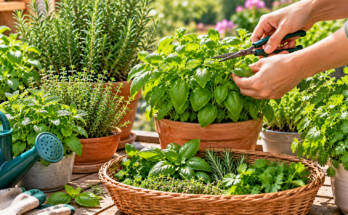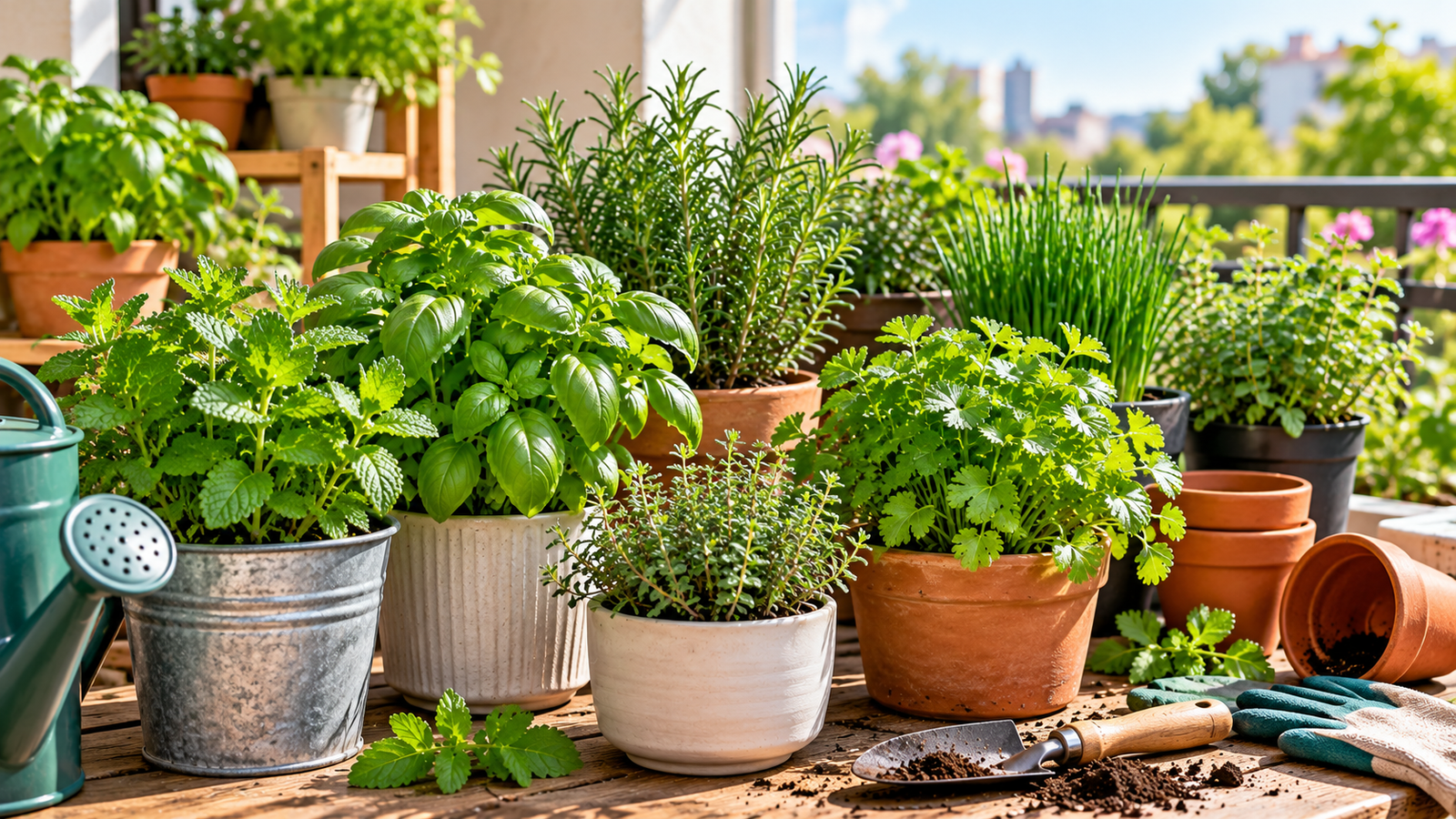
Starting a small herb garden in containers is one of the easiest ways to grow fresh herbs at home. I personally like container gardening because it does not require a large backyard or a special garden space. Even if you only have a balcony, windowsill, patio, rooftop, or a small corner near a sunny window, you can grow useful herbs with very little effort.
Growing herbs in containers also gives me more control over soil, water, sunlight, and plant placement. I can move the containers when the weather changes, protect delicate herbs from extreme heat, and harvest fresh leaves whenever I need them for cooking.
If you are new to gardening, a small container herb garden is a great place to begin. In this guide, I will explain how to choose containers, select herbs, prepare the soil, plant your herbs, and take care of them so they remain healthy and productive.
Choose the Right Location
The first thing I consider when starting a container herb garden is location. Most common herbs need several hours of sunlight each day to grow well. A place that receives around six hours of sunlight is usually a good choice for many herbs.
A sunny balcony, patio, rooftop, or kitchen windowsill can work well. If you are growing herbs indoors, place the containers close to a bright window where the plants can receive enough natural light.
However, sunlight requirements can vary between herbs. Basil, rosemary, thyme, oregano, and sage generally enjoy plenty of sunlight. Mint can tolerate somewhat less direct sunlight, although it still grows better when it receives good light.
I recommend observing your available space for a day before placing the plants there. Notice when sunlight reaches the area and how long it stays there. This simple step can help you choose a better location for your herb garden.
Select Herbs That Match Your Needs
One of the most enjoyable parts of starting a small herb garden is choosing what to grow. I prefer choosing herbs that I regularly use in the kitchen because this makes gardening more useful and rewarding.
Some excellent herbs for container gardening include basil, mint, parsley, coriander, chives, thyme, oregano, rosemary, and sage.
If you are a beginner, basil, mint, parsley, and coriander are good options to start with. They are commonly used in cooking and can be grown successfully in containers when their basic needs are met.
You do not need to grow every herb at once. I suggest starting with three or four varieties. Once you understand how they respond to your growing conditions, you can gradually add more plants.
Choose Suitable Containers
Choosing the right containers is important for healthy herb growth. Almost any container can work if it is large enough and has proper drainage holes.
I prefer containers with holes at the bottom because excess water needs somewhere to escape. Without drainage, water can remain around the roots and increase the risk of root problems.
The size of the container depends on the herb. Smaller herbs such as chives can grow in relatively small pots, while rosemary and larger herbs may need more space.
When growing mint, I recommend giving it its own container. Mint can spread quickly and may compete with other herbs if planted together. Keeping it in a separate pot makes it much easier to control.
You can use clay pots, plastic containers, ceramic pots, wooden planters, or other suitable gardening containers. Before using an old container, make sure it is clean and has drainage holes.
Use Good Quality Potting Soil
Regular garden soil is not always the best choice for container gardening because it can become compacted inside a pot. Herbs need a growing medium that allows air and water to move around their roots.
I prefer using a good quality potting mix designed for containers. A light and well draining mix gives the roots enough room to grow while allowing excess moisture to escape.
You can also improve the growing medium by adding suitable organic matter. The main goal is to create soil that is loose, fertile, and well draining.
Avoid filling containers with extremely heavy or compact soil. Healthy roots need both moisture and air, so good drainage is one of the most important parts of growing herbs successfully in containers.
Plant Your Herbs Carefully
Once you have selected the containers and prepared the soil, it is time to plant your herbs.
Fill the container with potting mix, leaving a little space near the top. Make a hole large enough for the roots of the herb. Carefully remove the plant from its original container and place it in the new pot.
Try not to damage the roots while transplanting. Place the plant at approximately the same depth at which it was growing before. Fill the space around the roots with soil and gently press the soil into place.
After planting, water the herb thoroughly. Allow excess water to drain from the bottom of the container.
If you are growing herbs from seeds, follow the seed packet instructions for planting depth and spacing. Some herbs are better started from seeds, while others can be purchased as young plants.
Water Your Container Herbs Properly
Watering is one of the most important parts of herb gardening. Container plants can dry out faster than plants growing in the ground, especially during hot weather.
I do not like following a strict watering schedule because the amount of water a plant needs can change with temperature, sunlight, container size, and soil type.
Instead, I check the soil regularly. If the top layer feels dry, it may be time to water. Water slowly until some water begins to come out of the drainage holes.
At the same time, avoid keeping the soil constantly wet. Overwatering is a common mistake among new gardeners. Herbs need moisture, but their roots also need access to air.
During very hot weather, container herbs may need more frequent attention. During cooler or rainy periods, they may require less water.

Give Your Herbs Enough Sunlight
Good sunlight helps herbs produce healthy leaves and strong growth. If your herbs are growing indoors, place them near the brightest suitable window.
If you notice that the stems are becoming long and weak or the plant is leaning strongly toward the window, it may not be receiving enough light.
Outdoor containers can usually be moved to a better location if the plants are struggling. This is one of the biggest advantages of container gardening.
However, extremely strong heat can also stress some herbs. During very hot weather, you may need to provide some afternoon protection, especially for delicate plants.
Feed Your Herbs When Needed
Herbs generally do not require excessive fertilizer. In fact, too much fertilizer can sometimes encourage soft growth and reduce the concentration of flavors in certain culinary herbs.
I prefer starting with good quality potting soil and then providing light feeding when the plants appear to need it.
A balanced fertilizer suitable for edible plants can be used according to its label instructions. Compost or other suitable organic material can also support healthy growth.
Always follow the recommended application amount. More fertilizer does not automatically mean faster or healthier growth.
Prune and Harvest Regularly
Regular harvesting can actually help many herbs become fuller and bushier. Instead of allowing the plant to grow tall without trimming, I like to harvest the leaves and stems regularly.
For herbs such as basil, pinching the growing tips can encourage branching. This gives the plant a fuller appearance and provides more leaves for future harvests.
When harvesting herbs, use clean scissors or garden snips when possible. Avoid removing too much of the plant at one time because the remaining leaves are needed for continued growth.
Fresh herbs are best harvested when they are needed. I enjoy being able to walk outside or reach my kitchen windowsill and collect a small amount of fresh herbs for a meal.
Protect Your Herb Garden From Pests
Even a small container herb garden can experience pest problems. Aphids, spider mites, whiteflies, and other insects can sometimes appear on herb plants.
I recommend checking the leaves regularly. Look underneath the leaves as well because some pests prefer hiding there.
If you notice a small pest problem, gently washing the plant with water can sometimes help remove insects. Removing badly damaged leaves can also help keep the plant tidy.
Avoid using garden chemicals on edible herbs unless the product is specifically suitable for edible plants and you follow the label directions carefully.
Good air circulation, appropriate watering, and healthy growing conditions can also help reduce many plant problems.
Keep Containers Clean and Organized
A small herb garden can quickly become messy if containers are placed randomly. I like keeping my pots organized so that every plant has enough space and sunlight.
Remove dead leaves and plant debris from the soil surface. Check drainage holes occasionally to make sure they are not blocked.
You can also label your containers. This is especially helpful when growing herbs that look similar when they are young.
If you are growing several herbs, grouping plants according to their needs can make care easier. Herbs with similar sunlight and watering requirements can often be placed near one another.
Start Small and Learn as You Grow
I believe one of the biggest mistakes beginners make is trying to grow too many plants at once. A small herb garden does not need to contain ten or twenty different varieties.
Start with a few herbs that you actually use. Learn how much sunlight they receive, how quickly the soil dries, and how the plants respond to watering and feeding.
Once you become comfortable, you can add more containers and experiment with different herbs.
Container gardening is a learning process. Some plants may grow extremely well while others may struggle. Instead of becoming discouraged, I think it is better to observe what happened and make a small adjustment.
Final Thoughts
Starting a small herb garden in containers is simple, practical, and rewarding. You do not need a large garden or expensive equipment to grow fresh herbs at home. With suitable containers, good potting soil, enough sunlight, proper watering, and regular harvesting, even a small space can become a productive herb garden.
I recommend beginning with a few easy herbs such as basil, mint, parsley, coriander, thyme, or oregano. Give each plant the conditions it needs and pay attention to how the soil and leaves change over time.
For me, the best part of growing herbs in containers is having fresh ingredients within easy reach. It also makes gardening feel less complicated because I can move and manage each plant individually.
If you start small, stay consistent, and learn from your plants, you can build a healthy container herb garden that provides fresh herbs throughout the growing season.