
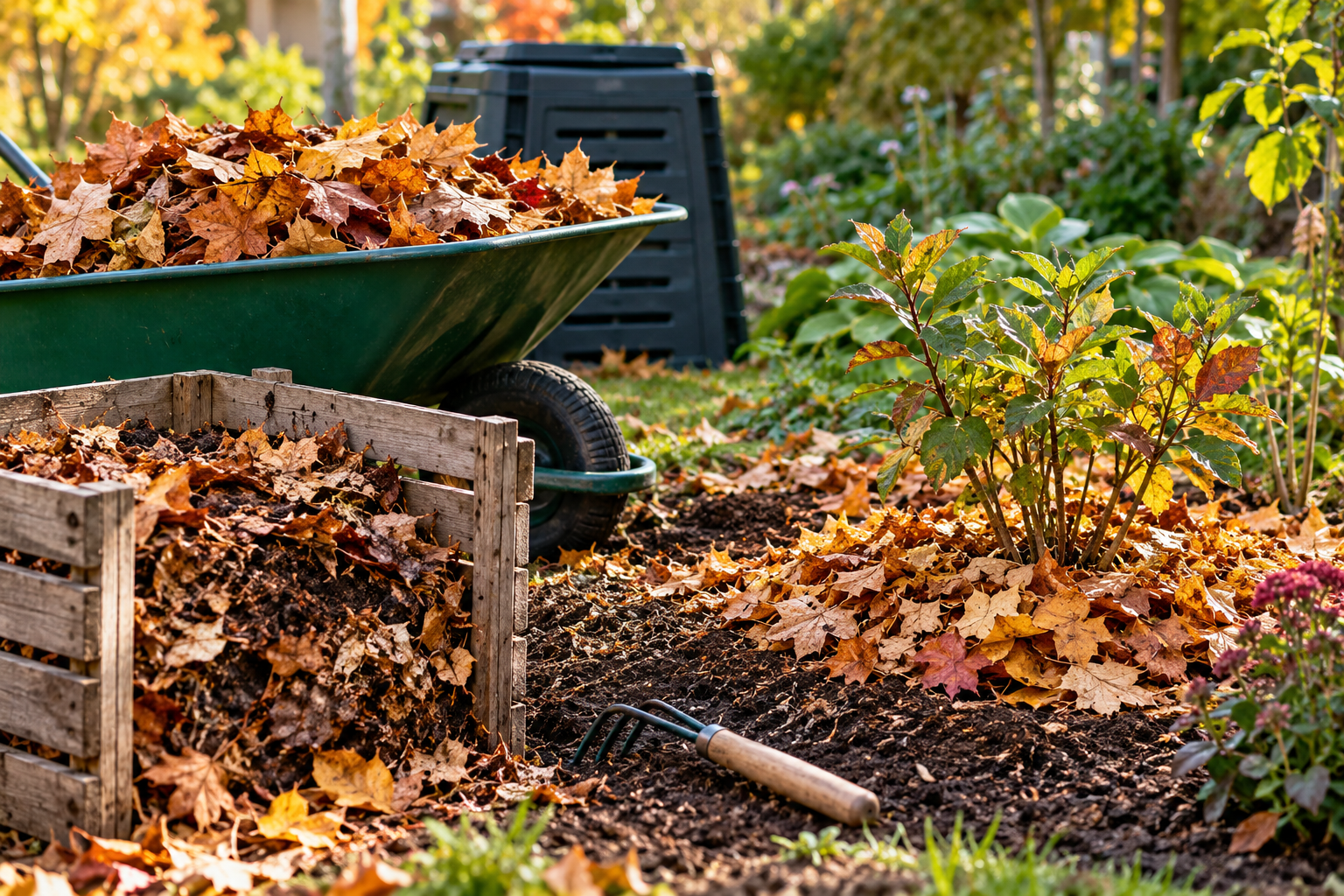
Every autumn, I see fallen leaves covering gardens, lawns, pathways, and flower beds. Many people consider them garden waste and immediately collect them into bags for disposal. In my experience, fallen leaves can actually be one of the most useful natural materials in a garden. Instead of throwing them away, I prefer to reuse fallen leaves in ways that improve the soil, protect plants, and reduce garden waste.
Fallen leaves contain organic matter that can return valuable nutrients to the soil as they break down. They can also help protect plant roots, improve soil structure, and support useful organisms in the garden. The best part is that using fallen leaves does not require expensive equipment or complicated methods.
In this article, I will explain some simple and practical ways to reuse fallen leaves in your garden and how you can turn this common seasonal material into something useful.
Why Fallen Leaves Are Useful for the Garden
Fallen leaves are a natural part of the plant life cycle. When leaves fall from trees, they eventually break down and return organic matter to the soil. We can make use of this natural process instead of removing every leaf from the garden.
One major benefit of fallen leaves is that they can improve soil quality. As leaves decompose, they add organic matter that can make soil more suitable for plant growth. Organic matter can also help soil hold moisture while improving drainage.
Fallen leaves can also provide shelter for small garden organisms. Earthworms and other beneficial organisms help break down organic material and contribute to healthy soil.
For me, the biggest advantage is that fallen leaves are free and easily available. They can replace some commercially purchased materials and help create a more natural garden environment.
1. Use Fallen Leaves as Mulch
One of the easiest ways to reuse fallen leaves is to use them as mulch. Leaf mulch can be placed around trees, shrubs, flowers, and many other garden plants.
Before using whole leaves as mulch, I recommend shredding or cutting them into smaller pieces. Large whole leaves can become wet and compacted, especially after rain. This can create a thick layer that blocks air and water from reaching the soil.
Shredded leaves are much easier to manage. Spread a moderate layer around plants while keeping some space around plant stems and tree trunks. This helps protect the soil without creating excessive moisture around the base of the plant.
Leaf mulch can help reduce moisture loss from the soil. It can also help moderate soil temperature and gradually add organic matter as it decomposes.
2. Add Leaves to Your Compost
Fallen leaves are excellent material for a home compost pile. They are especially useful because they provide carbon rich organic material.
I like to combine dry leaves with greener materials such as fresh grass clippings, vegetable scraps, and other suitable garden materials. A balanced compost pile breaks down more effectively when different types of organic material are mixed together.
Shredding leaves before adding them to compost can make the process easier because smaller pieces decompose faster. If you have a large amount of leaves, you can store some dry leaves separately and add them to the compost when needed.
Over time, the leaves and other organic materials break down into compost. Finished compost can then be added to garden beds, containers, and around established plants.
3. Make Leaf Mold
Leaf mold is another useful way to reuse fallen leaves. It is made almost entirely from decomposed leaves and can be a valuable soil amendment.
To make leaf mold, collect fallen leaves and place them in a suitable pile, bin, or container. Keep the leaves slightly moist and allow them to decompose naturally. The process can take several months or longer depending on the conditions and type of leaves.
I find leaf mold particularly useful because it requires very little effort once the leaves are collected. The leaves gradually break down into a dark, crumbly material.
Leaf mold can help improve soil structure and moisture retention. It can also be mixed into garden soil before planting.
4. Protect Plant Roots During Cold Weather
A layer of fallen leaves can provide insulation around plant roots during colder weather. This can be especially useful for perennial plants and young plants that need additional protection.
I usually place shredded leaves around the root area rather than directly against the stems. A reasonable layer can help reduce sudden temperature changes in the soil.
Leaves should not be packed tightly around plants because excessive moisture and poor airflow can create problems. The goal is to create a loose protective layer rather than a thick, wet covering.
5. Use Leaves Around Trees and Shrubs
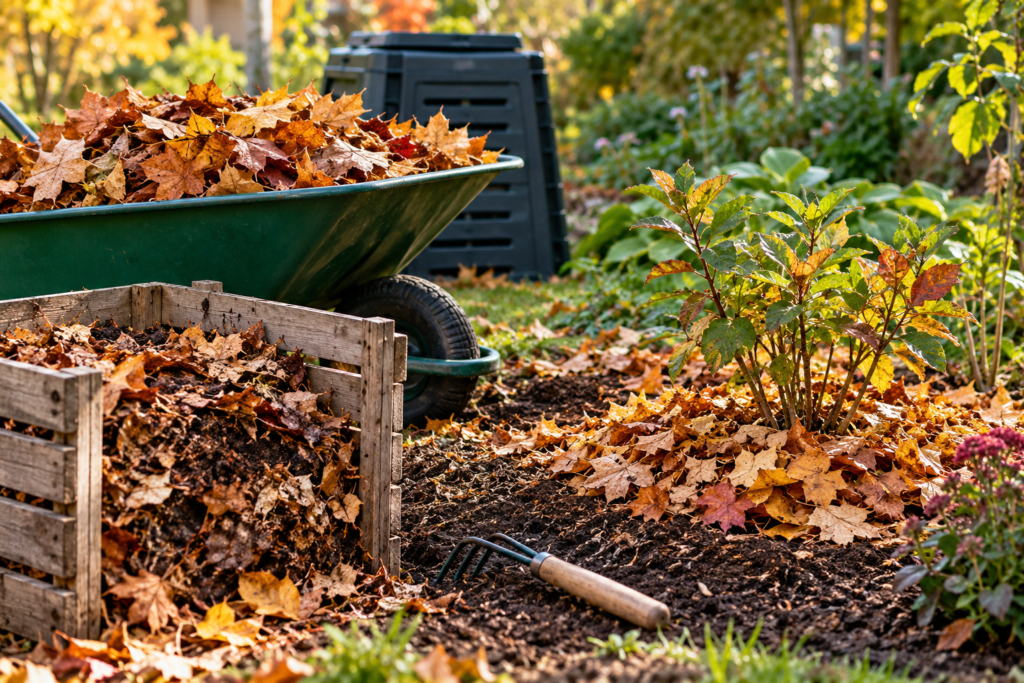
Trees and shrubs can also benefit from leaf mulch. Instead of removing every fallen leaf from underneath trees, you can allow some leaves to remain and break down naturally.
Shredded leaves can be spread around the root zone. This adds organic material to the soil over time and helps create a more natural environment.
When using leaves around trees, I always avoid piling them directly against the trunk. Keeping the trunk area clear helps reduce the chance of moisture related problems.
6. Add Leaves to Empty Garden Beds
If you have garden beds that are not being used during a particular season, fallen leaves can be placed over the soil.
This can help cover bare soil and add organic material as the leaves decompose. Over time, the leaves become part of the soil rather than remaining as garden waste.
Before planting again, I usually mix partially decomposed leaves into the upper layer of soil or move them aside depending on what I plan to grow.
This is a simple way to prepare garden beds naturally without wasting useful organic material.
7. Use Leaves to Reduce Weeds
A layer of leaves can also help reduce weed growth. When the soil is covered, fewer weed seeds receive the light they need to germinate.
For this purpose, shredded leaves can be spread over areas where weeds commonly appear. However, the layer should not be excessively thick or compacted.
Leaf mulch works best when combined with other good gardening practices. It should not be considered a complete solution for serious weed problems, but it can reduce the amount of bare soil available for weeds.
8. Create a Natural Garden Habitat
Fallen leaves can provide shelter for many small organisms. Instead of removing every leaf from your garden, you can leave some leaves in less formal areas.
Small insects and other organisms can use leaf litter as shelter. These organisms are part of the wider garden ecosystem and can contribute to natural processes.
If you want to encourage a more wildlife friendly garden, consider leaving a small area where leaves can remain undisturbed.
I think this is one of the simplest ways to make a garden feel more natural while reducing unnecessary garden cleanup.
9. Use Leaves in Container Gardening
Fallen leaves can also be useful for container gardening, but they should not simply be placed as a thick layer on top of potting soil.
Instead, shredded and partially decomposed leaves can be incorporated into suitable homemade compost and then used as part of a growing medium when appropriate.
For established containers, a thin layer of suitable leaf mulch can help reduce moisture loss. Always leave space around the plant stem and avoid creating a constantly wet surface.
Because containers have limited drainage and soil volume, I prefer using leaves carefully rather than adding large quantities.
10. Use Fallen Leaves as a Soil Cover
Bare soil can dry out quickly and may become more exposed to erosion. Fallen leaves provide a simple natural cover.
If I have an area of the garden that is not currently planted, I may cover the soil with a moderate layer of shredded leaves. As they decompose, they contribute organic matter to the soil.
This can be particularly useful between growing seasons when garden beds would otherwise remain completely exposed.
How to Prepare Fallen Leaves for Garden Use
The easiest way to prepare fallen leaves is to shred them. You can use a lawn mower, leaf shredder, or another suitable method.
Shredding reduces the size of the leaves and helps them break down more easily. It also makes them less likely to form a dense layer.
Before using leaves, I recommend removing obvious rubbish and checking that they have not been mixed with materials that should not go into the garden.
It is also important to avoid collecting leaves from areas that may have been exposed to chemicals or other contaminants.
Which Fallen Leaves Should You Avoid?
Most ordinary healthy tree leaves can be reused in the garden. However, I would avoid using leaves that are heavily diseased or contaminated.
If a tree has a serious disease, putting large amounts of its infected leaves into compost may not be a good idea. Removing heavily diseased material can help reduce the possibility of spreading problems.
Leaves should also be free from plastic, litter, chemical contamination, and other unwanted materials.
When in doubt, I prefer using clean leaves from healthy plants.
Common Mistakes When Reusing Fallen Leaves
One common mistake is using too many leaves at once. A very thick layer can become compacted and restrict air and water movement.
Another mistake is placing leaves directly against plant stems or tree trunks. Keeping a small gap around the base is a simple precaution.
Using large whole leaves as mulch can also create problems because they may stick together after becoming wet. Shredding them usually produces a better result.
I also recommend avoiding the idea that more organic material is always better. Garden materials work best when used in reasonable amounts.
Final Thoughts
Fallen leaves do not have to be treated as garden waste. They can become valuable resources for improving soil, protecting plants, reducing weeds, supporting garden organisms, and making compost.
Personally, I think reusing fallen leaves is one of the easiest sustainable gardening habits to develop. Instead of spending time and money trying to remove every leaf from the garden, I prefer finding useful ways to return them to the soil.
Whether you use fallen leaves as mulch, add them to compost, make leaf mold, protect plant roots, or simply leave some leaf litter in a quiet corner, you can turn seasonal garden waste into something beneficial.
The next time your garden is covered with fallen leaves, do not automatically throw them away. Take a moment to see what you can reuse. With a little preparation, those leaves can become an important part of a healthier and more natural garden.


