
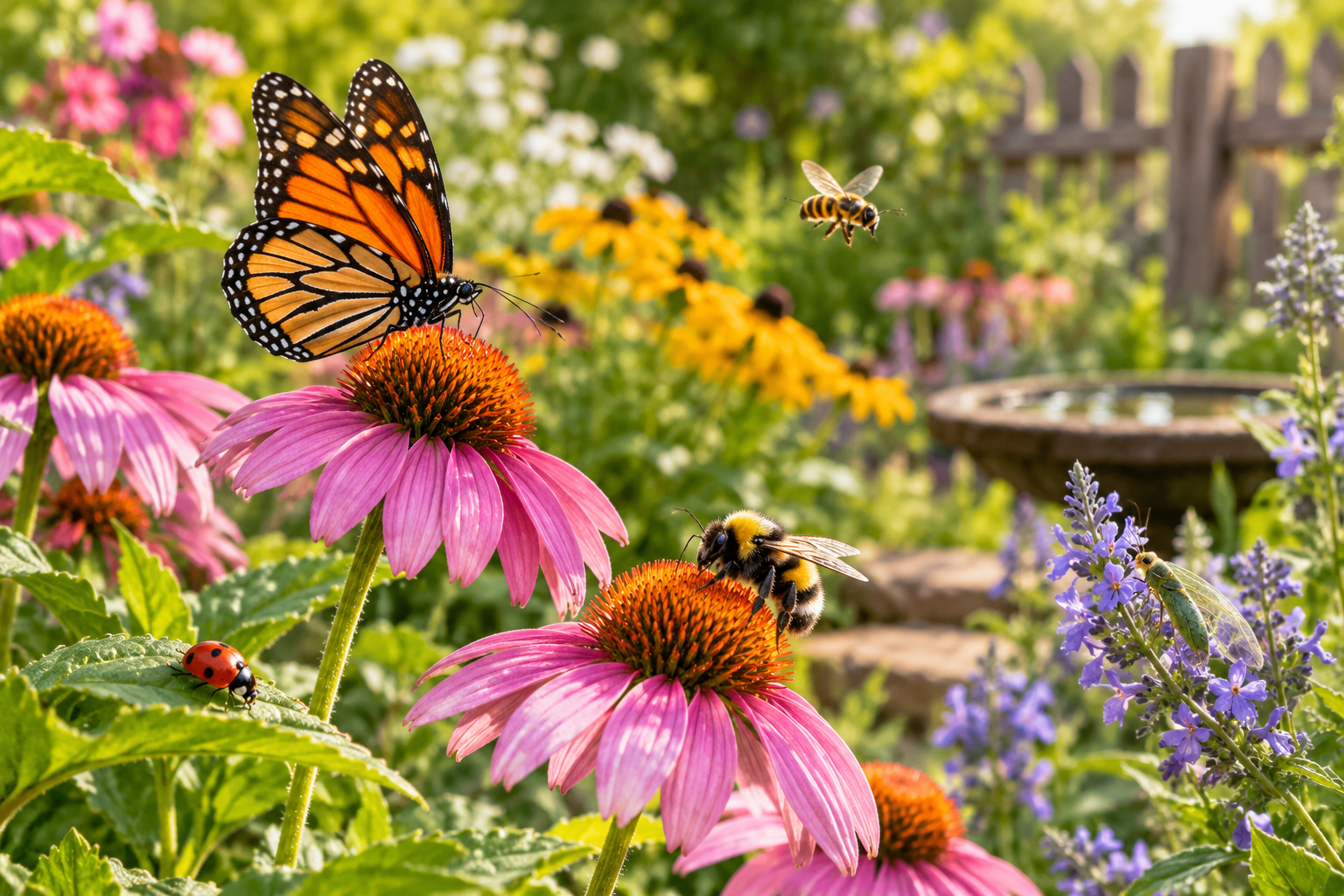
When I think about a healthy garden, I do not only think about flowers, vegetables, green leaves, and good soil. I also think about the small insects that quietly work around plants. Many people see every insect in the garden as a problem, but in my experience, that is not always true. Some insects can actually help plants grow better by controlling pests, pollinating flowers, and supporting the natural balance of the garden.
Attracting helpful insects to your garden is one of the easiest ways to create a more natural growing space. You do not need expensive equipment or complicated methods. With the right plants, water, shelter, and gardening habits, you can make your garden more welcoming to beneficial insects.
In this article, I will share some simple ways to attract helpful insects to your garden and explain why these small creatures can be valuable for both flowers and vegetables.
What Are Helpful Insects?
Helpful insects are insects that provide benefits to plants and gardens. Some help by pollinating flowers, while others feed on common garden pests such as aphids, caterpillars, mites, and small flies.
Ladybugs are a familiar example. Both adult ladybugs and their larvae can feed on aphids. Lacewings are another useful insect because their larvae eat several soft bodied garden pests. Bees and some types of flies are important pollinators that help flowers and many food crops produce seeds and fruit.
Not every insect needs to be welcomed without consideration, but learning to identify insects can help you understand which ones are actually helping your garden.
1. Grow More Flowering Plants
One of the simplest ways to attract helpful insects is to grow flowering plants. Flowers provide nectar and pollen, which are important food sources for many beneficial insects.
I like to include different types of flowers in a garden rather than relying on just one variety. Plants such as marigolds, sunflowers, cosmos, lavender, zinnias, and herbs that produce flowers can make a garden more attractive to pollinators and other useful insects.
Try to choose flowers with different blooming periods. When flowers are available throughout the growing season, insects have a more consistent food supply.
2. Plant Native Flowers When Possible
Native plants are often well adapted to the local climate and can be useful for supporting local insect populations. They may require less special care because they are naturally suited to the conditions of the area.
When choosing plants for your garden, I recommend looking at flowers that naturally grow well in your region. Local garden centers and experienced gardeners can often suggest suitable varieties.
A garden filled with locally suitable flowering plants can provide food and shelter for many insects without requiring excessive maintenance.
3. Avoid Using Pesticides Unnecessarily
One of the most important things I have learned about gardening is that using chemicals too quickly can sometimes create more problems than it solves. Broad spectrum pesticides may kill harmful insects, but they can also affect beneficial insects.
If you notice a few insects on your plants, first try to identify them. A small number of pests does not always mean that immediate treatment is necessary.
For minor pest problems, simple methods such as removing insects by hand, washing plants with water, pruning affected leaves, or improving plant care may be enough.
Reducing unnecessary pesticide use gives helpful insects a better chance to establish themselves in the garden.
4. Grow Herbs That Attract Insects
Herbs can be useful in more ways than one. Besides providing ingredients for cooking, flowering herbs can attract bees, butterflies, hoverflies, and other insects.
Basil, mint, oregano, thyme, rosemary, dill, fennel, and parsley can produce flowers that provide food for insects when allowed to bloom.
I especially like the idea of letting some herbs flower instead of harvesting every part of the plant. You can keep using the herbs while allowing a few plants to produce flowers for visiting insects.
5. Provide a Clean Water Source
Insects also need water, especially during hot and dry weather. A simple shallow dish can provide a useful water source.
Avoid using a deep container because small insects can fall into it and struggle to escape. Instead, use a shallow plate or dish and place small stones inside it. The stones give insects a safe place to land while drinking.
Keep the water clean and replace it regularly. This simple step can make your garden more attractive to small beneficial creatures.
6. Leave Some Natural Areas
A perfectly clean garden may look attractive, but it does not always provide the best habitat for helpful insects. Many insects need small areas where they can hide, rest, or reproduce.
I believe it is useful to leave a small natural corner in the garden. You can allow some leaves, stems, or natural plant material to remain instead of removing everything immediately.
Small piles of leaves, pieces of untreated wood, and dense plants can provide shelter for different insects.
The goal is not to make the whole garden messy. Even one small natural area can provide valuable habitat.
7. Plant Different Types of Flowers
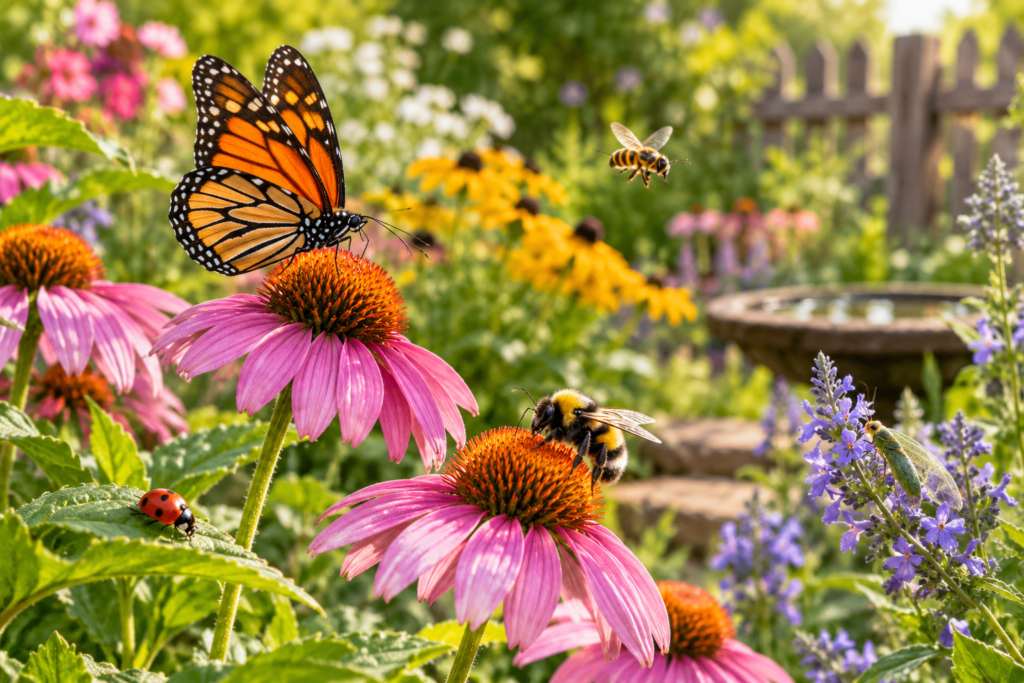
Plant diversity is another excellent way to attract helpful insects. Different insects are attracted to different flower shapes, colors, scents, and sizes.
Instead of planting only one flower species, try combining several varieties. Tall flowers can be mixed with medium sized plants and low growing flowers.
This creates a more interesting garden while providing different food sources for insects.
A diverse garden can also be more resilient because if one plant struggles with weather or disease, other plants may continue growing.
8. Keep Some Plants in Bloom
If every flower is removed as soon as it begins to fade, insects may have fewer food sources. Deadheading can encourage some plants to produce more flowers, but I also like to leave a few flowering plants untouched.
Allowing selected plants to continue flowering can provide nectar and pollen for bees and other beneficial insects.
You do not have to let every plant go to seed. Simply leave a few plants in different parts of the garden so insects can continue finding food.
9. Create Shelter With Different Plant Heights
Helpful insects need more than food. They also need places to rest and hide.
You can create natural shelter by growing plants at different heights. Tall plants can provide shade, while shorter plants can create protected spaces near the soil.
Ground covers, grasses, leafy herbs, and flowering plants can work together to create a layered garden environment.
This type of planting can make the garden feel fuller while giving insects more places to move and shelter.
10. Avoid Over Cleaning the Garden
Garden maintenance is important, but too much cleaning can remove useful habitats. Fallen leaves, old stems, and small pieces of plant material can sometimes provide shelter for insects.
Instead of cleaning every part of the garden immediately, I prefer to remove diseased material and dangerous debris while leaving some healthy natural material in suitable areas.
This approach creates a better balance between a tidy garden and a wildlife friendly garden.
11. Grow Plants That Produce Small Flowers
Large colorful flowers are beautiful, but some beneficial insects are also attracted to small flowers. Plants with clusters of tiny flowers can provide easy access to nectar.
Dill, fennel, coriander, parsley, and other flowering herbs can be especially useful. These plants can attract hoverflies and other insects that visit flowers for nectar.
Adding several small flowering plants can therefore increase the variety of insects visiting your garden.
12. Do Not Remove Every Caterpillar
Caterpillars are often considered garden pests, but it is important to understand that some caterpillars eventually become butterflies or moths.
If a caterpillar is causing serious damage to an important vegetable plant, you may need to move it or protect the plant. However, finding one caterpillar does not automatically mean that your entire garden has a problem.
Learning to identify different insects can help you decide which ones should stay and which ones need to be controlled.
13. Make Your Garden Chemical Free Where Practical
A natural garden does not necessarily mean that you must completely stop caring for your plants. It means trying to use gentle methods whenever they are practical.
Healthy soil, proper watering, good sunlight, suitable plants, and regular observation can reduce many pest problems.
When pest control becomes necessary, consider targeted methods instead of treating the entire garden. This can help protect beneficial insects while addressing the actual problem.
14. Grow Plants for Different Seasons
Helpful insects need food at different times of the year. If your garden only has flowers for a short period, insects may move elsewhere when those flowers disappear.
Try to choose plants with different blooming seasons. Early flowering plants can provide food at the beginning of the growing season, while summer and autumn flowers can continue supporting insects later.
This creates a more consistent source of nectar and pollen.
15. Observe Your Garden Regularly
One of the best ways to attract helpful insects is simply to pay attention. Spend a few minutes looking closely at your plants.
Check the leaves, flowers, stems, and soil. You may notice ladybugs, bees, hoverflies, lacewings, butterflies, spiders, and other small creatures.
I find that regular observation makes gardening more interesting. Instead of immediately trying to remove every unfamiliar insect, you can learn what it is and understand its role.
Benefits of Attracting Helpful Insects
Attracting beneficial insects can provide several advantages. Pollinating insects can help flowering plants produce fruits and seeds. Predatory insects can help control some common garden pests naturally.
A garden with more insect diversity can also become a more balanced ecosystem. Instead of depending entirely on chemical pest control, you can encourage natural relationships between plants and insects.
Another benefit is that a garden filled with flowers and insects can be more enjoyable to spend time in. Watching bees move between flowers or seeing a ladybug on a plant can make an ordinary garden feel more alive.
Final Thoughts
In my opinion, attracting helpful insects to your garden is one of the simplest ways to support a healthier and more natural garden. You do not need a large yard or expensive gardening products. Even a small balcony garden can provide flowers, water, and shelter for useful insects.
Start by growing a variety of flowering plants, allowing some herbs to bloom, reducing unnecessary pesticide use, and providing small sources of water and shelter. Most importantly, take time to observe the insects already living around your plants.
A healthy garden is not only about keeping every leaf perfectly clean. It is about creating a space where plants, insects, soil, water, and nature can work together. By making a few simple changes, you can attract helpful insects and create a garden that is more productive, beautiful, and naturally balanced.


