
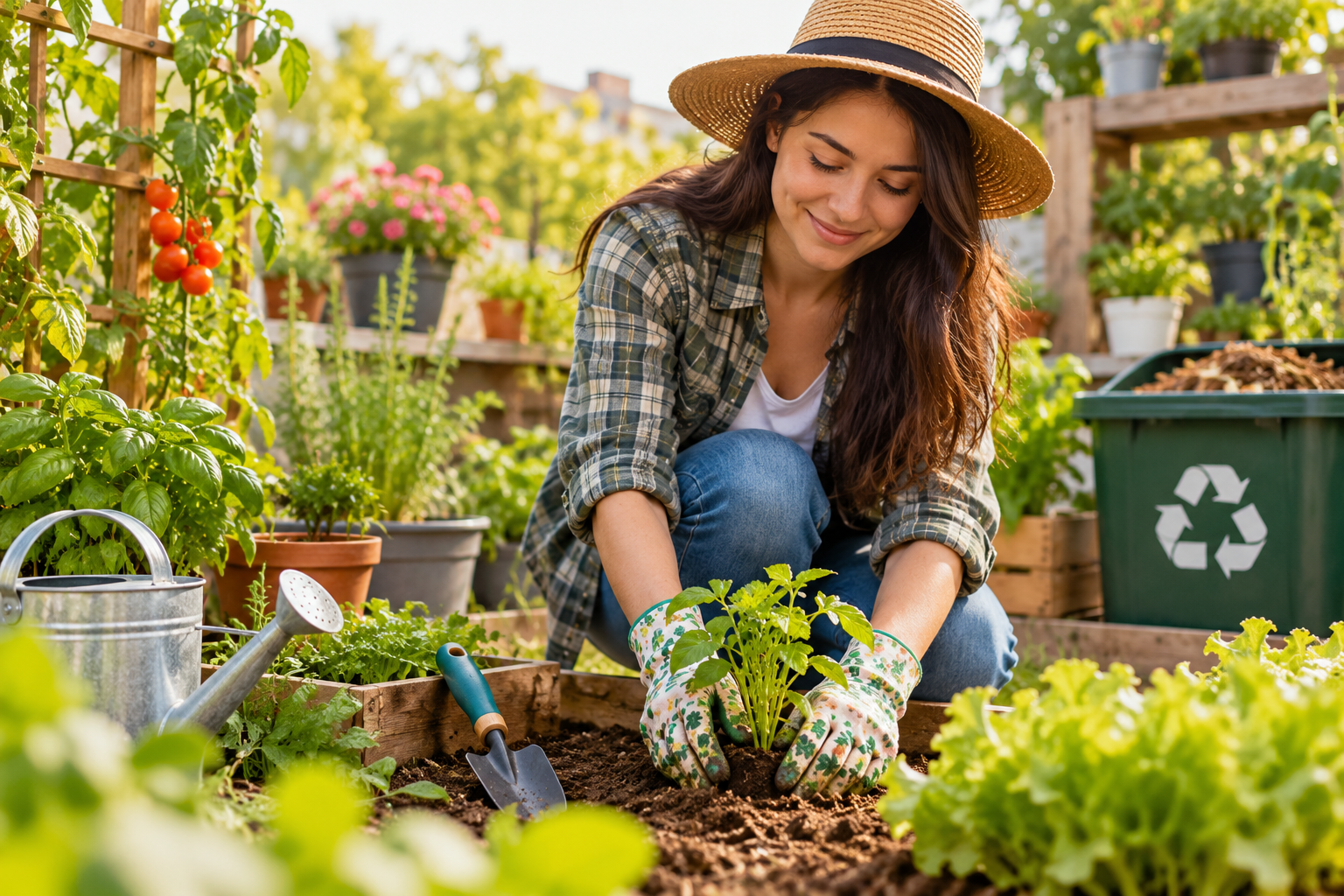
Starting a garden is one of the most enjoyable ways to spend time outdoors, but I believe gardening can be even more rewarding when we make sustainable choices from the beginning. Sustainable gardening does not mean that you need expensive equipment, complicated techniques, or a large garden. In my experience, even small changes in the way we water plants, improve soil, reuse materials, and choose plants can make a noticeable difference.
For beginners, the best approach is to start with simple sustainable gardening habits that are easy to maintain. These habits can help reduce waste, save water, support healthy soil, and create a better environment for plants and useful insects.
What Is Sustainable Gardening?
Sustainable gardening means growing and caring for plants in a way that uses natural resources responsibly. The main goal is to create a healthy garden without unnecessarily wasting water, soil, energy, or other materials.
I think of sustainable gardening as working with nature rather than constantly trying to control it. A healthy garden should support plants while also providing a suitable environment for insects, birds, soil organisms, and other small forms of life.
You do not have to make your entire garden sustainable overnight. Starting with one or two simple habits is enough. Once those habits become part of your routine, you can gradually add more.
Start With the Right Plants
One of the easiest sustainable gardening habits for beginners is choosing plants that are suitable for your local climate. Plants that naturally grow well in your area usually need less special care than plants that struggle with the local weather.
Before buying a plant, I recommend checking how much sunlight, water, and space it needs. A plant that requires full sunlight may not perform well in a dark corner, while a plant that prefers shade may suffer in intense afternoon heat.
Choosing suitable plants can reduce unnecessary watering, fertilizing, and pest problems. Native plants can also be a useful choice because many are naturally adapted to local conditions.
Instead of filling your garden with many different plants immediately, start with a small selection that you understand and can care for properly.
Save Water While Gardening
Water is one of the most important resources in any garden. Beginners often make the mistake of watering plants too frequently. More water does not always mean healthier plants.
I prefer checking the soil before watering. Push your finger slightly into the soil and see whether it feels dry. If the soil is still moist, the plant may not need water yet.
Watering early in the morning can also be helpful because temperatures are generally lower and there is less immediate evaporation. Water the soil around the roots instead of constantly spraying the leaves.
Another useful habit is collecting rainwater when it is safe and practical to do so. Rainwater can be used for many garden plants and helps reduce dependence on treated water.
Make Compost From Organic Waste
Composting is one of my favorite sustainable gardening practices because it gives ordinary kitchen and garden waste another purpose. Instead of throwing suitable organic materials into the trash, you can turn them into useful compost.
Fruit and vegetable scraps, dry leaves, grass clippings, and certain other plant materials can be composted. Over time, these materials break down and create a nutrient rich material that can improve garden soil.
For beginners, there is no need to build a complicated compost system. A simple compost container or designated compost area can be enough to get started.
Good compost should have a balance of fresh green materials and dry brown materials. Avoid adding meat, dairy products, or materials that can attract unwanted animals.
Reuse Fallen Leaves
Fallen leaves are another useful garden resource. Many beginners see leaves as waste and immediately remove them from the garden, but they can actually provide several benefits.
Dry leaves can be added to compost or used as a natural mulch around suitable plants. As leaves slowly break down, they contribute organic matter to the soil.
I usually think twice before throwing away natural garden materials because many of them can be reused. A simple pile of leaves can eventually become valuable material for the garden.
If you have thick layers of leaves on grass or small plants, remove some of them to prevent problems. The goal is to reuse them sensibly rather than simply letting them cover everything.
Use Natural Mulch
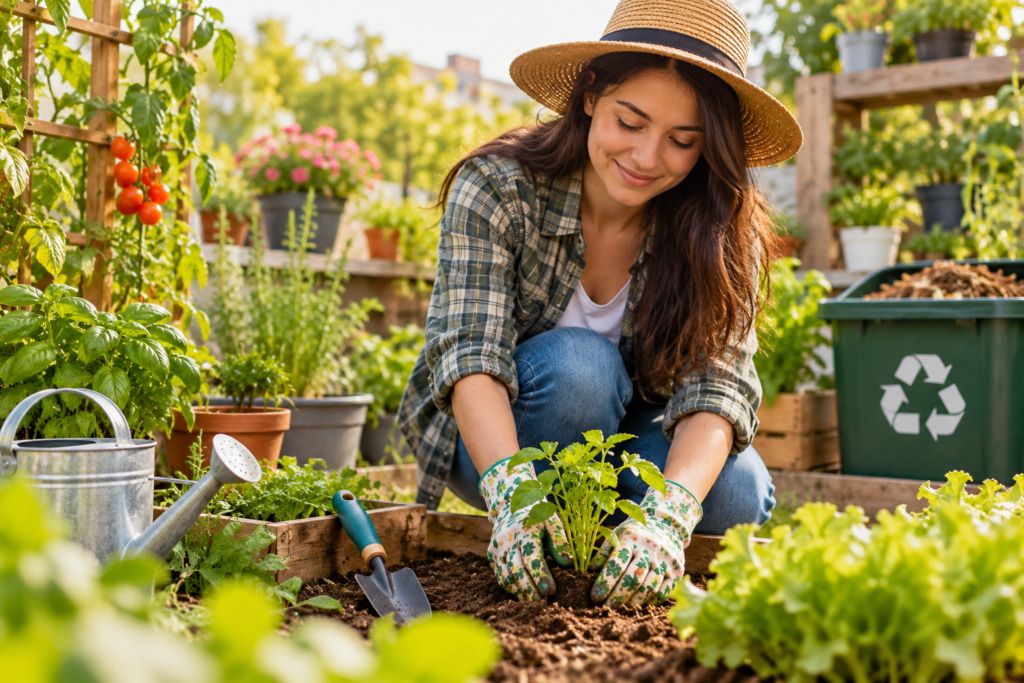
Mulching is a simple sustainable gardening habit that beginners can easily add to their routine. A layer of suitable organic mulch around plants can help retain soil moisture and reduce weed growth.
Materials such as dry leaves, untreated grass clippings, straw, or homemade compost can be useful depending on the garden.
Mulch also gradually breaks down and adds organic matter to the soil. This means one simple material can provide several benefits.
However, avoid placing thick mulch directly against plant stems or tree trunks. Leaving a small gap around the base helps reduce moisture related problems.
Avoid Wasting Garden Materials
Sustainable gardening is also about reducing unnecessary waste. Before buying something new, I recommend thinking about whether something you already have can perform the same job.
Old containers can sometimes become plant pots if they have suitable drainage. Wooden boxes can be used as planters when they are safe for gardening. Fallen branches can sometimes be used for simple garden supports or natural structures.
The important thing is to make sure reused materials are clean and safe for plants. Avoid containers that previously held harmful chemicals or materials that can contaminate soil.
Reusing household items can save money while also reducing the amount of waste sent to landfills.
Build Healthy Soil Naturally
Healthy soil is the foundation of a successful garden. Instead of depending heavily on synthetic products, beginners can improve soil by adding organic matter.
Compost, decomposed leaves, and other suitable organic materials can improve soil structure and help support soil organisms.
Healthy soil can hold moisture more effectively while still allowing roots to receive air. It can also provide a better environment for beneficial organisms.
I believe it is better to improve soil gradually rather than trying to change everything at once. Add organic matter regularly and observe how your plants respond.
Use Fertilizer Carefully
Plants need nutrients, but using too much fertilizer can create unnecessary problems. Beginners sometimes assume that adding more fertilizer will make plants grow faster and healthier. That is not always true.
Before applying fertilizer, learn what your plants actually need. Compost and healthy soil can provide some nutrients naturally.
If fertilizer is necessary, follow the product instructions carefully and avoid applying more than recommended. Excess nutrients can move into waterways and may negatively affect the environment.
A sustainable garden focuses on balanced plant nutrition rather than excessive feeding.
Encourage Helpful Insects
Not every insect in the garden is a pest. Many insects are useful because they help with pollination or feed on insects that damage plants.
Flowers such as marigolds, lavender, sunflowers, and other suitable flowering plants can help attract pollinators and other beneficial insects.
I also recommend avoiding unnecessary pesticide use. If you see a few insects on a plant, first identify what they are and determine whether they are actually causing serious damage.
A garden with a variety of plants can provide food and shelter for many helpful creatures.
Choose Natural Pest Control Methods
When pests become a problem, beginners do not always need to reach for strong chemical products immediately. Start by identifying the pest and understanding the problem.
Removing heavily affected leaves, washing certain pests from plants with water, encouraging beneficial insects, and keeping plants healthy can sometimes reduce pest problems naturally.
Good garden hygiene is also important. Remove severely diseased plant material and avoid leaving large amounts of decaying material around plants when it could encourage problems.
Natural pest control requires patience, but it can be a valuable part of sustainable gardening.
Grow Your Own Herbs and Vegetables
Growing some of your own food can make gardening more sustainable and rewarding. Herbs such as mint, basil, coriander, and parsley can be suitable starting points depending on your climate and available space.
Vegetables can also be grown in containers, raised beds, or small garden areas.
Growing food at home allows you to understand where your food comes from and gives you an opportunity to reuse kitchen and garden resources through composting.
Start with a few easy plants instead of trying to grow everything at once. Learning from a small garden can make future gardening projects much easier.
Reduce Lawn Areas Where Possible
Large lawns can require regular watering, mowing, and maintenance. If you have a lawn, you do not necessarily need to remove it, but you can consider reducing unnecessary lawn areas.
Unused lawn sections can sometimes be replaced with flower beds, ground covers, herbs, or other plants suitable for the local climate.
This can create more space for biodiversity while potentially reducing maintenance requirements.
Even converting a small section of lawn can make your garden more interesting and useful.
Learn to Observe Your Garden
One of the most important sustainable gardening habits is simply paying attention. Spend a few minutes regularly looking at your plants and soil.
Check whether leaves are changing color, whether the soil is too dry, whether pests are increasing, and whether plants are receiving enough sunlight.
When you observe your garden regularly, you can often identify problems before they become serious. This may reduce the need for excessive water, fertilizer, or pest control products.
I have found that gardening becomes easier when you learn to understand what your plants are showing you.
Start Small and Stay Consistent
Sustainable gardening does not require perfection. The most important thing for beginners is consistency.
You can begin by saving water, composting kitchen scraps, reusing garden materials, choosing suitable plants, and avoiding unnecessary chemicals. These small actions can become normal parts of your gardening routine.
There is no need to spend a lot of money creating a sustainable garden. In many cases, sustainable gardening actually helps reduce expenses because you reuse materials, make compost, save water, and avoid buying unnecessary products.
Final Thoughts
Simple sustainable gardening habits can make a big difference over time. You do not need a huge garden or advanced gardening knowledge to start. Even a few containers on a balcony can become a place where you save water, reuse organic materials, support helpful insects, and grow healthy plants.
In my opinion, the best sustainable garden is not necessarily the most perfect looking one. It is a garden where resources are used thoughtfully and plants are given the conditions they naturally need.
Start with one habit that feels easy for you. Maybe it is collecting rainwater, making compost, reusing fallen leaves, or watering plants more carefully. Once that habit becomes part of your routine, add another.
With patience and regular care, these simple sustainable gardening habits can help you create a healthier garden while using fewer resources and producing less waste. More importantly, they can help you develop a better understanding of how plants, soil, water, insects, and people can exist together in a healthier garden environment.


