
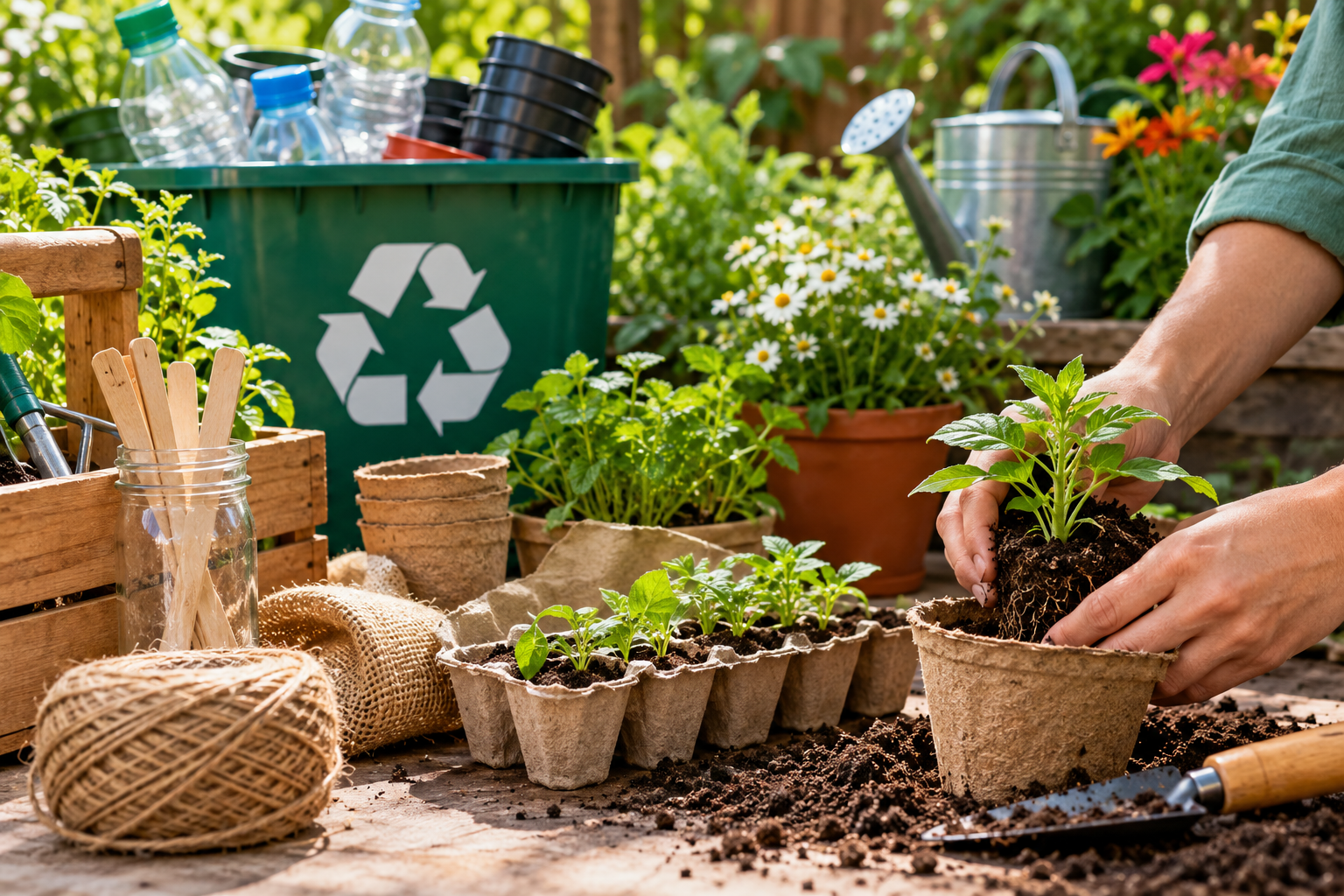
Gardening is one of my favorite ways to spend time outdoors, but I have also noticed that gardening can create more plastic waste than we often realize. Plastic plant pots, seed trays, packaging, plant labels, fertilizer containers, watering cans, plastic bags, and many other items can slowly build up around the garden. When I started paying attention to these things, I realized that small changes could make gardening much more environmentally friendly.
Reducing plastic waste from gardening does not mean giving up the useful tools we already have. Instead, I believe the better approach is to use what we already own for as long as possible, reuse household items, choose durable products, and avoid unnecessary plastic whenever there is a practical alternative.
In this article, I will share some simple ways to reduce plastic waste from gardening while keeping the garden healthy, attractive, and easy to manage.
Choose Reusable Plant Pots
Plastic plant pots are one of the most common sources of plastic waste in gardening. They are inexpensive and convenient, but many gardeners collect large numbers of them over time.
Instead of throwing away plastic pots after using them once, I prefer to wash and reuse them. A good quality plastic pot can often be used for many growing seasons. Before reusing a pot, I clean it properly and make sure it has suitable drainage holes.
If I need new containers, I also look around my home before buying something specifically for gardening. Old buckets, food containers, wooden boxes, and other suitable household items can sometimes become useful plant containers.
The important thing is to make sure any reused container is clean, strong enough for the plant, and has proper drainage.
Reuse Seed Trays and Propagation Containers
Growing plants from seeds can create a surprising amount of plastic waste because many gardeners purchase new seed trays every season.
There is usually no need to do this. Seed trays can be washed and reused year after year. I recommend cleaning them after each growing season and storing them somewhere dry until they are needed again.
Small yogurt containers, food containers, and other suitable household items can also be reused for starting seeds. Just make sure they have drainage holes and are clean before using them.
Reusing containers for seedlings is a simple way to reduce gardening plastic waste without spending extra money.
Avoid Buying Too Many Plastic Gardening Items
Sometimes the easiest way to reduce plastic waste is simply to buy less.
Gardening stores contain many plastic products that may look useful but are not always necessary. Before buying something, I like to ask myself whether I really need it and whether I already have something at home that can perform the same job.
For example, instead of buying several different plastic tools for small gardening tasks, I prefer to keep a basic collection of durable tools that can handle different jobs.
This approach not only reduces plastic waste but can also save money.
Reuse Plastic Plant Labels
Plant labels are small items, but they can add up when used frequently.
Instead of throwing away plastic plant labels after one season, wash them and reuse them. A permanent marker can often be cleaned or covered with new information when necessary.
Another option is to make plant labels from materials that are already available at home. Small pieces of untreated wood, old wooden spoons, or other suitable materials can sometimes work well.
I find that simple homemade plant labels can also give a garden a more natural appearance.
Reuse Soil and Compost Bags
Potting soil, compost, fertilizer, and other gardening materials are often sold in plastic bags. These bags can become a regular source of waste, especially for gardeners who buy soil frequently.
When possible, I try to buy larger quantities instead of repeatedly purchasing many small bags. Larger packages can reduce the amount of packaging used for the same amount of material.
Empty soil bags can sometimes be reused for temporary storage, collecting garden waste, or other practical purposes. However, they should be kept away from children and pets and should only be reused when they are clean and suitable for the purpose.
Make Your Own Compost
Making compost at home is another useful way to reduce plastic waste from gardening.
Instead of buying compost in plastic bags, gardeners can turn suitable kitchen and garden waste into valuable organic matter. Vegetable scraps, fruit peels, dry leaves, grass clippings, and other compostable materials can become useful compost when managed correctly.
I like the idea of composting because it solves two problems at the same time. It reduces household waste and provides a natural soil amendment for the garden.
A compost pile or compost bin can be made using different materials, and it does not always require expensive plastic equipment.
Use Natural Materials for Garden Support
Many gardeners use plastic ties, plastic stakes, and plastic supports to hold plants in place. While these products can be useful, there are natural alternatives.
Bamboo sticks, wooden stakes, twine made from natural fibers, and fallen branches can sometimes be used for supporting plants.
For example, climbing plants may be supported with bamboo poles and natural string. Tomato plants can also be supported using strong wooden stakes.
Natural materials may eventually need replacing, but they can reduce dependence on single use plastic products.
Carry Gardening Materials Without Plastic Bags
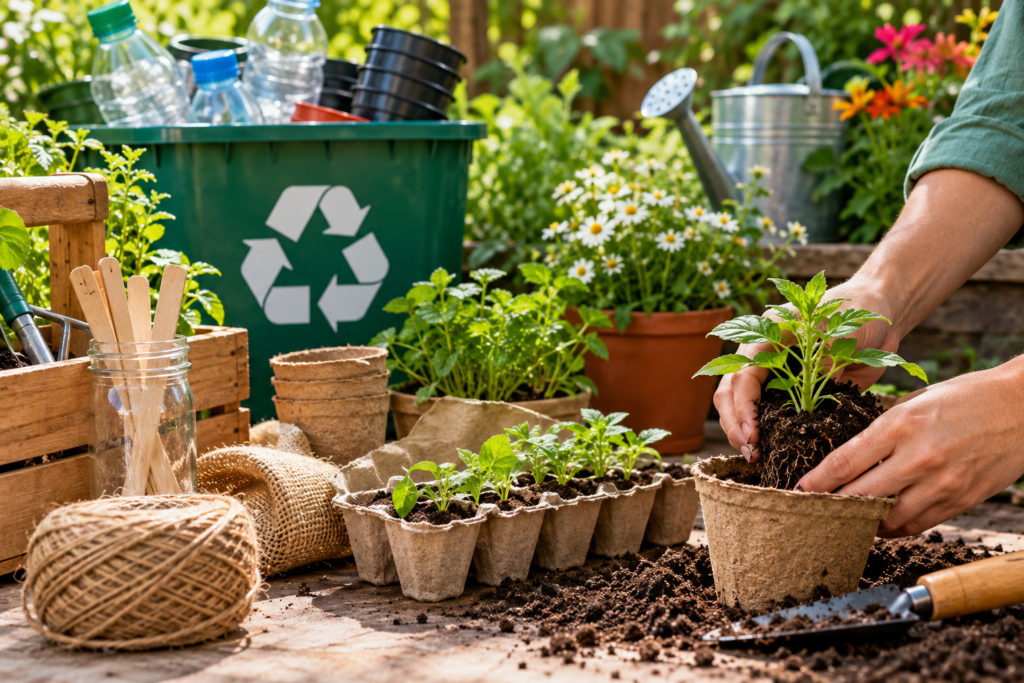
Plastic bags are often used when carrying soil, seeds, tools, and other gardening materials.
One simple solution is to keep reusable bags or containers specifically for gardening. Strong fabric bags can be used repeatedly for carrying smaller gardening supplies.
For heavier materials, reusable buckets or sturdy containers can also be helpful.
I have found that keeping reusable gardening bags in one place makes it easier to remember them whenever I need to buy or transport something for the garden.
Choose Durable Gardening Tools
When buying gardening tools, I believe quality is more important than quantity.
Cheap tools made mostly from low quality plastic may break quickly and eventually become waste. A durable tool that lasts for many years can be a better choice.
Look for tools with strong handles and replaceable parts when possible. Taking proper care of gardening tools also increases their lifespan.
Cleaning tools after use, storing them in a dry place, and protecting them from unnecessary weather exposure can help them last longer.
Repair Instead of Replacing
Another important way to reduce plastic waste is to repair gardening equipment whenever possible.
A broken handle, loose connection, cracked container, or damaged tool does not always mean that the entire item needs to be thrown away.
Before replacing something, I like to check whether the problem can be repaired. Sometimes a simple replacement part or small repair can extend the useful life of an item for another season.
This habit is especially helpful with larger gardening equipment because replacing complete items can create unnecessary waste.
Recycle Plastic Gardening Items Properly
Some plastic gardening products eventually become too damaged to reuse. When this happens, recycling may be an option depending on the type of plastic and the recycling facilities available in your area.
I recommend checking local recycling guidelines before placing gardening plastic into a recycling bin. Not every type of plastic can be recycled through ordinary household programs.
Remove soil and other materials from recyclable items when local guidelines require it. Keeping recyclable materials clean can make the recycling process easier.
Reduce Plastic Packaging When Buying Plants
Plants are sometimes sold with several layers of plastic packaging. Whenever possible, I prefer buying plants with minimal packaging or from nurseries that accept containers back for reuse.
If a nursery uses plastic pots, ask whether the pots can be returned. Some gardening businesses may have systems for reusing containers.
You can also ask whether plants are available in reusable or alternative containers.
Small choices when purchasing plants can make a meaningful difference over time.
Share and Exchange Gardening Supplies
Not every gardener needs to own every tool or piece of equipment.
If you only need a particular item occasionally, consider borrowing it from a friend, neighbor, or family member. You can also share gardening supplies with other gardeners.
Plant exchanges are another great idea. Instead of buying new plants in plastic pots, gardeners can exchange cuttings, seeds, or young plants with each other.
This can reduce packaging waste while also helping gardeners discover new plants.
Use Rainwater for Gardening
Collecting rainwater can reduce the need to buy water in plastic containers, especially for gardeners who regularly purchase bottled water for plants.
A suitable rainwater collection system can provide water for many garden tasks. Always follow local guidance and keep collection containers covered and clean.
Using rainwater is not only a way to reduce plastic waste. It can also encourage more responsible use of water in the garden.
Be Careful With Garden Products
Fertilizers, pesticides, and other garden products are often sold in plastic containers. Before buying them, consider whether there is a simpler approach.
Improving soil health, using compost, choosing suitable plants, and maintaining good garden hygiene can reduce the need for some packaged garden products.
When a product is genuinely necessary, follow the label instructions carefully and use only the recommended amount. This reduces waste and helps prevent unnecessary chemical use.
Create a More Sustainable Gardening Routine
Reducing plastic waste becomes easier when it becomes part of your regular gardening routine.
I suggest keeping a small area where reusable pots, labels, containers, and other gardening supplies can be stored. This makes it easier to reuse things instead of accidentally throwing them away.
At the end of each gardening season, take some time to clean and organize your supplies. Separate items that can be reused, repaired, donated, or recycled.
This simple habit can prevent a lot of unnecessary waste.
Final Thoughts
Reducing plastic waste from gardening does not require major changes. In my opinion, the best approach is to start with small habits and continue them consistently.
Reuse plastic pots and seed trays, choose durable gardening tools, make compost at home, use natural materials when practical, avoid unnecessary packaging, repair damaged items, and share gardening supplies with others.
The goal is not to create a completely plastic free garden overnight. Plastic can still be useful in many gardening situations, and sometimes it is the most practical option. The important thing is to avoid unnecessary waste and make thoughtful choices whenever possible.
A more sustainable garden can still be beautiful, productive, and easy to maintain. By using what we already have, buying only what we need, and finding creative ways to reuse everyday materials, we can reduce plastic waste from gardening while creating a healthier relationship with our outdoor spaces.


