Growing new plants from cuttings is one of my favorite ways to expand a garden without spending much money. It is also a simple way to turn one healthy plant into several new plants. However, one thing I have learned is that taking a cutting is only the beginning. The more important part is knowing when that cutting is ready to be planted.
Many beginners make the mistake of moving a plant cutting into soil too early. A cutting may look healthy on the outside, but that does not always mean it has developed enough roots to survive on its own. If it is planted too soon, it can become weak, stop growing, or even die.
In my experience, the best approach is to watch the cutting carefully and look for clear signs of healthy root development. In this article, I will explain how to know when a plant cutting is ready to be planted, what signs to look for, and how to move it into soil safely.
Why Timing Matters When Planting Cuttings
A plant cutting needs time to develop roots before it can properly support itself. Until roots form, the cutting has limited ability to absorb water and nutrients.
If you plant a cutting before it has enough roots, the transition can be stressful. The cutting may struggle to take up enough moisture from the soil, especially if the roots are very small.
On the other hand, waiting until the cutting has developed a healthy root system gives it a much better chance of adapting to its new environment.
I usually avoid rushing this stage. A few extra days of growth can sometimes make a big difference.
Look for Visible Roots
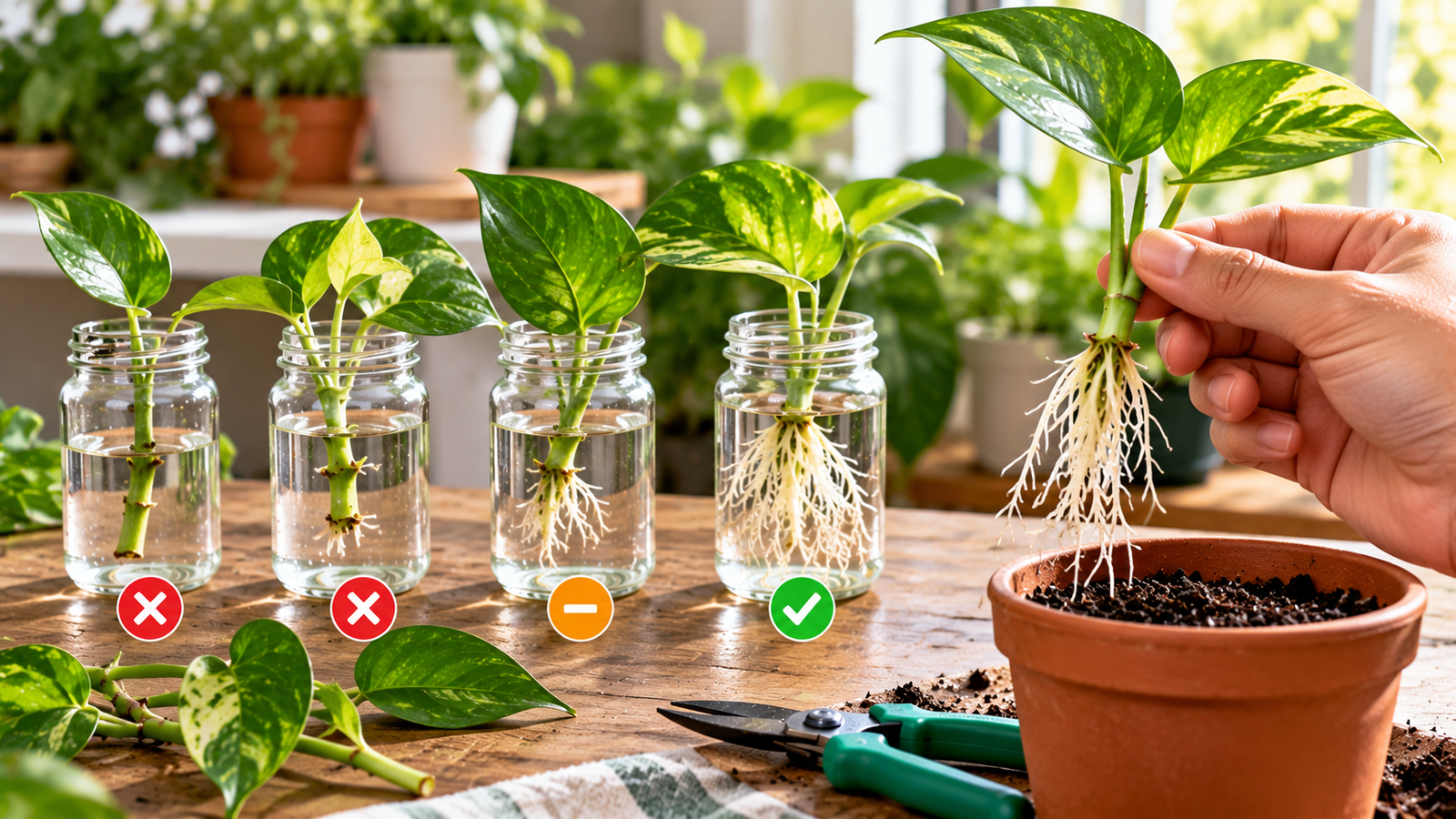
The most obvious sign that a plant cutting is ready to be planted is the development of healthy roots.
If you are propagating a cutting in water, you can easily check the roots without disturbing the plant. Healthy roots are usually light colored and firm. Depending on the plant, they may be white, cream, or light brown.
I like to wait until the roots are clearly developed rather than moving the cutting as soon as I see one tiny root.
A cutting with several roots has a much better chance of establishing itself in soil. The roots do not necessarily need to be very long, but there should be enough healthy growth to support the plant.
Check the Number of Roots
Root length is important, but the number of roots also matters.
A cutting with one thin root may still be developing. A cutting with several small roots is generally in a stronger position.
When I check my propagated cuttings, I look for a small network of roots rather than focusing only on the longest root.
This gives me more confidence that the cutting is actually establishing itself instead of simply producing one early root.
Healthy Roots Should Look Strong
Not every root means that a cutting is ready to be planted. You also need to consider the condition of those roots.
Healthy roots should generally look firm and active. They should not be completely soft, slimy, or falling apart.
If the roots have an unpleasant smell or appear damaged, I would not immediately move the cutting into soil. Instead, I would first investigate whether there is a problem with water quality, excessive moisture, or root rot.
Healthy roots are one of the best indicators that propagation is going well.
New Leaves Are Another Good Sign
New leaf growth can also tell you that a cutting is becoming established.
When a cutting begins producing fresh leaves, it usually shows that the plant is actively growing. If the cutting has both healthy roots and new growth, I feel much more comfortable moving it into soil.
However, new leaves alone are not enough. Some cuttings can produce new growth using stored energy before they have developed a strong root system.
That is why I prefer to consider both root development and new plant growth together.
The Stem Should Look Healthy
Before planting a cutting, inspect the stem carefully.
A healthy stem should generally remain firm and should not look black, mushy, or severely damaged. The cutting should also maintain a reasonably healthy appearance.
If the stem is becoming soft or discolored, planting it immediately may not solve the problem. It is better to identify the cause first.
A strong stem combined with healthy roots and fresh growth is a much better indication that the cutting is ready.
How Long Should Plant Cuttings Stay in Water?
There is no single number of days that works for every plant cutting.
Some plants develop roots quickly, while others take much longer. Temperature, light, water quality, plant variety, and the condition of the original cutting can all affect propagation speed.
Instead of following a strict calendar, I recommend watching the cutting itself.
If you see several healthy roots and signs of active growth, you can start thinking about transferring it to soil.
This is one reason I prefer observing the plant rather than depending only on a specific number of days.
What If the Roots Are Very Long?
Long roots may look impressive, but extremely long water roots are not always necessary before planting.
If a cutting has several healthy roots that are already growing well, it may be better to transfer it before the roots become excessively tangled.
Roots that develop in water have adapted to a different environment than roots growing in soil. Moving the plant into soil allows it to begin developing roots that are better suited to its new growing conditions.
I prefer transferring a healthy cutting once it has enough roots to support the transition rather than waiting for an enormous root system.
Prepare the Soil Before Planting
Once I decide that a cutting is ready, I prepare the soil before taking it out of the water.
The soil should be clean, loose, and well draining. A heavy soil that stays wet for a long time can create problems for young roots.
A small container is usually enough for a newly rooted cutting. I do not think a very large pot is necessary at this stage.
The goal is to give the developing roots enough room while making it easy to control moisture.
How to Plant a Rooted Cutting
I start by making a small hole in the soil. The hole should be large enough to accommodate the roots without forcing them into an unnatural position.
I gently place the roots into the hole and cover them with soil.
I avoid pressing the soil too hard because compacted soil can reduce airflow around the roots.
After planting, I water the soil gently. I want the soil to be moist but not completely soaked.
This first watering helps the soil settle around the roots and reduces large air pockets.
Give the Cutting Time to Adjust
One thing I have learned from plant propagation is that a cutting may need some time to adjust after being planted.
A plant that looked perfectly healthy in water may appear slightly different during the first few days in soil. This does not automatically mean something has gone wrong.
The roots are adapting to a new environment, and the plant needs time to establish itself.
I usually avoid making several changes at once. I give the plant suitable light, moderate moisture, and time to settle.
Avoid Overwatering After Planting
Overwatering is one of the most common problems I see with newly planted cuttings.
Because the roots are still developing, it is easy to think the plant needs lots of water. In reality, constantly wet soil can reduce oxygen around the roots and increase the risk of root problems.
I prefer checking the soil before watering again.
If the surface is starting to dry and the plant needs moisture, I water gently. The exact watering schedule depends on the plant, container, soil, temperature, and growing conditions.
Give Newly Planted Cuttings Suitable Light
Light is another important factor after planting a cutting.
Most newly rooted cuttings benefit from bright but suitable light while they adjust. Very intense direct sunlight can sometimes stress a young cutting, especially if it was previously growing in water or lower light.
I prefer giving the plant a stable location rather than constantly moving it around.
Once the cutting becomes stronger and begins producing new growth, its light requirements can be adjusted according to the needs of that particular plant.
Signs That the Cutting Is Successfully Established
After planting, there are several signs that can tell you the cutting is adapting well.
New leaves are one of the best signs. Continued growth and a firm stem are also encouraging.
Another positive sign is that the plant remains stable in the soil instead of becoming loose.
If you gently touch the stem and the plant feels more firmly anchored after some time, it usually means the roots are developing further.
Do not pull the plant out of the soil to check the roots. Doing this can damage the new roots and slow the establishment process.
What If a Cutting Is Not Ready?
If a cutting does not have enough roots, I would simply give it more time.
There is no need to rush the process.
Keep monitoring the water if you are using water propagation. Change the water when necessary and keep the cutting in suitable light.
If the cutting remains healthy, it may eventually produce enough roots for planting.
Sometimes patience is the most important part of plant propagation.
Common Mistakes to Avoid
One common mistake is planting a cutting immediately after seeing the first tiny root.
Another mistake is using a large container with heavy, wet soil.
Some people also place newly planted cuttings in strong sunlight immediately, which can cause unnecessary stress.
Overwatering is another problem worth avoiding.
I also recommend handling the roots as little as possible. Young roots are delicate, and unnecessary handling can damage them.
My Simple Rule for Knowing When a Cutting Is Ready
When I am deciding whether a plant cutting is ready to be planted, I look at several things together.
First, I check whether there are several healthy roots. Then I look at the stem and leaves to make sure the cutting still looks strong. If I also see new growth, that gives me even more confidence.
I do not rely on one sign alone.
For me, the best combination is healthy roots, a firm stem, and signs of active growth.
Final Thoughts
Knowing when a plant cutting is ready to be planted can make plant propagation much easier. The most important thing is not to rush the process.
A cutting needs enough roots to begin taking up water and nutrients from the soil. Healthy roots, new leaves, a strong stem, and continued growth are all useful signs that the plant is ready for the next stage.
In my experience, patience makes a big difference. Instead of planting a cutting as soon as possible, I prefer to give it enough time to develop a healthy root system.
Once the cutting is ready, planting it in loose, well draining soil, providing suitable light, and avoiding excessive watering can help it adjust successfully.
Plant propagation is not always perfect, and some cuttings may fail. That is completely normal. With practice, it becomes easier to recognize healthy roots and understand when a cutting is strong enough to move into soil.
If you regularly propagate plants, learning how to recognize these signs will help you become more confident and improve your chances of growing healthy new plants from cuttings.