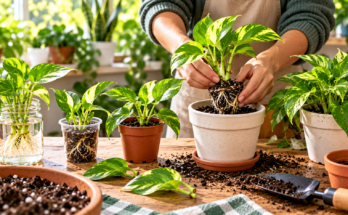
Plant propagation is one of my favorite ways to grow more plants without spending a lot of money. There is something very satisfying about taking a healthy part of a plant and watching it develop into a new plant. However, propagation can sometimes be frustrating, especially when cuttings fail to root, leaves become weak, or new growth suddenly stops.
From my experience, most plant propagation mistakes happen because of a few simple problems. These include using unhealthy plant material, giving too much water, choosing the wrong soil, providing poor light, or simply being too impatient. The good thing is that most of these problems are easy to avoid once you understand what plants need during propagation.
In this article, I will explain the most common plant propagation mistakes and how to avoid them. These tips can help beginners improve their success rate and grow healthier new plants at home.
Choosing an Unhealthy Plant for Propagation
One of the biggest mistakes is taking a cutting from a weak or unhealthy plant. It is tempting to propagate any plant that has an extra stem or leaf, but not every part of a plant is suitable for propagation.
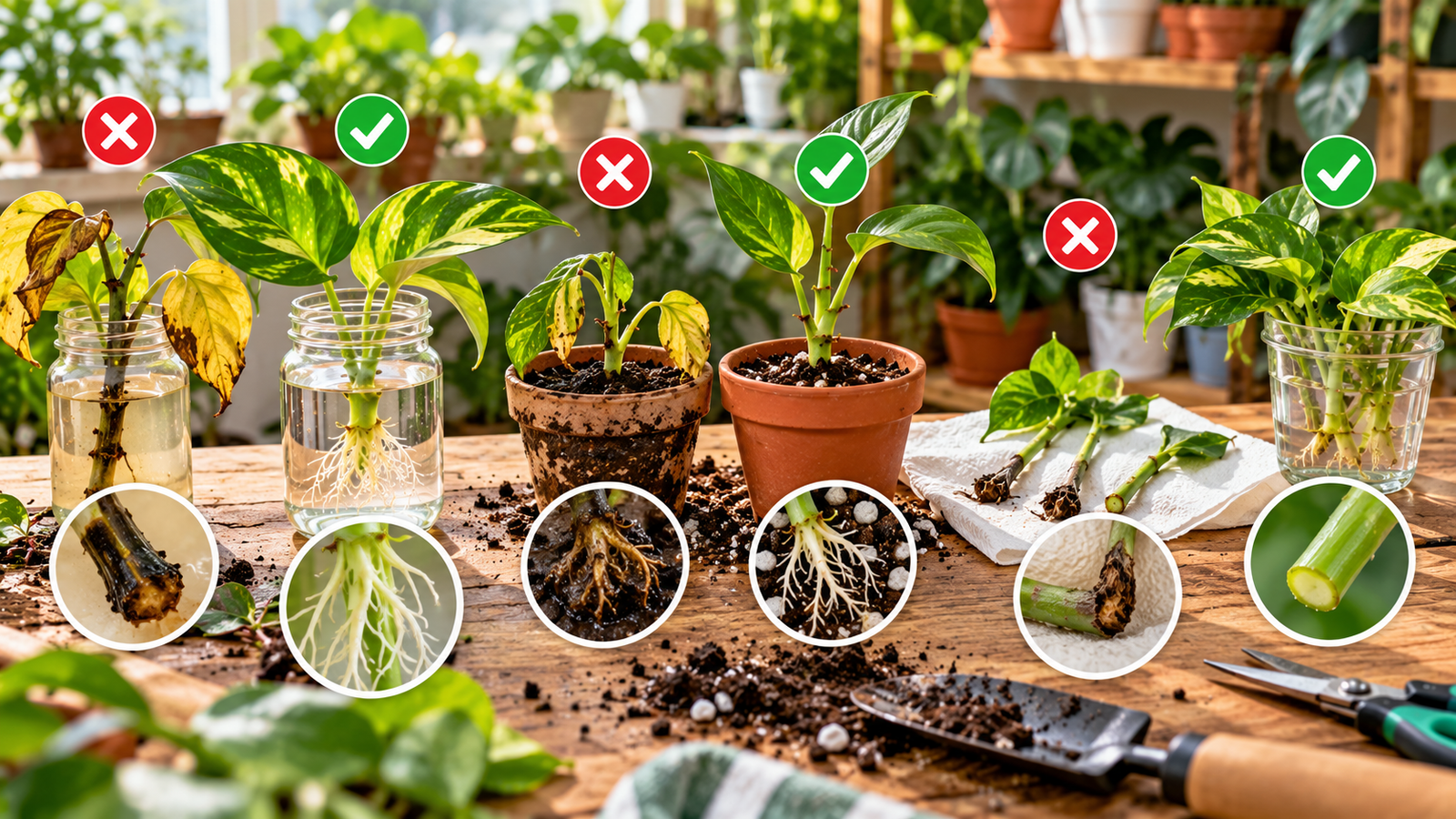
A cutting should usually come from a healthy plant with strong growth. Avoid stems or leaves that have signs of disease, serious insect damage, rot, or severe discoloration.
I prefer to select fresh and healthy plant material because it gives the new plant a much better starting point. A healthy cutting has more energy to produce roots and new growth.
Before taking a cutting, inspect the parent plant carefully. Make sure it is growing actively and does not have obvious pest or disease problems.
Taking Cuttings at the Wrong Time
Timing can also affect plant propagation success. Some plants propagate better during active growth, while others can be propagated at different times of the year.
One common mistake is taking cuttings when the parent plant is stressed because of extreme heat, cold, drought, or another problem.
If possible, I recommend propagating when the plant is healthy and actively growing. During this period, many plants have enough energy to support new root development.
However, the best time depends on the type of plant. Before propagating a specific plant, it is useful to understand its natural growth cycle.
Using the Wrong Part of the Plant
Not every cutting will produce roots. A stem cutting usually needs a suitable section of stem, while some plants can grow from individual leaves or leaf sections.
For stem propagation, one important detail is the presence of a node. A node is the point where leaves or buds grow from the stem. Many plants need a node to produce new roots and shoots.
A common mistake is cutting a stem without including a suitable node. The cutting may remain alive for some time but fail to produce new growth.
I always check the structure of the plant before making a cutting. Knowing where the nodes are can make a major difference.
Making Poor Cuts
A rough or damaged cutting can make propagation more difficult. Using a dull or dirty tool can crush the plant tissue instead of making a clean cut.
I prefer using a clean and sharp pair of scissors or pruning shears. A clean cut creates less unnecessary damage and gives the cutting a better chance to recover.
It is also important to avoid repeatedly cutting the same piece of plant material. Prepare the cutting carefully and handle it gently afterward.
Clean tools are especially important because dirty equipment can transfer unwanted microorganisms between plants.
Giving Too Much Water
Overwatering is one of the most common plant propagation mistakes. Many beginners believe that more water will help roots develop faster. Unfortunately, too much moisture can create the opposite result.
When the propagation medium remains constantly wet, there may not be enough air around the developing roots. This can encourage rot and make the cutting weak.
For soil propagation, I like to keep the growing medium lightly moist rather than completely soaked. The exact amount of water depends on the plant, container, temperature, and growing medium.
If you notice a cutting becoming soft, dark, or unpleasantly mushy, excessive moisture may be one of the possible causes.
Letting Cuttings Dry Out Too Much
While overwatering is a problem, allowing a cutting to become completely dry can also reduce its chances of success.
A new cutting may not have roots to absorb enough moisture. It can lose water quickly, especially in warm and dry conditions.
This is why maintaining balanced moisture is so important. The goal is not to keep the cutting soaked. The goal is to create a stable environment where the cutting does not dry out completely.
I regularly check the propagation medium instead of following a fixed watering schedule. This helps me respond to the actual condition of the cutting.
Using Poor Quality Growing Medium
The growing medium plays an important role in successful plant propagation. Heavy soil can hold too much water and may make it difficult for young roots to develop properly.
A good propagation medium should provide moisture while also allowing air to reach the developing roots.
Depending on the plant, people commonly use materials such as potting mix, perlite, coco coir, sand, or combinations of these materials.
I avoid using extremely heavy or compact soil for delicate cuttings. A loose and well draining medium generally makes it easier to control moisture.
Choosing the Wrong Container
The container may seem like a small detail, but it can influence propagation results. A container without drainage holes can allow excess water to collect around the cutting.
This creates a higher risk of root rot.
I prefer containers with drainage holes because excess water can escape. Small containers are often enough for individual cuttings because there is no need to use a large amount of growing medium.
The container should also be clean before use. Reusing a dirty container without cleaning it first can create unnecessary problems.
Providing Too Much Direct Sunlight
New cuttings often need light, but strong direct sunlight can be too intense for them.
Because a fresh cutting may not have an established root system, it can lose moisture quickly. Strong sunlight can cause leaves to wilt or dry out.
I usually prefer bright indirect light for many types of indoor plant propagation. This provides light for the cutting without exposing it to excessive heat.
Outdoor plants can have different requirements, so it is important to consider the specific plant before deciding where to place the cutting.
Keeping Cuttings in Complete Darkness
The opposite mistake is keeping cuttings somewhere with almost no light. Plants need light to support important biological processes, and insufficient light can slow their development.
A dark room may seem like a safe place because it reduces the risk of sunlight damage, but it is not usually ideal for healthy plant growth.
A bright location with suitable indirect light is often a better choice. I always try to find a balance between enough light and protection from harsh conditions.
Moving the Cutting Too Often
Another mistake I see often is checking the cutting too frequently. It is natural to want to know whether roots have started growing, but constantly pulling a cutting out of the soil can damage developing roots.
Young roots are delicate. Disturbing them repeatedly can slow progress or cause damage.
Once I place a cutting in its propagation environment, I try to give it time. I monitor the leaves, moisture, and general condition without disturbing the roots unnecessarily.
Patience is one of the most important parts of plant propagation.
Using Too Much Rooting Hormone
Rooting hormone can be useful for some plants, but using more does not necessarily mean faster rooting.
Applying excessive rooting hormone may not improve results and can sometimes interfere with healthy development.
If you decide to use rooting hormone, follow the product instructions carefully. A small and appropriate amount is generally better than covering the cutting with unnecessary powder or gel.
It is also worth remembering that many plants can root successfully without rooting hormone when the correct conditions are provided.
Ignoring Humidity
Humidity can be important when propagating certain plants. Fresh cuttings can lose moisture through their leaves before they develop enough roots to replace that moisture.
Very dry air can therefore make propagation more difficult.
Some gardeners use a clear plastic cover or propagation box to increase humidity. However, excessive humidity without enough airflow can create other problems, including fungal growth.
I believe the key is balance. Humidity can help, but fresh air and cleanliness are also important.
Propagating Too Many Cuttings at Once
When I first became interested in propagation, it was easy to get excited and prepare too many cuttings. However, propagating a large number of cuttings at once can make it harder to monitor each one properly.
If you are a beginner, starting with a small number can be easier. You can observe what works and learn from unsuccessful attempts.
Propagation is a learning process. Losing a few cuttings does not mean you are bad at gardening. It simply gives you information about what needs to change.
Giving Up Too Early
One of the biggest mistakes in plant propagation is expecting results too quickly.
Some cuttings can develop roots within a relatively short period, while others take much longer. The speed depends on the plant species, temperature, light, moisture, and other growing conditions.
I try not to judge a cutting too quickly. If it still looks healthy and shows no signs of rot or serious damage, I give it more time.
Successful plant propagation requires patience because roots often develop before there is obvious new growth above the soil.
How to Improve Your Plant Propagation Success
The easiest way to improve plant propagation is to focus on the basics. Start with healthy plant material, use clean tools, choose a suitable growing medium, and provide the right moisture and light.
Keep your containers clean and make sure they have proper drainage. Avoid disturbing cuttings unnecessarily and monitor them regularly.
I also recommend keeping simple notes when trying to propagate a plant for the first time. You can record the date, type of cutting, growing medium, watering routine, and location. If something works well, you will know what to repeat.
If a cutting fails, do not immediately consider it a wasted effort. Try to understand what happened. Was the soil too wet? Was the cutting too weak? Did it receive too much sunlight? Was there not enough humidity?
These small observations can help you become much better at propagation over time.
Final Thoughts
Plant propagation does not have to be complicated. Most common plant propagation mistakes come from simple issues such as excessive water, poor light, unhealthy cuttings, dirty tools, unsuitable soil, or lack of patience.
In my opinion, the best approach is to keep the process simple and pay attention to what the plant is telling you. Start with healthy material, create suitable growing conditions, and avoid making unnecessary changes.
Not every cutting will succeed, and that is completely normal. Even experienced gardeners lose cuttings from time to time. What matters is learning from each attempt.
Once you understand the basic needs of a developing cutting, plant propagation becomes much easier and more enjoyable. With patience, observation, and proper care, you can turn healthy parts of your existing plants into new plants and gradually build a larger and healthier garden.