Creating a beautiful garden does not always require a large yard. In my experience, even a small outdoor space can become a comfortable and attractive garden when the layout is planned carefully. Whether you have a small backyard, balcony, patio, rooftop, or narrow outdoor area, the right garden layout can help you make the most of every available space.
A small garden can actually be easier to manage because you have less area to maintain. The main goal is to choose suitable plants, arrange them properly, and avoid making the space feel crowded. With a few simple ideas, you can create a garden that looks organized, fresh, and enjoyable throughout the year.
In this article, I will share some easy garden layout ideas for small outdoor spaces that I find practical and simple to follow.
Start by Measuring Your Outdoor Space
Before buying plants or garden decorations, I recommend measuring the available area. This simple step can prevent many problems later.
Look at the length and width of your space and think about how you want to use it. You should also notice where sunlight reaches during different parts of the day. Some areas may receive full sunlight, while others may remain shaded.
Make a simple sketch of your outdoor space on paper. Mark doors, windows, pathways, walls, and existing structures. You do not need professional design skills. A basic drawing can help you understand where everything can fit.
When working with a small space, every section matters. Good planning can make even a limited area feel much larger.
Choose a Simple Garden Layout
One of the easiest garden layout ideas for small outdoor spaces is to keep the design simple. Too many different shapes, plants, and decorations can make a small garden look messy.
I prefer using a clear structure with a few main planting areas. For example, you can create one border along a wall, place several containers near a seating area, and leave a small open space in the center.
Simple layouts are also easier to maintain. You can water plants, remove weeds, and check for pests without constantly moving around decorations or containers.
Use Vertical Gardening
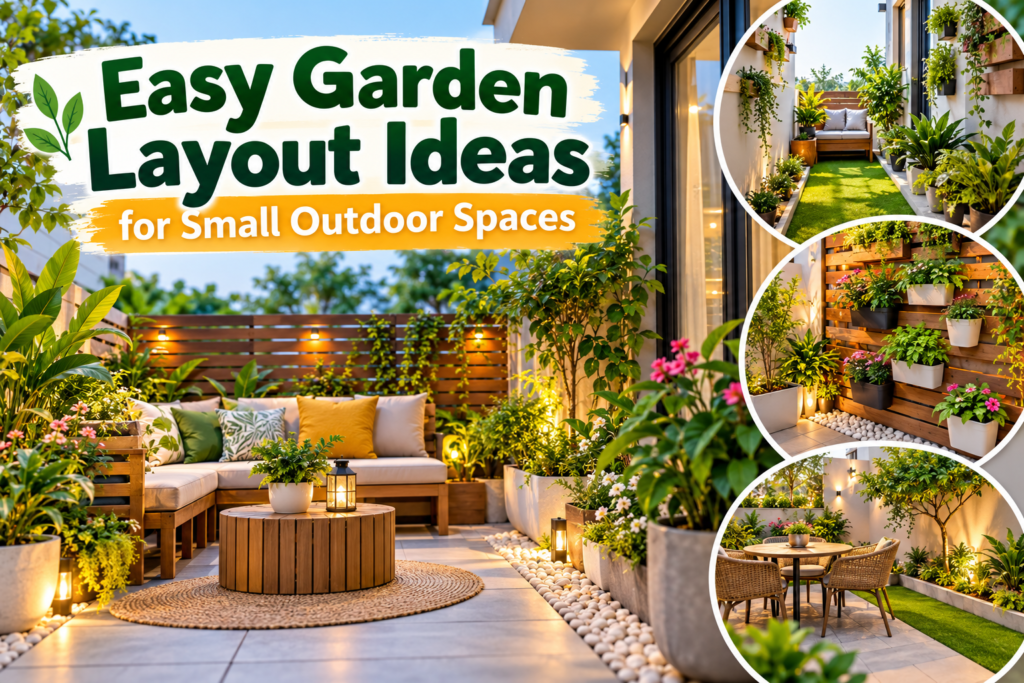
Vertical gardening is one of the best solutions for small outdoor spaces. Instead of using only floor space, you can use walls, fences, railings, and other vertical surfaces.
You can grow plants in hanging pots, wall planters, wooden shelves, or vertical plant stands. Climbing plants can also be trained along a suitable support.
Herbs, flowers, and some vegetables can work well in vertical gardens. Plants such as mint, basil, parsley, trailing flowers, and certain leafy vegetables can be grown in suitable containers.
The main advantage is that vertical gardening allows you to grow more plants without taking up much ground space.
Create a Narrow Garden Border
If your outdoor space is narrow, consider creating a garden border along one side. This can leave enough room for walking while still giving you an attractive planting area.
You can plant flowers, herbs, small shrubs, or ornamental plants depending on the amount of sunlight available.
Try to place taller plants toward the back and shorter plants toward the front. This arrangement allows most plants to remain visible and gives the garden a more organized appearance.
A narrow border can also make an otherwise empty wall or fence look much more attractive.
Try a Container Garden
Container gardening is especially useful when you have limited outdoor space. You do not need a traditional garden bed to grow beautiful plants.
You can use pots of different sizes and arrange them around your patio, balcony, entrance, or small backyard. Containers also give you more control because you can move them when necessary.
When choosing containers, remember that plants have different root requirements. Some plants need deeper pots, while others can grow comfortably in wider but shallower containers.
I also recommend choosing containers with drainage holes. Good drainage helps prevent excess water from staying around the roots.
Use Corners Wisely
Corners are often ignored when designing a small garden. However, they can become some of the most useful areas.
A corner can hold a tall container, vertical planter, small tree, or group of plants. You can also place a small bench or decorative feature in a corner if you have enough room.
Using corners effectively allows you to keep the center of the garden open. This can make the entire outdoor space appear more spacious.
For very small gardens, I find that using corners for plants while keeping the middle area simple creates a comfortable balance.
Add a Small Seating Area
If space allows, include a small seating area in your garden. You do not need a large outdoor furniture set.
A single chair, small bench, or two compact chairs can create a relaxing place to enjoy your plants. Position the seating area where you can easily see the garden.
You can surround the seating area with a few containers or low growing plants. Avoid placing too many pots around the chair because you still need enough room to move comfortably.
A small garden should not only look attractive. It should also be useful and enjoyable.
Use Raised Garden Beds Carefully
Raised garden beds can work well in small outdoor spaces when their size is planned properly. A narrow raised bed along a wall can provide space for flowers, herbs, and vegetables.
Before building one, consider how much walking space you need. A garden bed that is too wide may make the area difficult to use.
For a small garden, I prefer compact raised beds that are easy to reach from both sides or accessible from one side when placed against a wall.
Raised beds can also give the garden a clean and organized appearance.
Grow Plants at Different Heights
Using different plant heights can make a small garden look more interesting. If every plant is the same height, the space may appear flat.
You can combine low growing plants, medium sized flowers, and taller plants. Place taller plants toward the back or corners and shorter plants closer to the front.
This technique creates layers without requiring additional floor space.
However, avoid choosing too many large plants. A plant that eventually becomes too big can quickly take over a small garden.
Choose Plants That Fit the Space
Plant selection is one of the most important parts of designing a small garden layout.
Before buying a plant, check its mature size. A small plant at the garden center may eventually become much larger.
For small outdoor spaces, compact plants, dwarf varieties, herbs, small flowering plants, and suitable container plants can be practical choices.
You should also consider sunlight, temperature, watering needs, and soil requirements. Choosing plants that naturally suit your outdoor conditions can make garden care much easier.
Create a Small Pathway
Even a tiny garden can benefit from a simple pathway. You do not need a long walkway. A narrow path made from stepping stones or suitable outdoor materials can provide structure.
A pathway can lead from the entrance to a seating area or separate different planting sections.
When designing a small garden, keep the pathway simple. A complicated pattern may use too much space and make the garden feel crowded.
Use One Main Focal Point
A small garden can benefit from having one main focal point. This could be a beautiful flowering plant, small tree, attractive pot, water feature, or garden bench.
Having one main feature gives the eye somewhere to focus. You do not need many decorative items to make the garden interesting.
In my view, choosing one strong focal point often looks better than filling the garden with several unrelated decorations.
Use Wall Space for Herbs
If you enjoy growing herbs, walls and fences can provide valuable gardening space.
Small containers can be attached to suitable structures or placed on narrow shelves. You can grow herbs such as basil, coriander, parsley, thyme, and mint depending on your local growing conditions.
Keeping herbs close to the house can also make harvesting convenient.
Just make sure the plants receive the amount of sunlight they need and that containers have proper drainage.
Keep Colors Simple
Color can have a major effect on how a small garden feels. Using too many different colors may make the space appear busy.
You can choose two or three main flower colors and combine them with different shades of green. This creates a more coordinated appearance.
Green foliage can also provide a calm background for colorful flowers.
I personally think a simple color scheme makes a small garden feel cleaner and more organized.
Leave Some Open Space
One common mistake in a small garden is trying to fill every available area. Empty space is not wasted space.
Leaving some open areas can make your garden feel larger and easier to move around. It also gives plants room to grow without competing for space.
Instead of asking how many plants you can fit into the garden, think about how comfortable and balanced the space will feel after everything grows.
Think About Maintenance
A beautiful garden layout should also be easy to maintain. Before finalizing your design, think about watering, pruning, cleaning, fertilizing, and removing dead leaves.
Keep frequently used plants in locations that are easy to reach. Avoid placing containers where you cannot comfortably check them.
If you have limited time, choose plants that suit your conditions and do not require constant attention.
A simple garden that stays healthy is much better than a complicated garden that becomes difficult to maintain.
Final Thoughts
Small outdoor spaces can become beautiful gardens with thoughtful planning. You do not need a large backyard or an expensive garden design to create an attractive place.
From my point of view, the best approach is to start with the space you already have and work around its natural features. Use vertical gardening, containers, narrow borders, corners, and different plant heights to make the most of limited space.
Choose plants according to their mature size and growing requirements, and avoid overcrowding the garden. Keep the layout simple, leave some open space, and include a small seating area if possible.
The most important thing is to create a garden that works for you. A small outdoor garden can provide flowers, herbs, fresh greenery, and a peaceful place to relax. With a little planning and regular care, even the smallest outdoor space can become a welcoming garden that you enjoy throughout the year.