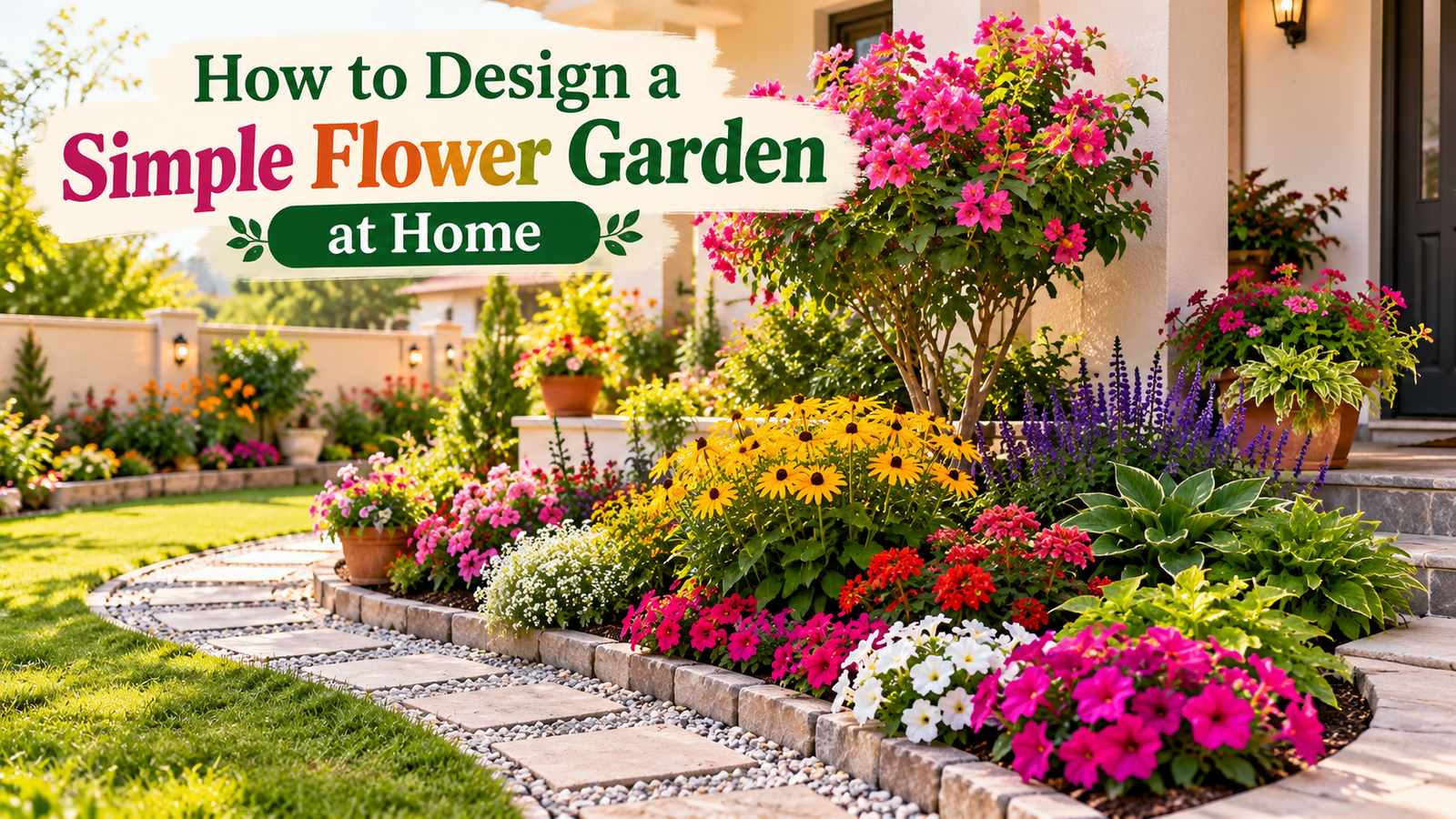
Designing a simple flower garden at home is one of the easiest ways to make an outdoor space look colorful, peaceful, and inviting. I believe a flower garden does not need to be large or expensive to look beautiful. Even a small corner, balcony, front yard, or backyard can become a pleasant garden with the right planning and plant choices.
When I plan a flower garden, I like to keep things simple. I first look at the available space, sunlight, soil, and the type of flowers that can grow well in that environment. This makes gardening easier and also helps plants stay healthy.
In this guide, I will explain how to design a simple flower garden at home, from choosing the right location to arranging flowers and caring for them.
Choose the Right Location
The first step in designing a flower garden is choosing a suitable location. Most flowering plants need plenty of sunlight, although the exact requirement depends on the plant.
Before planting anything, I recommend observing your garden for a full day. Notice which areas receive direct sunlight in the morning, afternoon, or evening. Some areas may receive several hours of sunlight, while others may remain shaded.
If you want to grow sun loving flowers, choose an area that receives around six or more hours of sunlight each day. For shade loving flowers, choose a location with filtered sunlight or partial shade.
The location should also be easy to access. I find that gardens are easier to maintain when I can comfortably water the plants, remove weeds, trim flowers, and check for pests.
Measure Your Garden Space
You do not need a huge space to create a beautiful flower garden. Before buying plants, measure the available area.
For a small garden, you can use a simple rectangular or circular design. If you have a larger space, you can divide it into several sections.
Measuring the area helps you avoid planting too many flowers in one place. It also gives the plants enough room to grow.
For a very small space, containers and flower pots can be a great option. They allow you to create a colorful flower garden without preparing a large piece of land.
Decide on a Simple Garden Style
Having a basic garden style can make the design look more organized. You do not need a complicated landscape plan.
A simple flower garden can have a straight flower border along a wall, a small circular flower bed, or several flower pots arranged around a sitting area.
I personally prefer simple arrangements because they are easier to maintain. Too many different designs can make a small garden look crowded.
You can also choose a color theme. For example, you might use flowers in shades of pink and white or combine yellow, purple, and blue flowers.
A simple color plan can make the entire garden look more balanced.
Select Flowers That Suit Your Area
Choosing the right flowers is one of the most important parts of flower garden design. Different flowers have different requirements for sunlight, water, soil, and temperature.
Before buying flowers, check whether they are suitable for your local climate. It is usually better to choose plants that naturally perform well in your area.
You can combine annual flowers and perennial flowers depending on your gardening goals. Annual flowers generally provide seasonal color, while perennial plants can return year after year in suitable conditions.
When choosing flowers, I also consider their mature size. A small plant at the garden center may eventually become much larger. Giving plants enough space from the beginning can prevent overcrowding later.
Create Different Plant Heights
One of the easiest ways to make a flower garden look attractive is to use plants of different heights.
Tall flowers can be placed toward the back of the garden, medium sized plants in the middle, and shorter flowers toward the front.
This arrangement allows you to see more of the flowers instead of having tall plants block smaller ones.
If you are designing a flower border along a wall or fence, tall plants can provide a nice background. Short flowering plants can then be placed near the edge.
Using different heights also gives the garden more depth and makes the planting area look more natural.
Prepare the Soil Before Planting
Healthy soil is important for a successful flower garden. Before planting, remove weeds, stones, dry roots, and other unwanted materials from the area.
Loosen the soil with a garden fork or hand tool. This helps roots spread more easily.
If the soil is poor, adding suitable organic matter can improve its structure. Compost can help provide nutrients and improve soil quality.
However, I recommend avoiding excessive fertilizer. More fertilizer does not always mean better growth. Too much fertilizer can sometimes damage plants or encourage excessive leafy growth instead of flowers.
If possible, learn about your soil before making major changes. Different flowers have different soil preferences.
Arrange Flowers Before Planting
One useful method is to place the flower pots or young plants in their planned positions before planting them.
This gives you a chance to see how the garden will look.
Move the plants around until you are happy with the arrangement. Make sure tall plants are not blocking smaller ones and that there is enough space between plants.
This simple step can save time because changing the design after planting can disturb roots.
I find it much easier to create a balanced flower garden when I can see the arrangement before putting everything into the soil.
Leave Enough Space Between Plants
One common gardening mistake is planting flowers too close together.
Young plants may look small when they are first planted, but they can grow considerably over time. Crowded plants may have poor airflow and can compete for water, nutrients, and sunlight.
Always check the recommended spacing for each plant. If you are unsure, leaving slightly more space is usually better than creating an overcrowded garden.
Good spacing can also make maintenance easier because you will have room to water and inspect the plants.
Add a Simple Garden Border
A garden border can make a flower bed look neat and organized. You can use stones, bricks, wooden edging, or other suitable garden materials.
The purpose of a border is not only decoration. It can also help separate the flower bed from grass, pathways, or other parts of the yard.
Keep the design simple. A clean border around a colorful flower bed can create a finished appearance without requiring expensive landscaping.
Consider Flowering Seasons
If you want your garden to remain colorful for a longer period, think about when different plants bloom.
Some flowers bloom during cooler seasons, while others perform better during warmer months. By selecting plants with different flowering periods, you may be able to enjoy flowers across several seasons.
When choosing plants, check their expected blooming period and growing requirements.
This approach is especially useful if you want your garden to look attractive rather than having all the flowers bloom at exactly the same time.
Add Flowers in Containers
Containers are a useful option for small home gardens. They can be placed on patios, balconies, entrances, steps, or other suitable areas.
Flower pots also allow you to move plants when necessary. For example, you can move a container to a sunnier location if the plant is not receiving enough light.
Choose containers with drainage holes. Good drainage helps prevent excess water from remaining around the roots.
You can use different pot sizes, but try to keep the arrangement organized. Too many different container styles can make a small garden look messy.
Think About Watering
Watering is an important part of flower garden care. Newly planted flowers usually need regular attention while they establish their roots.
The exact watering schedule depends on the plant, weather, soil, and container size.
Instead of watering automatically every day, check the soil first. If the surface is dry and the plant needs moisture, water it appropriately.
Watering deeply can encourage roots to grow into the surrounding soil. However, avoid keeping the soil constantly waterlogged.
Early morning is often a convenient time to water because plants can use the moisture during the day.
Maintain Your Flower Garden Regularly
A simple flower garden still needs regular maintenance. You do not need to spend hours every day. A few small tasks each week can make a big difference.
Remove weeds before they become large. Check leaves and stems for signs of insects or disease. Remove damaged flowers and leaves when necessary.
Some flowering plants benefit from deadheading, which means removing old flowers. This can help certain plants produce more blooms.
Also check the soil around your plants and make sure the garden is not becoming too dry or overly wet.
Regular observation is one of the best habits a gardener can develop.
Avoid Making the Garden Too Complicated
When designing a flower garden at home, it can be tempting to buy many different plants. However, more plants do not always create a better garden.
I believe a simple design with a few carefully selected flowers can look much better than a crowded garden.
Choose plants that have similar care requirements when possible. This makes watering and maintenance easier.
Start with a small area if you are new to gardening. Once you become comfortable with plant care, you can gradually expand the garden.
Add a Small Decorative Feature
A simple decorative feature can give your flower garden more personality. You could add a small bench, garden stone, bird feeder, decorative pot, or simple pathway.
The feature should complement the flowers instead of taking attention away from them.
For a small garden, one decorative element may be enough. Keeping the design simple helps the flowers remain the main attraction.
Final Thoughts
Designing a simple flower garden at home does not require a professional landscape designer or a large budget. With a little planning, you can turn even a small outdoor space into a colorful and enjoyable area.
Start by choosing the right location and observing the amount of sunlight available. Measure your space, select suitable flowers, prepare the soil, and arrange plants according to their height. Leave enough room for growth and choose a watering and maintenance routine that works for your garden.
From my point of view, the most important part of gardening is not creating a perfect garden immediately. It is learning how plants respond to their environment and improving the garden little by little.
A simple flower garden can become a relaxing part of your home. With the right plants, proper spacing, healthy soil, and regular care, you can create a beautiful garden that brings color and life to your everyday surroundings.