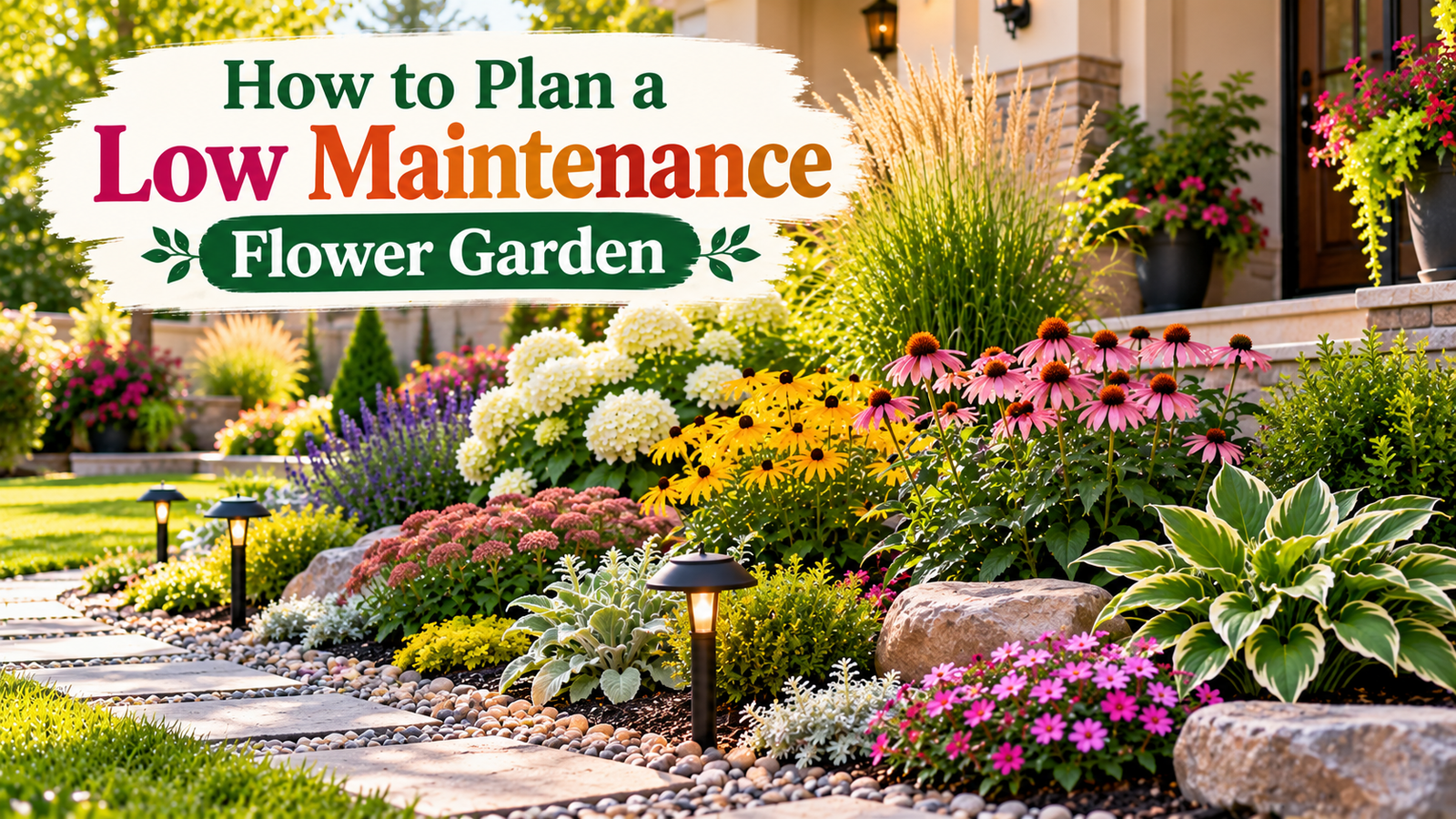
A flower garden can make any outdoor space feel more beautiful, fresh, and welcoming. However, many people avoid growing flowers because they believe a garden requires constant watering, pruning, fertilizing, and cleaning. In my experience, this is not always true. With the right planning and plant choices, it is possible to create a beautiful flower garden that needs much less daily attention.
The key to a low maintenance flower garden is not avoiding care completely. Instead, the goal is to make smart choices that reduce the amount of regular work. Choosing suitable flowers, preparing the soil properly, placing plants in the right locations, and using simple watering methods can make garden care much easier.
In this article, I will explain how I would plan a low maintenance flower garden and the practical steps that can help keep it attractive without spending hours working in it every day.
Choose the Right Location
The first step in planning a low maintenance flower garden is choosing a suitable location. Before buying plants, I would observe the garden area for a few days and notice how much sunlight it receives.
Most flowering plants need several hours of sunlight to grow and produce flowers. Some flowers prefer full sun, while others grow better in partial shade. Choosing plants according to the available sunlight can prevent many problems later.
If an area receives strong sunlight for most of the day, I would choose flowers that can tolerate sunny conditions. For a shaded area, I would look for plants that naturally perform well with less direct sunlight.
The location should also have good drainage. Water that remains around plant roots for a long time can cause root problems and other plant diseases. A well chosen location can reduce the amount of maintenance needed throughout the growing season.
Select Low Maintenance Flowers
Plant selection is one of the most important parts of creating a low maintenance flower garden. Some flowers need frequent attention, while others are naturally easier to care for.
When choosing flowers, I prefer plants that are known for being hardy and adaptable. Depending on the climate, options may include marigolds, zinnias, coneflowers, lavender, daylilies, cosmos, salvia, and some varieties of geraniums.
The best flowers for your garden will depend on your local climate, soil, sunlight, and seasonal temperatures. I would always check the growing requirements of a plant before adding it to the garden.
Native and locally adapted plants can also be a good choice because they are often better suited to local weather conditions. When plants are naturally comfortable in their environment, they generally require less extra attention.
Plan the Garden Before Planting
A simple garden plan can save a lot of work later. Before planting, I would decide where each type of flower should go and how much space it needs when fully grown.
It is tempting to plant many flowers close together because the garden looks fuller immediately. However, overcrowding can create problems. Plants may compete for water, nutrients, sunlight, and air circulation.
I prefer leaving enough space between plants so they can grow naturally. Good spacing also makes it easier to water, inspect, prune, and remove unwanted plants.
When planning the layout, taller flowers can be placed toward the back of a flower bed, medium height plants in the middle, and shorter flowers near the front. This arrangement can create a balanced appearance while making individual plants easier to access.
Prepare the Soil Properly
Healthy soil is one of the best ways to reduce garden maintenance. When plants grow in good soil, they are more likely to develop strong roots and healthy growth.
Before planting, I would remove weeds, stones, and old plant material from the garden bed. Then I would loosen compacted soil and add suitable organic matter if necessary.
Compost can improve soil structure and help provide nutrients. However, adding too much fertilizer is not always better. I prefer understanding the condition of the soil first and then adding what the plants actually need.
Good soil preparation at the beginning can reduce problems with weak growth and poor flowering later.
Use Mulch to Reduce Garden Work
Mulching is one of my favorite techniques for making a garden easier to maintain. A layer of organic mulch around plants can help the soil retain moisture and can also reduce the growth of weeds.
Mulch can include materials such as shredded leaves, compost, or other suitable organic materials. It should be placed around the plants without covering the stems directly.
During hot weather, mulch can help protect the soil from drying too quickly. It can also help keep the soil temperature more stable.
Because mulch reduces weed growth and moisture loss, it can save time that would otherwise be spent watering and weeding.

Choose an Easy Watering Routine
Watering can become one of the biggest maintenance tasks in a flower garden. I believe the best approach is to create a simple and consistent watering routine.
Instead of giving plants small amounts of water every day, many established plants benefit from deeper and less frequent watering, depending on their specific requirements and local weather.
A drip irrigation system or soaker hose can make watering much easier. These methods deliver water close to the soil and plant roots instead of spraying the entire garden.
I would also check the soil before watering. If the soil is still moist, there may be no need to water immediately. Overwatering can be just as harmful as underwatering.
Group Plants With Similar Needs
Another useful strategy is to group plants according to their care requirements. For example, flowers that need more sunlight and water can be planted together, while plants that prefer drier conditions can have their own area.
This approach makes watering and general care much easier. Instead of treating every plant differently, I can manage groups of plants with similar needs.
Grouping plants also creates a more organized appearance. It can make the garden look intentionally designed rather than randomly planted.
Avoid Plants That Need Constant Attention
If the main goal is a low maintenance flower garden, I would avoid filling the garden with plants that require constant pruning, special feeding, or regular protection.
Some beautiful flowers may need frequent deadheading or careful maintenance to keep them looking their best. There is nothing wrong with growing these plants, but they may not be the best choice if you have limited time.
Before purchasing a plant, I would ask myself a simple question: How much care will this plant need throughout the year?
This small consideration can prevent a lot of unnecessary work.
Keep the Garden Simple
A low maintenance garden does not need dozens of different flower varieties. In fact, using fewer plant types can make the garden easier to manage.
I prefer choosing a small selection of flowers that complement one another in color, height, and growing requirements. Repeating the same plants in different parts of the garden can create a more attractive and organized appearance.
A simple design also makes maintenance easier because you become familiar with the needs of each plant.
Control Weeds Early
Weeds can quickly turn a beautiful flower garden into a difficult project. I have found that removing small weeds early is much easier than allowing them to grow large.
Regularly checking the garden for unwanted growth can prevent weeds from becoming established. Mulching can also reduce the number of weeds that appear.
When removing weeds, I try to remove the roots whenever possible. Leaving roots behind may allow some weeds to grow again.
Spending a few minutes on weed control regularly can save much more time later.
Use Fertilizer Carefully
Flowers need nutrients, but excessive fertilizer can create unnecessary problems. Too much fertilizer may encourage excessive leafy growth instead of healthy flowering.
I would first learn about the nutritional requirements of the flowers I am growing. Compost or a suitable balanced fertilizer may be enough for many gardens.
Following the recommended application instructions is important. More fertilizer does not automatically mean more flowers.
For a low maintenance garden, I prefer a simple feeding schedule rather than constantly adding different products.
Choose Perennial Flowers When Suitable
Perennial flowers can be useful for reducing yearly planting work. Many perennial plants return season after season under suitable growing conditions.
Instead of replacing the entire flower bed every year, established perennial plants can continue growing and flowering with regular seasonal care.
However, perennial plants are not suitable for every climate or garden. I would check whether a particular perennial can survive local winter temperatures and growing conditions before planting it.
Combining suitable perennials with a few annual flowers can provide both reliability and seasonal color.
Leave Some Space for Natural Growth
One mistake I often see in garden planning is trying to make every empty space disappear. A little open space can actually make a garden look better.
Leaving enough room between plants allows them to spread naturally and improves air circulation. It also gives me enough space to walk around the garden when watering, checking plants, or removing weeds.
A garden does not need to look completely packed to be beautiful. Sometimes a simple arrangement with open areas looks cleaner and requires less maintenance.
Create a Seasonal Maintenance Routine
Even a low maintenance flower garden needs some care. The difference is that the work can be organized into a simple routine.
I would divide garden maintenance into small tasks. For example, watering can be checked regularly, weeds can be removed when noticed, dead flowers can be removed when necessary, and seasonal cleanup can be done at the appropriate time.
This is much easier than waiting until the garden becomes overgrown.
A few minutes of regular attention can prevent small problems from becoming major garden projects.
Final Thoughts
Planning a low maintenance flower garden is mostly about making good decisions before planting. The right location, suitable flowers, healthy soil, proper spacing, mulch, and an efficient watering routine can make a major difference.
In my opinion, the best low maintenance garden is not one that receives no care. It is a garden designed in a way that makes regular care simple and manageable.
I would focus on plants that suit the local climate, group flowers with similar needs, avoid overcrowding, and keep the garden design simple. With these steps, it is possible to enjoy colorful flowers without spending every day working in the garden.
A well planned flower garden should give you more time to enjoy your outdoor space and less time worrying about maintenance. Starting with a simple design and improving it gradually is often the easiest way to create a beautiful and manageable garden at home.