
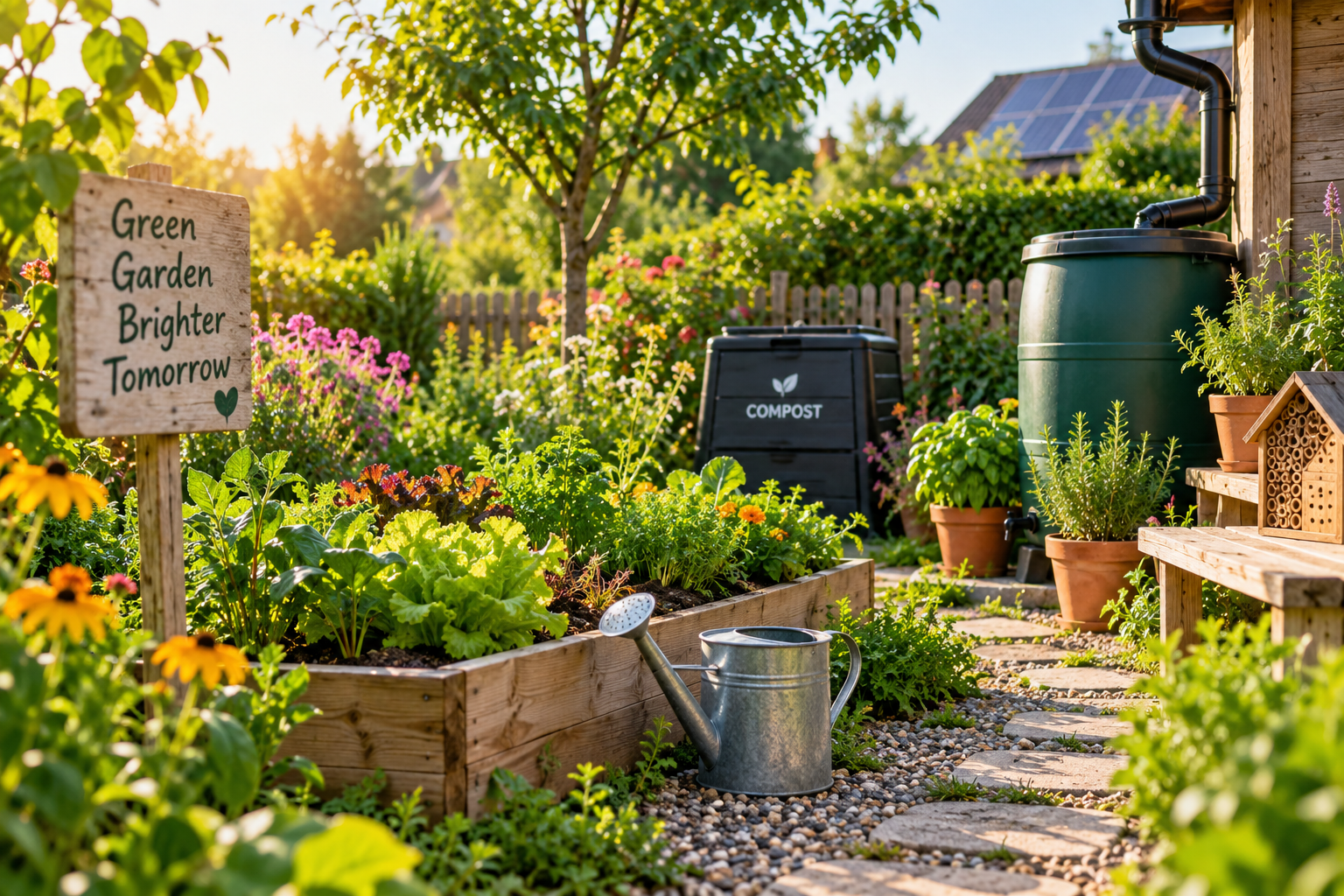
Creating a garden is one of the best ways to bring nature closer to home. I personally believe that a beautiful garden does not have to depend on expensive products, excessive watering, or chemicals. With a few simple changes, we can make our outdoor spaces healthier for plants, insects, birds, and even the environment around us.
An eco friendly garden focuses on using natural resources wisely, reducing waste, protecting soil, and creating a space where plants can grow naturally. You do not need to completely change your garden overnight. Small improvements can make a meaningful difference over time.
In this article, I will share some simple and practical ways to make your garden more eco friendly while keeping it attractive, healthy, and easy to maintain.
Choose Plants That Suit Your Local Climate
One of the easiest ways to create an eco friendly garden is to choose plants that naturally grow well in your local climate. Every area has different temperatures, rainfall patterns, soil conditions, and sunlight levels.
When plants are suitable for the local environment, they usually need less water and maintenance. They can also handle local weather conditions more easily.
Before buying new plants, I recommend checking how much sunlight, water, and space each plant needs. Choosing the right plant for the right location can save both time and resources.
Native plants are especially useful because they are already adapted to local conditions. They can also provide food and shelter for local insects and birds.
Reduce Unnecessary Watering
Water is one of the most important resources in any garden, so using it carefully should be a priority. Overwatering can waste water and may also damage plant roots.
I prefer checking the soil before watering instead of following a strict daily schedule. If the soil is still moist, the plants may not need more water.
Watering early in the morning is another helpful habit. The cooler conditions can reduce evaporation and allow plants to absorb water properly.
You can also collect rainwater where it is practical and safe to do so. Rainwater can be useful for watering many garden plants and can reduce your dependence on treated household water.
Make Your Own Compost
Composting is one of my favorite ways to make a garden more sustainable. Instead of sending certain organic materials to the trash, you can turn them into useful compost.
Fruit and vegetable scraps, dry leaves, grass clippings, and other suitable plant materials can be composted under the right conditions. Over time, these materials break down and create nutrient rich organic matter.
Adding compost to garden soil can improve its structure and help it hold moisture. This may reduce the need for frequent watering and synthetic fertilizers.
If you have limited space, you can start with a small compost container rather than creating a large compost pile.
Avoid Excessive Chemical Products
Using too many chemical fertilizers and pesticides can negatively affect the natural balance of a garden. I believe it is better to first understand the problem before immediately reaching for a chemical product.
For example, not every insect is harmful. Some insects are actually helpful because they pollinate flowers or feed on pests.
When a plant has a problem, identify the cause first. It could be poor watering, unsuitable sunlight, weak soil, overcrowding, or a genuine pest problem.
Natural gardening methods can often solve smaller problems without unnecessary chemical use.
Use Organic Fertilizers
Plants need nutrients to grow, but you do not always need strong synthetic fertilizers. Organic materials such as compost and well prepared natural soil amendments can provide nutrients while supporting soil health.
The important thing is to use any fertilizer correctly. More fertilizer does not automatically mean healthier plants. Too much can damage roots and create nutrient problems.
I recommend learning what your plants actually need before adding fertilizer. This simple habit can prevent waste and help maintain healthier soil.

Create a Pollinator Friendly Garden
An eco friendly garden should not only benefit people. It should also provide useful habitat for bees, butterflies, and other pollinators.
You can grow flowers that provide nectar and pollen. Try choosing different plants that bloom during different parts of the growing season. This can provide food for pollinators over a longer period.
Avoid disturbing every insect you see. Some insects are important parts of the garden ecosystem.
Adding flowering plants can also make your garden more colorful and enjoyable. In my opinion, a garden feels more alive when butterflies and other beneficial insects are visiting it.
Use Natural Mulch
Mulching is another simple gardening practice that can help conserve resources. Organic mulch can protect the soil surface, reduce moisture loss, and help control unwanted weeds.
Dry leaves, grass clippings, wood chips, and other suitable organic materials can be used as mulch when prepared properly.
A layer of mulch can also gradually break down and add organic matter to the soil. However, it is important not to pile mulch directly against plant stems or tree trunks because excessive moisture around the base can create problems.
Reuse Materials in the Garden
Making a garden more eco friendly does not always mean buying new gardening products. In many cases, things already available at home can be reused.
Old containers can become plant pots if they have suitable drainage. Wooden boxes can sometimes be turned into planters. Fallen branches can be used as simple garden supports or natural decorations.
Before throwing something away, I like to consider whether it could have another useful purpose in the garden.
Reusing materials reduces waste and can also make a garden look more personal.
Grow Some of Your Own Food
Growing vegetables, herbs, and fruits at home can be a rewarding part of an eco friendly garden. Even a small space can be used for growing herbs or a few seasonal vegetables.
Home gardening allows you to understand exactly how your food is grown. You can choose natural growing methods and avoid unnecessary packaging associated with some store bought produce.
You do not need a large vegetable garden. A few containers near a sunny window, balcony, patio, or outdoor area can be a good starting point.
Protect and Improve Your Soil
Healthy soil is the foundation of a healthy garden. Instead of constantly replacing soil or relying heavily on fertilizers, focus on improving the soil you already have.
Adding compost, organic matter, and natural mulch can support soil structure. Avoid walking repeatedly over planting areas because compacted soil can make it difficult for roots, air, and water to move properly.
I think gardeners sometimes focus so much on the plants that they forget about the soil. When the soil is healthy, plants generally have a stronger foundation for growth.
Reduce Garden Waste
Garden waste can quickly become a problem if everything goes into the trash. Leaves, small branches, grass clippings, and old plant material can often be reused in useful ways.
Leaves can become part of compost or natural mulch. Healthy plant material can sometimes be composted as well.
However, diseased plants should be handled carefully because composting infected material may spread certain plant problems.
Reducing garden waste is a simple step toward a more sustainable outdoor space.
Choose Hand Tools When Practical
Not every gardening task requires powered equipment. For smaller gardens, simple hand tools can often handle many jobs effectively.
Hand tools do not require fuel or electricity and can be useful for planting, weeding, pruning, and maintaining small areas.
I am not suggesting that everyone should avoid powered equipment completely. Larger gardens may require it. The idea is simply to use energy consuming equipment when it is genuinely necessary.
Encourage Birds and Helpful Wildlife
An eco friendly garden can become a small habitat for wildlife. Birds, butterflies, bees, and other creatures can all contribute to a healthy garden ecosystem.
You can grow plants that provide food or shelter for birds and pollinators. Dense shrubs and suitable trees can provide useful spaces for wildlife.
If you provide water for birds, keep the container clean and replace the water regularly. Avoid creating conditions where standing water becomes a problem.
A garden with healthy wildlife can be more interesting to observe and can support natural ecological processes.
Make Your Garden More Energy Efficient
Garden lighting can also be considered when creating an eco friendly outdoor space. If you use garden lights, choose energy efficient options and avoid keeping unnecessary lights on throughout the night.
Solar garden lights can be useful in suitable locations because they use sunlight as their energy source. However, they should be positioned where they can receive enough sunlight during the day.
Using less energy is a small change, but several small changes can add up over time.
Let Some Areas Grow Naturally
A perfectly clean garden is not always the most environmentally friendly garden. Leaving a small area with natural growth can provide habitat for insects and other small creatures.
You do not need to let your entire garden become wild. Even a small section with native plants, flowers, leaves, and natural ground cover can provide useful shelter.
I think finding a balance between an organized garden and a natural space is one of the best approaches. You can still keep paths and main planting areas neat while allowing certain sections to support biodiversity.
Maintain Plants Instead of Replacing Them
Buying new plants every season can become expensive and can create unnecessary waste. Learning how to maintain existing plants is often a better approach.
Regular pruning, proper watering, suitable sunlight, and healthy soil can help plants remain productive for longer.
When a plant looks unhealthy, do not immediately remove it. First try to understand what is wrong. Sometimes a small change in care can help the plant recover.
Final Thoughts
Making your garden more eco friendly does not require a large budget or complicated equipment. In my experience, the best approach is to start with simple habits and gradually improve your gardening routine.
Choose plants that suit your climate, use water carefully, make compost, protect your soil, reduce waste, reuse materials, and avoid unnecessary chemicals. You can also create a welcoming environment for birds, bees, butterflies, and other helpful wildlife.
An eco friendly garden is not about creating a perfect space. It is about making thoughtful choices that reduce waste and work with nature instead of constantly fighting against it.
Even if you start with just one change, such as collecting rainwater, adding compost, planting native flowers, or reducing unnecessary chemical use, you are already moving in a better direction.
With consistent care, your garden can become more than just a beautiful outdoor space. It can become a small, healthy ecosystem that benefits plants, wildlife, your home, and the environment.


