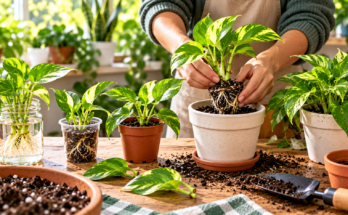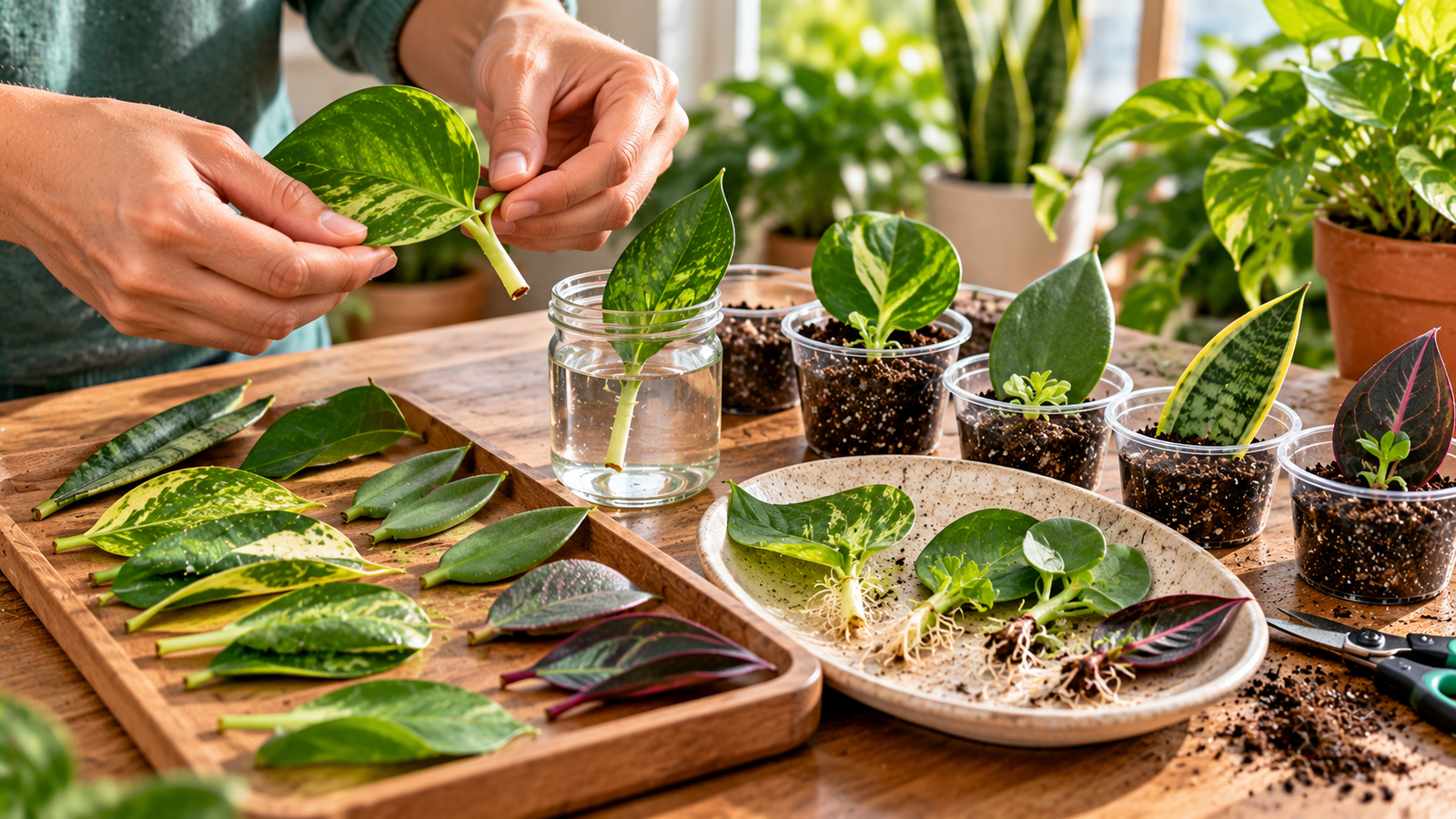
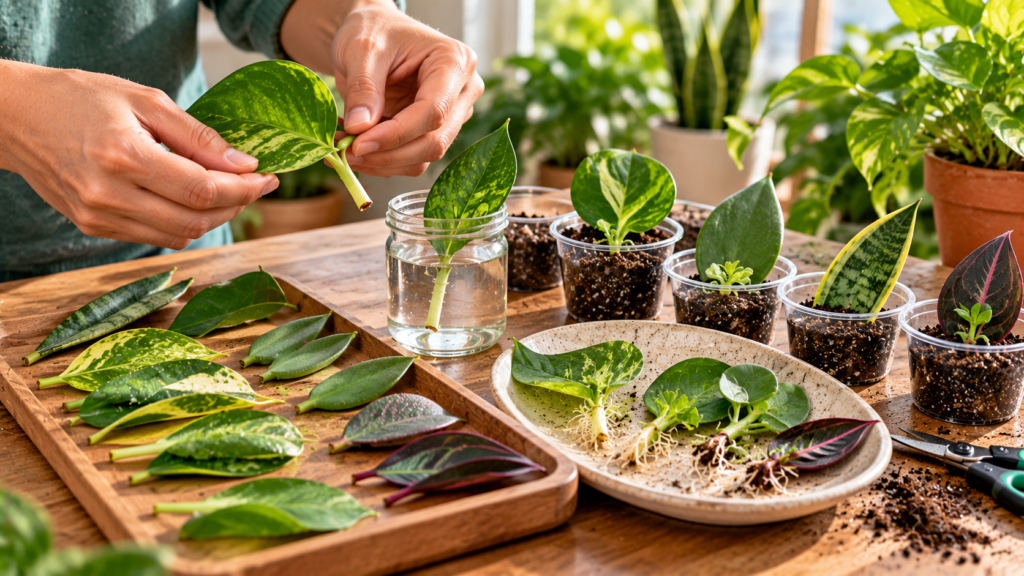
Growing new plants from healthy leaves is one of the easiest and most interesting ways to expand a home garden. I personally like this method because it does not always require expensive seeds, special equipment, or a large amount of space. With the right plant and a healthy leaf, it is possible to produce a new plant and watch roots and fresh growth develop over time.
Leaf propagation is especially useful for many indoor plants and succulents. However, not every plant can grow from a leaf, so choosing the right plant is the first important step. In my experience, patience also makes a big difference because some leaves develop roots quickly while others may take several weeks.
In this guide, I will explain how to propagate plants from healthy leaves, how to choose the right leaf, what growing conditions are needed, and how to care for new plants after roots begin to develop.
What Is Leaf Propagation?
Leaf propagation is a plant propagation method where a healthy leaf or part of a leaf is used to grow a new plant. Under suitable conditions, the leaf can develop roots and eventually produce new stems and leaves.
This method is different from growing plants from seeds because the new plant usually develops from plant tissue rather than from a seed. It can be a simple way to multiply certain houseplants and ornamental plants at home.
Some plants are naturally better suited to leaf propagation than others. Succulents are well known for this method, while plants such as snake plants can often be propagated using sections of leaves. Other plants may require a stem cutting or another propagation method.
Choose a Healthy Leaf
The quality of the leaf is one of the most important factors when propagating plants from leaves. I always recommend selecting a leaf that looks healthy, mature, and free from obvious disease or pest damage.
Avoid leaves that are yellow, badly damaged, soft, rotten, or covered with fungal spots. A healthy leaf contains more stored energy and has a better chance of producing new growth.
The leaf should also be mature enough to handle propagation. Very young leaves can be delicate and may not have enough energy to produce roots and new growth.
If you are taking a leaf from an existing plant, use clean scissors or a clean knife. This helps reduce the chance of transferring bacteria or fungal problems to the cutting.
Let the Leaf Dry When Necessary
Some plants, especially many succulents, benefit from allowing the cut area to dry before planting. This process is often called callusing.
After removing the leaf, place it in a clean, dry area with indirect light. Do not immediately bury the fresh cut end in wet soil.
The time required for the cut to dry depends on the plant and the environment. The goal is simply to allow the damaged area to form a dry protective layer.
This step can reduce the chance of rot when the leaf eventually comes into contact with moisture.
Prepare the Right Growing Medium
A suitable growing medium is very important for successful leaf propagation. The soil should provide enough support while allowing excess moisture to drain away.
For many plants, a light and well draining potting mixture works better than heavy garden soil. Succulent leaves especially benefit from a growing medium that does not remain wet for long periods.
I prefer using a clean container with drainage holes. Good drainage helps prevent water from collecting around the leaf and reduces the risk of rot.
The container does not need to be large. In fact, using a small container can make it easier to control moisture while the new plant is developing.
How to Plant a Leaf Cutting
Once the leaf is ready, place it on or lightly into the growing medium according to the requirements of the plant.
For some succulents, the leaf can simply rest on top of slightly moist soil. The end where the leaf was attached to the original plant should be positioned close to the growing medium.
For plants that require the leaf to be inserted into soil, avoid burying too much of the leaf. Deep planting can increase the chance of rot.
The exact method depends on the plant species, so it is always useful to understand how that particular plant naturally produces new growth.
Give the Leaf the Right Amount of Water
Watering is one of the areas where beginners often make mistakes. It is easy to think that more water will help roots develop faster, but excessive moisture can actually damage the leaf.
The growing medium should not remain soaking wet. At the same time, completely dry conditions may prevent healthy root development in plants that require moisture.
I usually focus on keeping the environment lightly moist rather than wet. A spray bottle can sometimes be useful for maintaining gentle moisture, but watering requirements vary between plant types.
Succulent leaves generally need much less water than tropical houseplants, so avoid using one watering routine for every plant.
Provide Bright Indirect Light
Light is another important part of successful leaf propagation. Newly propagated leaves generally benefit from bright indirect light.
Direct, intense sunlight can sometimes cause the leaf to dry out or become damaged, especially when it has recently been separated from the parent plant.
On the other hand, very low light can slow down the development of roots and new growth.
A bright location near a window can work well as long as the leaf is protected from harsh direct sunlight. I also like to observe the leaf regularly because its appearance can tell me whether the conditions are suitable.
Keep the Environment Comfortable
Temperature can influence how quickly a plant develops roots. Many houseplants grow best in a warm and stable environment.
Try to avoid placing leaf cuttings directly beside cold windows, strong heating equipment, or air conditioning vents. Sudden temperature changes can create unnecessary stress.
Good air circulation is also helpful. However, the cutting should not be exposed to strong wind that can dry it out too quickly.
A stable environment often produces better results than constantly moving the cutting from one location to another.
Be Patient While Roots Develop
One of the biggest lessons I have learned from plant propagation is that patience is essential. A leaf may appear unchanged for quite some time before you notice roots or new growth.
Do not remove the leaf every few days to check whether roots have formed. Constantly disturbing the cutting can damage developing roots.
Instead, observe it from the surface and give it stable growing conditions.
Some plants may begin showing signs of development within a few weeks, while others can take much longer. The exact timing depends on the plant, temperature, light, moisture, and overall health of the leaf.
Watch for Signs of Rot
Rot is one of the most common problems when propagating plants from leaves. A rotting leaf may become soft, dark, mushy, or develop an unpleasant smell.
Excessive moisture is often one of the main causes.
If you notice early signs of rot, remove the affected material if possible and improve drainage and airflow. If the entire leaf has become soft and damaged, it may not recover.
This is another reason why I prefer starting with several healthy leaves when possible. Propagation is a learning process, and not every cutting will succeed.
When New Roots Appear
Once roots begin to develop, avoid disturbing them unnecessarily. Tiny roots can be fragile and may break easily.
At first, the roots may be very small and difficult to see. Over time, you may notice new plant growth developing near the base of the original leaf.
This is an exciting stage because it means the propagation process is progressing.
Continue providing suitable light and moisture while allowing the young plant to become stronger.
When to Separate the New Plant
Some plants naturally produce a small new plant beside the original leaf. Once the new growth has developed enough roots and leaves, it may eventually be ready to grow independently.
Do not rush this process. A young plant needs enough roots to support itself after separation.
When the new plant is established, carefully move it into its own small container filled with suitable potting soil.
Handle the roots gently and avoid damaging the young growth.
Common Mistakes to Avoid
There are several common mistakes that can reduce the success of leaf propagation.
The first is using unhealthy leaves. A damaged or diseased leaf may struggle to produce new growth.
The second mistake is overwatering. Too much moisture can encourage rot, especially in succulent leaves.
Another mistake is placing the cutting in harsh direct sunlight. Newly propagated leaves can be sensitive and may dry out quickly.
Some people also become impatient and keep moving the cutting or checking the roots. It is better to give the plant stable conditions and allow nature to take its course.
Finally, avoid assuming that every plant can be propagated from a leaf. Some plants require stems, roots, divisions, or other propagation techniques.
Best Plants for Leaf Propagation
Several popular plants can be propagated using leaves or leaf sections. Many succulent plants are excellent examples.
Jade plants can sometimes produce new growth from leaves, although stem cuttings are also commonly used. Snake plants can be propagated from leaf sections. African violets can also be propagated from healthy leaves under suitable conditions.
Other plants may have completely different requirements.
Before starting, I recommend checking the specific propagation method for the plant you want to multiply. Knowing the plant’s natural growth habit can save a lot of time and prevent unnecessary mistakes.
Benefits of Propagating Plants From Leaves
There are several reasons why I enjoy leaf propagation. The first is that it can be inexpensive. You often need only a healthy leaf, a suitable growing medium, a small container, and the right environment.
It is also a great way to learn about plant growth. Watching a tiny root appear from a leaf can make gardening much more interesting.
Leaf propagation can also help you create more plants for your home. Instead of purchasing new plants every time you want to add greenery, you can multiply suitable plants that you already have.
For gardening beginners, it can also be a useful experiment. Even if the first attempt does not work, the experience can teach you about moisture, light, soil, and plant care.
Final Thoughts
Learning how to propagate plants from healthy leaves is a simple and rewarding gardening skill. The process does not require a complicated setup, but it does require the right plant, a healthy leaf, suitable growing conditions, and plenty of patience.
In my opinion, the most important things are starting with healthy plant material, avoiding excessive moisture, providing bright indirect light, and giving the new growth enough time to develop.
Every plant behaves a little differently, so do not feel discouraged if one attempt fails. Try again with another healthy leaf and pay attention to what happened the first time.
With practice, leaf propagation can become an enjoyable part of your regular gardening routine. It is a simple way to grow more plants, save money, and experience the satisfaction of watching a small leaf gradually become a new plant.