
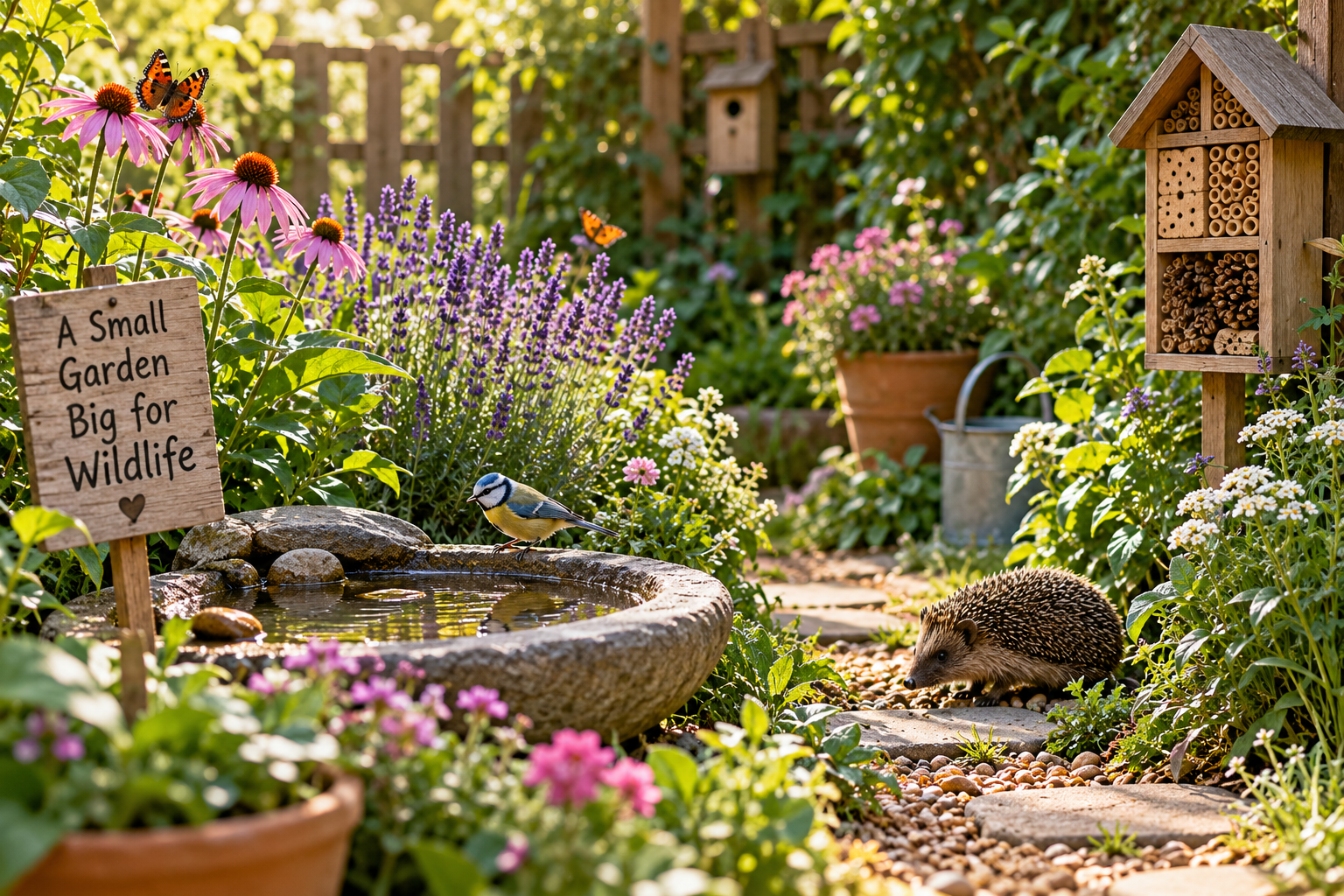
Creating a wildlife friendly garden does not require a large yard or a huge amount of money. Even a small outdoor space can become a useful place for birds, butterflies, bees, and other small creatures. In my experience, the most important thing is to make thoughtful choices about plants, water, shelter, and garden care.
A small wildlife friendly garden can also make an ordinary outdoor space feel more natural and peaceful. Instead of trying to make every corner perfectly neat, I prefer to create a garden where plants and small creatures can exist together. This approach is simple, practical, and enjoyable.
In this article, I will share some of the easiest ways to create a wildlife friendly garden in a small space.
Choose Plants That Help Wildlife
The first step in creating a small wildlife garden is choosing the right plants. Plants provide food, shelter, nesting opportunities, and places for insects to live.
I recommend choosing a mixture of flowering plants, herbs, shrubs, and native plants when possible. Flowering plants are especially useful because they can provide nectar for bees, butterflies, and other pollinators.
Try to select plants that flower at different times of the year. This gives wildlife access to food across several seasons instead of providing resources for only a short period.
Native plants can also be a good choice because local insects and birds are often familiar with them. However, the best plants will depend on your climate, soil, and growing conditions.
Add Flowers for Bees and Butterflies
Flowers are one of the easiest ways to make a garden more attractive to wildlife. Bees and butterflies are naturally attracted to flowers that provide nectar and pollen.
I like the idea of planting several types of flowers rather than filling the garden with only one variety. Different flower shapes and colors can attract different pollinators.
Lavender, marigolds, sunflowers, cosmos, zinnias, basil flowers, and many other flowering plants can provide useful food for pollinators. Before planting, it is always better to check which varieties grow well in your local climate.
Try to avoid using too many plants that have been heavily treated with pesticides. A wildlife friendly garden should provide a safe environment for insects rather than exposing them to unnecessary chemicals.
Include Plants That Produce Seeds
Flowers are not the only useful plants in a wildlife friendly garden. Plants that produce seeds can provide food for birds and other animals.
Sunflowers are a simple example. Once the flowers mature, their seeds can become a natural food source for birds. Other plants that produce seeds can also be useful depending on your climate and garden size.
I prefer allowing some plants to remain after flowering instead of removing everything immediately. This can provide food and shelter while also making the garden look more natural.
Create a Small Water Source
Wildlife needs water, and even a very small garden can provide it.
You do not need a large pond. A shallow bowl, bird bath, or small container can provide drinking water for birds and insects.
When setting up a water source, I recommend keeping the water shallow. Small stones can be placed inside the container so insects have safe places to land and drink.
Clean the water regularly because standing water can collect dirt and become unhealthy for wildlife. Fresh water is especially useful during hot and dry weather.
If you have enough space, a small pond can provide even more benefits. However, a simple shallow water dish is a good starting point for a small wildlife friendly garden.
Provide Shelter for Small Creatures
Wildlife needs more than food and water. Animals also need safe places to rest, hide, and sometimes raise their young.
You can create shelter by planting dense shrubs, grasses, and plants with different heights. A small pile of natural branches can also provide hiding places for insects and other small creatures.
Leaving a few natural areas in the garden can make a surprising difference. Fallen leaves, small pieces of wood, and dry stems can provide shelter for insects.
I have found that a garden does not need to look perfectly clean to be healthy. A little natural mess can actually make the garden more useful for wildlife.
Add Different Plant Heights
A wildlife friendly garden becomes more useful when it contains plants of different heights.
Low growing plants can provide cover for insects and small animals. Medium sized plants can offer flowers and hiding places, while taller plants can provide food and shelter for birds.
This layered approach can be used even in a small garden. For example, you can place ground cover near the front, flowering plants in the middle, and taller plants toward the back.
Using different plant heights also makes a small garden look fuller without requiring more space.
Grow Herbs for Wildlife
Herbs can be useful in both a wildlife garden and a kitchen garden.
Plants such as basil, mint, rosemary, thyme, oregano, and other herbs can attract insects when they flower. Some herbs also provide shelter for small insects.
One thing I like about growing herbs is that they serve more than one purpose. I can use them in cooking while their flowers can provide food for pollinators.
Allowing some herbs to flower instead of harvesting every part of the plant can make them more valuable to wildlife.
Avoid Excessive Chemical Use
One of the most important parts of creating a wildlife friendly garden is reducing unnecessary chemical use.
Strong pesticides can affect insects that are actually helpful to the garden. Bees, butterflies, ladybugs, and other beneficial insects can be harmed when chemicals are used carelessly.
Instead of immediately reaching for a chemical treatment, I prefer identifying the actual problem first. Sometimes a small number of insects are not a serious problem and can be left alone.
You can also remove some pests by hand, spray plants gently with water, or encourage natural predators such as ladybugs and birds.
The goal is not to eliminate every insect. A healthy garden naturally contains many different types of insects.
Leave Some Natural Areas
A completely tidy garden may look attractive, but wildlife often benefits from less disturbed areas.
You can leave a small corner with fallen leaves, natural stems, or a few branches. This area does not need to be large.
Even a small natural corner can become a place where insects hide and feed.
If your garden is very small, you can use a container or planter to create a mini wildlife habitat. This is especially useful for balconies, patios, and small yards.
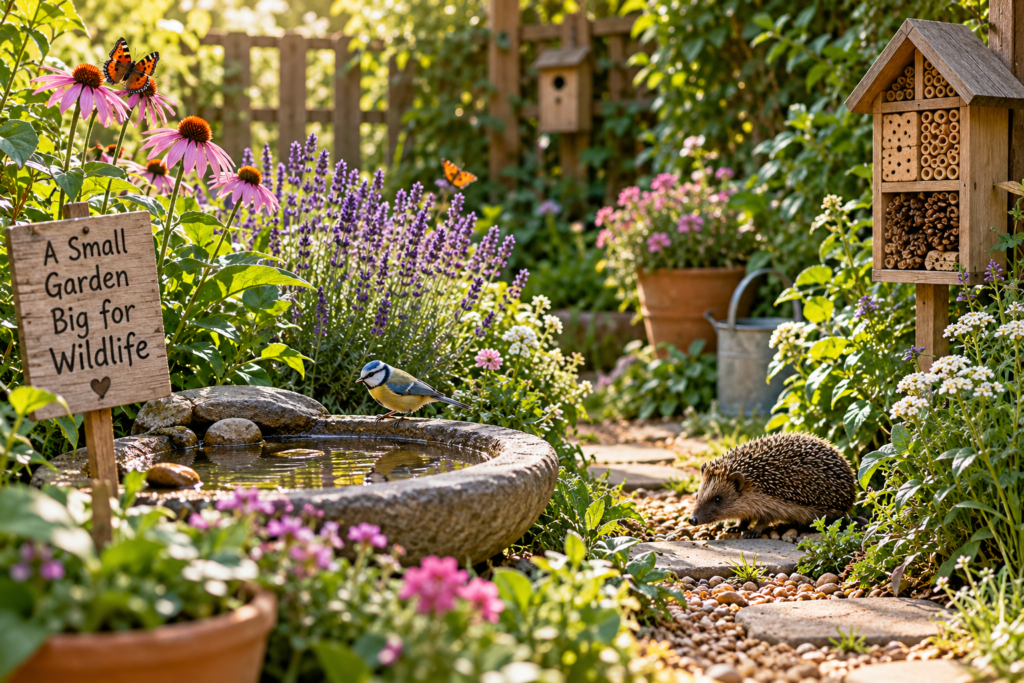
Add Bird Friendly Features
Birds can make a small garden feel lively and enjoyable.
Plants that provide seeds, berries, or natural shelter can attract different types of birds. A clean bird bath can also provide an important water source.
If you decide to add a bird feeder, keep it clean and place it somewhere that provides reasonable protection from predators. Regular cleaning is important because dirty feeders can spread disease among birds.
I personally think natural food sources are even better when possible because they allow birds to find food directly from plants.
Make Your Garden Safe for Pollinators
Pollinators are an important part of a healthy garden. Bees, butterflies, moths, and other insects help many plants reproduce.
To support pollinators, grow flowers that provide nectar and pollen. Try to include different flower types so insects have more choices.
Avoid spraying flowers with harmful chemicals, especially when they are actively attracting bees and butterflies.
You can also provide a shallow water source and small areas of shelter. These simple changes can make your garden more useful to pollinators.
Use Containers in Small Spaces
If you live in an apartment or have a very small yard, containers can help you create a wildlife friendly garden.
You can grow flowering plants in pots, use a container for herbs, or create a small collection of plants that attract butterflies and bees.
Containers also make it easier to experiment with different plants. If one plant does not perform well, you can replace it with another variety.
A balcony with several carefully selected containers can provide food and shelter for insects even without a traditional garden.
Choose Plants With Different Flowering Seasons
A wildlife garden becomes more useful when it offers food throughout the year.
Try to choose plants that bloom during different seasons. Early flowering plants can provide food when fewer flowers are available, while summer and autumn flowers can continue supporting pollinators later in the year.
When planning my garden, I find it helpful to think about the whole growing season instead of choosing plants based only on how they look at one particular time.
This also keeps the garden visually interesting because something new can be flowering at different times.
Keep Some Dead Plant Material
It can be tempting to remove every dead flower and dry stem from the garden. However, some dead plant material can provide useful habitat.
Dry stems may give insects places to hide, while seed heads can provide food for birds.
You do not need to leave everything untouched. Simply keeping a few stems and seed heads can provide additional wildlife habitat.
This is one of the easiest changes because it does not require buying anything.
Create a Balanced Garden
A wildlife friendly garden should still be enjoyable for you and your family.
You do not need to turn the entire garden into a wild area. Instead, create a balance between plants, pathways, seating areas, and wildlife spaces.
For a small garden, even a few containers, flowering plants, a shallow water dish, and a natural corner can make a meaningful difference.
I believe the best garden is one that works for both people and nature.
Final Thoughts
Creating a small wildlife friendly garden is much easier than many people think. You do not need a large property, expensive equipment, or complicated landscaping.
Start with a few plants that provide flowers, seeds, or shelter. Add a shallow water source and create small areas where insects and birds can feel safe. Avoid unnecessary chemical use and allow some parts of the garden to remain natural.
The biggest lesson I have learned is that small changes can have a real impact. A few flowering plants can attract bees and butterflies, while a small water dish can provide drinking water for birds and insects.
If you have a small yard, patio, balcony, or even a few containers, you can still create a wildlife friendly garden. With thoughtful plant choices and simple natural features, your garden can become a welcoming space for both people and wildlife.
For me, the real beauty of a wildlife friendly garden is watching it become more active over time. Birds visit, insects move between flowers, and plants create their own little ecosystem. That is what makes a garden feel alive, and it is one of the best reasons to make space for wildlife at home.


