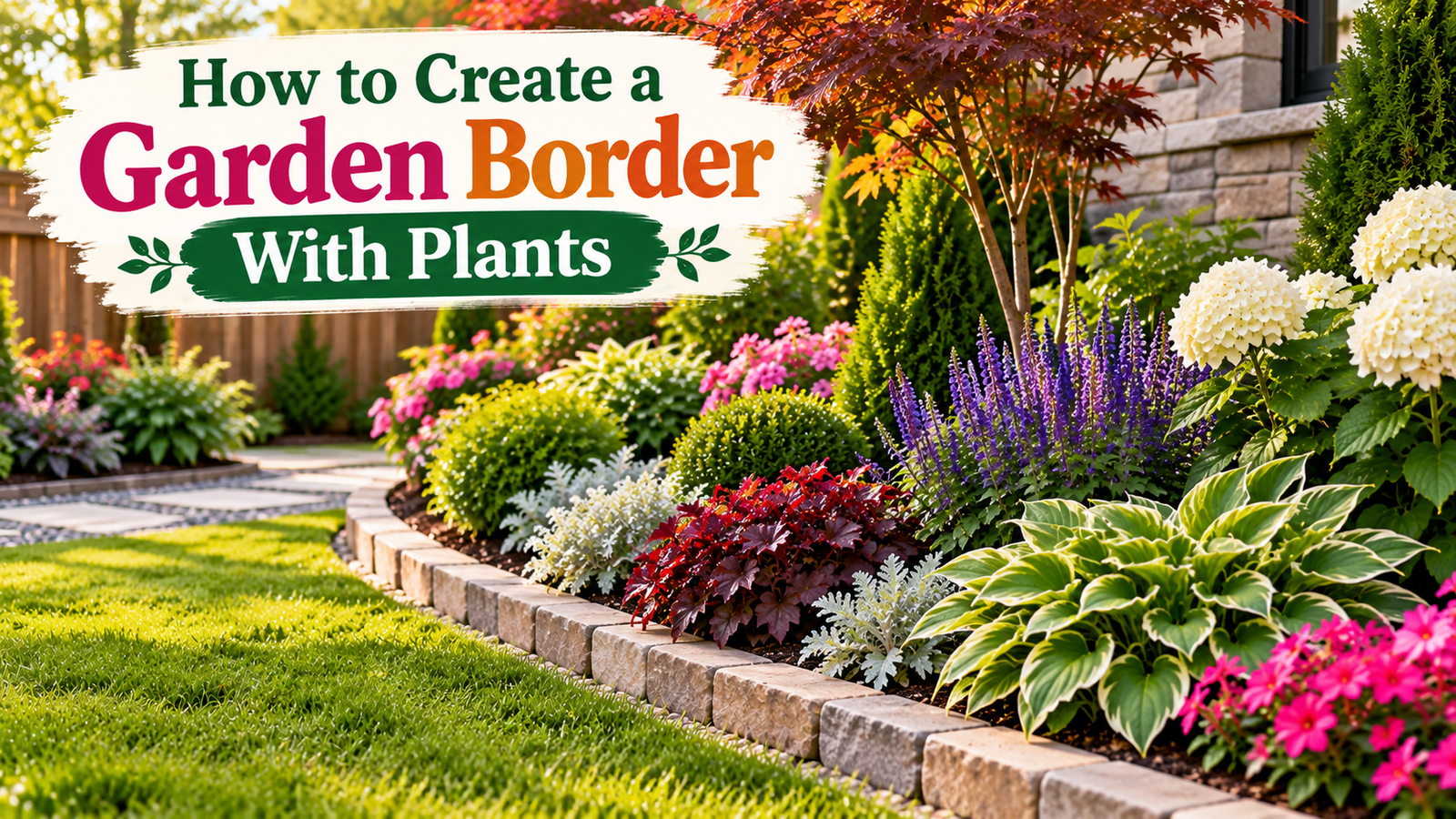
Creating a garden border with plants is one of the easiest ways to make an outdoor space look organized, attractive, and welcoming. In my experience, a good garden border can completely change the appearance of a garden without requiring expensive materials or complicated landscaping work. Plants can be used to separate a lawn from flower beds, define pathways, protect certain areas, and add color and texture around the garden.
The best part is that you can create a beautiful garden border using plants that suit your space, soil, sunlight, and maintenance routine. You do not need a huge garden or professional gardening skills. With a little planning and the right plant choices, even a small outdoor area can have a neat and natural looking border.
What Is a Garden Border?
A garden border is an area along the edge of a garden, lawn, pathway, patio, or flower bed where plants are arranged to create a clear boundary. Garden borders can be formal and symmetrical or relaxed and natural.
Plant borders are especially useful when you want to make different areas of your garden look connected. For example, a row of small plants can separate a walkway from a lawn, while taller plants can create a beautiful background around a flower bed.
I personally prefer plant borders because they look more natural than completely hard landscaping. Plants also change throughout the year, giving the garden a different appearance as they grow and flower.
Decide Where You Want the Garden Border
Before planting anything, decide where you want to create your garden border. Walk around your garden and look at the areas that appear empty, messy, or poorly defined.
You can create a border along a lawn, driveway, pathway, wall, fence, patio, or flower bed. If your garden is small, avoid creating too many separate borders because this can make the space look crowded.
For a simple design, choose one or two important areas and create a clear plant border there. Curved borders can give a soft and natural appearance, while straight borders usually create a cleaner and more formal look.
Choose Plants According to Sunlight
One of the most important steps when creating a garden border with plants is choosing plants that can grow well in the available sunlight.
Observe the area during the day. Some parts of the garden may receive full sunlight, while others may remain partially shaded. Choosing plants without considering sunlight can lead to weak growth, fewer flowers, and unhealthy leaves.
For sunny borders, consider plants that enjoy plenty of light. Depending on your climate, options can include lavender, marigolds, zinnias, salvia, ornamental grasses, and many flowering perennials.
For shaded areas, plants such as ferns, hostas, caladiums, and some begonias may work better.
The exact plants should always be selected according to your local climate and growing conditions.
Select Plants of Different Heights
Plant height is another important part of garden border design. If every plant is the same height, the border can look flat and less interesting.
I like using a combination of short, medium, and taller plants. Small plants can be placed toward the front, medium plants in the middle, and taller plants toward the back.
For example, low growing plants can create the front edge of a flower bed. Medium height flowering plants can provide color behind them, while taller ornamental plants can create a background.
This simple arrangement gives the garden border more depth and makes individual plants easier to see.
Use Low Growing Plants Along the Edge
Low growing plants are particularly useful for creating the front edge of a garden border. They provide a clean transition between the border and lawn, pathway, or other garden area.
Some suitable choices may include creeping thyme, alyssum, dwarf marigolds, ornamental ground covers, and compact flowering plants.
When choosing low growing plants, pay attention to their mature size. A plant that looks small at the nursery can spread considerably after a few months.
Leaving enough space between plants will make maintenance easier and prevent the border from becoming overcrowded.
Add Medium Height Plants for Color
After establishing the front edge, medium height plants can be added behind the shorter plants. This is where you can introduce more color and variety.
Flowering plants such as zinnias, marigolds, cosmos, salvia, and other locally suitable flowers can work well in many garden settings.
Try combining plants with different flower shapes rather than choosing several plants that look almost identical. Different shapes and textures make the border more interesting.
I also recommend considering flowering seasons. If every plant flowers at the same time, the border may look amazing for a few weeks but less colorful afterward. Choosing plants with different flowering periods can help maintain interest for longer.
Include Green Foliage Plants
Flowers are beautiful, but a garden border should not depend only on flowers. Green foliage plants can provide structure and keep the border attractive even when some flowers are not blooming.
Plants with large leaves, narrow leaves, textured foliage, or different shades of green can create visual variety.
Ornamental grasses are another useful choice for some garden borders. They can add movement and texture when the wind passes through their leaves.
In my view, combining flowering plants with foliage plants creates a more balanced garden because the green leaves provide a background for colorful flowers.
Repeat Plants for a More Natural Look
One simple garden design trick is to repeat certain plants throughout the border. Instead of planting one type of plant in one corner and another completely different plant everywhere else, repeat a few varieties at intervals.
For example, you could plant small flowering plants along the front and repeat them every few feet. Between them, you could add medium height plants and foliage plants.
This repetition makes the border look planned without making it feel too formal.
It is also easier to maintain because you are working with a smaller selection of plants.
Prepare the Soil Before Planting
Healthy soil is the foundation of a healthy garden border. Before planting, remove weeds, grass, stones, and unwanted roots from the area.
Loosen the soil with a garden fork or hand tool. If the soil is compacted, breaking it up will help roots establish more easily.
Adding suitable organic matter or compost can improve soil structure and provide nutrients. However, soil requirements vary between plants, so it is better to understand what your chosen plants need before adding large amounts of anything.
The goal is to create soil that allows roots to grow while providing adequate moisture and drainage.
Plan the Spacing Carefully
Plant spacing is something beginners often overlook. It is tempting to plant everything close together because the border can look empty immediately after planting.
However, plants need room to grow. If you place them too close together, they may compete for water, nutrients, sunlight, and space.
Check the mature width of each plant and use that information when planning the border. A little patience can result in a much healthier garden later.
I prefer leaving some visible space between young plants rather than overcrowding the border from the beginning.
Create a Simple Color Scheme
A garden border can contain many different colors, but too many competing colors may make the area look untidy.
A simple color scheme can make the garden feel more organized. You could use two or three main flower colors with green foliage as the connecting element.
For example, white and purple flowers can create a calm appearance, while yellow and orange flowers can create a warmer and brighter feeling.
You can also choose colors that complement the exterior of your home, patio, fence, or garden furniture.
Add Seasonal Interest
A good garden border should ideally look attractive for more than one season. This does not mean every plant needs to flower throughout the entire year.
Instead, combine plants that offer different types of interest. Some may provide flowers, while others may offer attractive foliage, texture, fragrance, or seed heads.
Seasonal planning also helps you understand when pruning, watering, feeding, and other maintenance tasks may be required.
Water New Plants Properly
Newly planted borders usually need more attention than established plants. Water them according to their needs and the weather conditions.
Avoid assuming that watering a little every day is always the best approach. The correct watering schedule depends on soil type, plant variety, temperature, rainfall, and sunlight.
Water deeply enough to encourage healthy root development while avoiding constantly waterlogged soil.
Checking the soil before watering is a simple habit that can prevent both underwatering and unnecessary watering.
Use Mulch Around the Plants
Mulch can make a plant border look cleaner while also helping the soil retain moisture. Organic mulch can also contribute to soil improvement as it breaks down over time.
Apply mulch around plants while keeping a little space around the base of stems. Placing excessive mulch directly against stems can create problems.
Mulch can also reduce weed growth, which makes garden border maintenance easier.
Keep the Border Looking Neat
Once the border is established, regular maintenance will keep it attractive. Remove weeds before they become large and trim plants when necessary.
Dead flowers can sometimes be removed to encourage continued blooming, depending on the plant. Remove damaged or diseased leaves when appropriate and keep an eye out for pests.
Do not try to control every small insect you see. Some insects are beneficial to gardens. Instead, identify the problem before taking action.
A few minutes of regular maintenance can be much easier than allowing the border to become completely overgrown.
Avoid Making the Border Too Crowded
One of the most common mistakes I see in garden design is adding too many plants. A garden border does not need to contain every plant you like.
A smaller number of well chosen plants can create a much better result than a crowded mixture.
Think about the mature size of each plant and how the border will look several months or even years later. Good garden design considers the future growth of plants rather than only their appearance on planting day.
Simple Garden Border Ideas
There are many ways to create a garden border with plants. A simple flower border can be made using repeated flowering plants along a lawn.
A foliage border can use plants with different leaf shapes and textures. A pathway border can combine low growing plants with medium height flowers.
For a natural garden, mix plants with different heights and allow some variation in shape. For a more formal garden, use repeated plants and maintain a consistent height.
Even a small balcony or courtyard garden can use containers arranged along an edge to create a similar effect.
Final Thoughts
Creating a garden border with plants does not have to be complicated. In my experience, the best results come from keeping the design simple and choosing plants that actually suit the growing conditions.
Start by selecting the location, check the sunlight, prepare the soil, and choose plants based on their mature height and size. Use low growing plants along the front, medium plants in the middle, and taller plants toward the back when the space allows.
Adding different foliage textures, repeating a few plants, and using a simple color scheme can make the border look balanced and attractive. Most importantly, give the plants enough room to grow and maintain the area regularly.
A well planned plant border can make an ordinary garden feel more complete. With a little planning and patience, you can create a garden edge that adds color, structure, and personality to your outdoor space while keeping the overall design natural and easy to manage.
SEO Keywords: garden border with plants, how to create a garden border, garden border ideas, plant border ideas, garden border design, plants for garden borders, easy garden border ideas, flower garden border, garden edging with plants, garden design ideas